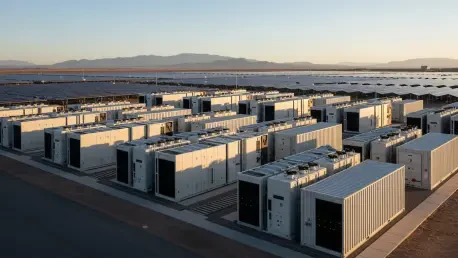

The global hunger for high-performance computing has reached a critical threshold where the availability of raw electricity, rather than silicon or data, determines the ultimate success of a technology giant’s artificial intelligence strategy. Oracle’s “Project Jupiter” in Doña Ana County, New Mexico, represents a radical departure from the industry standard by attempting to sever the umbilical cord connecting data centers to the public utility. By planning a massive 1,400-acre campus powered primarily by an on-site microgrid, Oracle is attempting to solve the “time to power” problem that currently plagues traditional hyperscale developments. This article explores the transition from a utility-dependent model to a self-sufficient energy architecture, examining how fuel-cell technology and massive capital investment are being used to bypass a congested and aging national electric grid.
The Evolution of Infrastructure: From Utility Dependence to Energy Sovereignty
Historically, data centers functioned as massive consumers of public utility resources, relying on the grid for primary power and reserving diesel generators strictly for emergencies. However, the explosive growth of AI training models has created a demand for electricity that the current infrastructure cannot meet with sufficient speed or volume. In previous decades, site selection was driven primarily by proximity to fiber optic cables and low land costs; today, the primary constraint is the years-long wait time for grid interconnection. Oracle’s pivot to on-site generation reflects a shift in the industrial landscape where energy is no longer a commodity to be purchased, but a component to be manufactured on-site to ensure operational speed.
The move toward energy independence is a calculated response to the realization that utility providers are often overmatched by the scale of modern compute clusters. As the time required to upgrade high-voltage transmission lines often exceeds five to seven years, the ability to build a private utility infrastructure has become a competitive differentiator. This shift suggests that the era of the passive consumer is ending for tech companies, replaced by a model where the data center and the power plant are designed as a single, unified organism. By taking control of the entire energy lifecycle, Oracle is effectively removing the regulatory and physical bottlenecks that threaten to stall the next generation of AI advancements.
Advanced Strategies in Autonomous Power Generation
Environmental Synergy: Embracing Fuel Cells for Resource Conservation
The heart of the strategy for this autonomous campus lies in the use of solid-oxide fuel cells, which generate electricity through an electrochemical reaction rather than traditional combustion. This choice is both a functional and environmental necessity, particularly in regions where air quality and resource management are under intense scrutiny. Compared to traditional gas turbines, these fuel cells allow for a projected 92% reduction in nitrogen oxide emissions, providing a cleaner footprint that aligns with modern ESG standards. This technology provides a steady, reliable baseline of power that is less susceptible to the weather-related outages or maintenance cycles that often disrupt public grids.
Furthermore, in the arid climate of New Mexico, the ability of the system to operate with minimal water consumption serves as a decisive advantage. Traditional data center cooling and power generation often require millions of gallons of water daily, a requirement that is increasingly difficult to meet in water-stressed regions. By utilizing closed-loop, non-evaporative cooling paired with water-efficient fuel cells, Oracle addresses local conservation concerns that often stall large-scale industrial projects. This demonstrates that for hyperscalers, sustainability has become a functional requirement for obtaining the social license to operate in resource-constrained environments.
Capital Intensity: The Economic Magnitude of Scaling On-Site Power
The financial commitment required to bypass the electric grid is unprecedented in the history of the technology sector. Oracle has signaled a long-term investment strategy that could reach $165 billion for the New Mexico campus alone, with $50 billion allocated for AI infrastructure in the current fiscal year. This scale of spending transforms the data center from a mere building into a specialized, multi-gigawatt power plant. When the power delivery systems, cooling mechanisms, and compute racks are engineered as a single, integrated machine, the resulting efficiency gains can offset the high initial costs of building private generation capacity.
This massive capital expenditure represents a bet that the speed gained by avoiding utility delays will provide a market advantage worth more than the cost of building a private utility infrastructure. In the race to train the most advanced large language models, a six-month delay in power delivery can translate to billions of dollars in lost market capitalization. Consequently, the economic logic of Project Jupiter is driven by the realization that in the AI era, time is the most expensive variable. High-density compute environments require a level of power reliability that traditional grids are increasingly unable to guarantee, making the investment in on-site generation a form of insurance against infrastructure failure.
Technical Precision: Navigating the Hurdles of Off-Grid Operations
Operating an islanded microgrid introduces sophisticated engineering challenges that were previously the sole responsibility of utility companies. Fuel cells are most efficient when maintaining a steady, constant load—a state often called “chill mode”—but AI workloads are notoriously volatile, with massive power spikes during training cycles. To bridge this gap, operators must integrate large-scale battery storage to buffer fluctuations and ensure system stability. This requires a complex orchestration of hardware and software to ensure that the transition between energy storage and generation remains seamless during peak demand.
Additionally, while a site may start off-grid, the long-term plan often requires eventual grid connectivity for redundant backup and safety. This creates a complex transition period where operators must manage their own internal grid while preparing for the technical and regulatory hurdles of synchronized utility integration. Managing a private power plant of this scale means the data center operator must also function as a grid balancer, frequency regulator, and emergency response team. This evolution in roles highlights the blurring lines between technology providers and energy companies, as the physical requirements of AI push both sectors into uncharted territory.
Decentralization and the Future of Industrial Energy
The move toward on-site generation is likely the beginning of a broader trend toward the decentralization of industrial power across the globe. As other tech giants face similar grid constraints, the industry is witnessing a shift toward microgrid-first development strategies that prioritize localized control over centralized dependence. This evolution could lead to a future where data centers serve as anchor tenants for new energy technologies, such as small modular reactors or advanced hydrogen storage systems. Such projects act as catalysts for local energy innovation, often providing the financial backing needed to bring experimental power technologies into the mainstream.
Regulatory frameworks will also likely shift as these companies begin to function as de facto private utilities, potentially leading to new models of public-private partnerships. In some scenarios, tech companies might eventually contribute excess power back to the public grid once local connections are established, acting as a stabilizing force for regional infrastructure. This decentralization does not just benefit the tech companies; it can also reduce the overall load on aging national grids, potentially delaying the need for taxpayer-funded utility upgrades. The decentralization of power generation is becoming a necessary prerequisite for the hyper-scaling of digital intelligence.
Strategic Frameworks for the Energy-First Era
For businesses and infrastructure professionals, the current shift offers a clear set of takeaways for navigating the energy-intensive AI era. First, the metric of “time to power” has surpassed land cost and labor availability as the most critical factor for project success. Waiting for traditional grid upgrades is no longer a viable strategy for companies that aim to lead the market. Second, the integration of power and compute through a co-design approach is essential for managing the extreme thermal and electrical densities of modern GPUs. This requires a multidisciplinary team capable of bridging the gap between electrical engineering and high-performance computing.
Furthermore, companies must prioritize community impact by selecting technologies that minimize noise, water usage, and local emissions. To apply these insights, organizations should evaluate on-site generation not as a secondary backup, but as a primary pillar of their deployment roadmap. Proactive engagement with energy technology providers and local governments can help secure the necessary approvals for autonomous sites. By building energy-resilient infrastructure, organizations can protect themselves from the volatility of public energy markets while ensuring that their compute capacity remains online regardless of grid conditions.
Redefining the Infrastructure Paradigm
Oracle’s Project Jupiter served as a bold experiment in energy independence, and the outcomes proved that the constraints of the traditional electric grid did not have to dictate the pace of innovation. By merging massive capital investment with advanced fuel-cell technology, the project redefined what it meant to build at scale. The results demonstrated that while the technology to power AI independently of the grid existed, it brought a new set of sophisticated engineering challenges regarding load management. The industry recognized that the ability to generate clean, reliable power on-site became a significant competitive differentiator that separated market leaders from those hampered by legacy infrastructure.
The strategic shift toward autonomous power generation provided the necessary agility to lead the global AI race. It was observed that the merging of the power plant and the data center into a single machine was the only way to manage the unprecedented demands of next-generation compute clusters. Ultimately, the success of this model changed how the technology sector viewed its relationship with physical resources. The lessons learned from this initiative established a blueprint for future developments, ensuring that the progress of artificial intelligence remained uncoupled from the limitations of the aging electrical grid. This move toward energy sovereignty secured a path forward for large-scale technological advancement in a world of increasing resource scarcity.