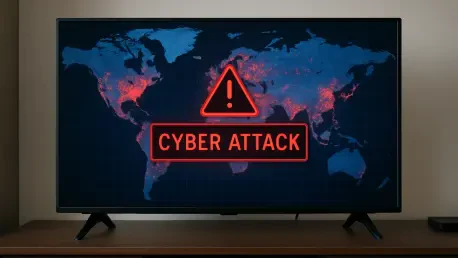

The soft glow of your smart TV screen as you stream your favorite show has become a symbol of modern convenience, but recent cybersecurity findings reveal a far more sinister reality lurking behind that familiar interface. A vast, global network of compromised Internet of Things (IoT) devices, with a heavy focus on Android-based smart TVs and streaming boxes, has been quietly conscripted into a digital army. This formidable botnet, known as Kimwolf, is not merely a theoretical threat; it is an active and evolving menace responsible for launching billions of disruptive attacks. The sheer scale of this operation is staggering, with at least 1.8 million devices across the globe infected and weaponized. This vast network of digital soldiers, operating from living rooms in countries from Brazil to the United States, demonstrates how everyday consumer electronics can be turned into instruments for widespread cyber warfare, often without the owner’s knowledge. The sophistication of the botnet allows it to do more than just overwhelm servers, turning these devices into versatile tools for a wide range of malicious activities.
The Anatomy of a Digital Menace
The Kimwolf botnet represents a significant evolution in cyber threats, leveraging a vast and diverse pool of compromised IoT devices to execute its commands. At its core, it is a distributed denial-of-service (DDoS) weapon, designed to flood target systems and networks with an overwhelming amount of traffic, rendering them inaccessible. Extensive research reveals its immense scale, with a primary focus on Android-based consumer electronics such as smart TVs, set-top boxes, and tablets from popular, often low-cost brands. The geographic distribution of these infected devices is global, with significant concentrations identified in Brazil, India, the United States, Argentina, South Africa, and the Philippines. The botnet’s power was demonstrated in a stunning four-day period in late 2023, when it generated an estimated 1.7 billion DDoS attack requests. This unprecedented level of activity caused its command-and-control (C2) domain to spike to the top of Cloudflare’s DNS rankings, a testament to the sheer volume of traffic originating from these hijacked devices.
While its DDoS capabilities are formidable, the Kimwolf botnet’s functionalities extend far beyond simple brute-force attacks, making it a more versatile and dangerous tool for its operators. The malware is compiled using the Native Development Kit (NDK), allowing it to run highly efficient code directly on the device’s hardware. This sophisticated design integrates advanced features such as proxy forwarding, which enables attackers to route their own malicious traffic through the compromised device, effectively hiding their true location and identity. Furthermore, it includes reverse shell access and file management capabilities. This gives attackers remote, administrative-level control over the infected device, allowing them to execute commands, access stored data, and potentially install other forms of malware. This multifunctionality transforms a simple smart TV or streaming box from a single-purpose DDoS bot into a persistent and adaptable foothold within a victim’s network, ready for broader offensive operations.
A Resilient and Evolving Threat
The operational resilience of the Kimwolf botnet highlights the strategic sophistication of its creators. The botnet demonstrated a remarkable ability to adapt and survive even after its infrastructure was targeted. In December, its command-and-control domains were successfully taken down on three separate occasions by unidentified security actors. For many botnets, such a disruption would be a crippling blow, severing the connection between the operators and their army of infected devices. However, the orchestrators of Kimwolf responded not by retreating but by innovating. They migrated their entire control infrastructure to the Ethereum Name Service (ENS), a decentralized domain name system built on the Ethereum blockchain. This strategic pivot makes the botnet’s command structure significantly more robust and resistant to traditional takedown methods, which typically rely on seizing or sinkholing centralized domain names. By leveraging a decentralized system, the operators have created a command hub without a single point of failure, making future disruption efforts far more complex.
This evolving threat landscape has exposed a critical and persistent vulnerability within the consumer electronics market, particularly concerning low-cost IoT devices. For end-users, the immediate recommendations for protection are clear: change default passwords, apply firmware updates whenever they become available, and perform a full device reset if any unusual behavior is detected. However, these measures are often insufficient due to a systemic issue beyond the user’s control. A significant portion of the devices targeted by Kimwolf and similar botnets are manufactured with minimal long-term support. These products are often rushed to market with little to no plan for ongoing security patches or system updates. Once a vulnerability is discovered and exploited, these devices can become permanently compromised, as the manufacturer provides no pathway to fix the flaw. This “ship and forget” model creates a perpetually vulnerable class of devices, ensuring a steady supply of potential recruits for botnet operators and leaving consumers with little recourse.
Beyond the Botnet
The emergence of the Kimwolf botnet served as a stark reminder of the hidden risks embedded in our increasingly connected homes. Its ability to hijack millions of everyday devices and adapt to countermeasures underscored a fundamental security gap in the consumer IoT industry. The migration of its control system to a decentralized platform like the Ethereum Name Service marked a tactical evolution, presenting a new and formidable challenge for cybersecurity professionals who could no longer rely on traditional domain takedowns. This incident highlighted the urgent need for manufacturers to prioritize long-term security support for their products, moving away from a model that leaves consumers perpetually vulnerable. Ultimately, the fight against such threats required a collaborative effort, pushing for higher industry standards and greater consumer awareness to secure the digital ecosystem from within.