
The undeniable effectiveness of emergency response operations in complex modern urban environments depends almost entirely on the speed and reliability of the data transmitted between command centers and frontline units during a life-threatening crisis. As the landscape of public safety evolves, the French government has recognized that antiquated voice-only radio systems no longer suffice for the high-stakes demands of contemporary disaster management. To address this gap, the nation is currently implementing the Réseau Radio du Futur (RRF), a pioneering high-speed critical communications network designed to provide secure, priority-access broadband capabilities to all emergency services. On April 2, 2026, the Agence des Communications Mobiles Opérationnelles de Sécurité et de Secours (ACMOSS) took a decisive step in this rollout by hosting an intensive training session for senior officers from the École Nationale Supérieure des Officiers de Sapeurs-Pompiers (ENSOSP). This initiative was not merely a technical briefing but a strategic immersion designed to ensure that the individuals who will lead regional fire services are fully equipped to leverage the transformative potential of this digital infrastructure.
Modernizing Public Safety Infrastructure
The Transition to Broadband Communication
The move from legacy narrowband systems to a robust broadband architecture represents a fundamental shift in how the French fire service operates on a daily basis. For decades, emergency responders relied on limited radio frequencies that struggled to handle anything beyond basic voice transmissions, often leading to bottlenecks during large-scale incidents where visual data and real-time location tracking are essential. The implementation of the RRF utilizes 4G and 5G cellular technology to provide a dedicated, high-priority layer for public safety, ensuring that critical data flows unimpeded even when commercial networks are congested or failing. During the immersion session in Paris, participants observed how the network supports high-definition video streaming, large file transfers, and instant access to complex building blueprints or chemical hazard databases directly from the field. This capability allows commanders to make more informed decisions based on visual evidence rather than relying solely on verbal descriptions from personnel on the ground.
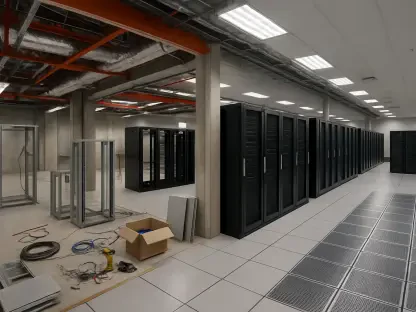
Building on this technical foundation, the training session provided senior officers with a firsthand look at the Operations Control Centre (OCC), where the theoretical advantages of the RRF become tangible operational assets. By inspecting the infrastructure that manages the network’s traffic, the officers gained insight into the levels of redundancy and cybersecurity built into the system to prevent unauthorized access or service interruptions. The agency demonstrated that the RRF is not just a future goal but a functioning reality that is currently being integrated into the national security framework. This exposure was critical for dispelling skepticism regarding the reliability of cellular-based systems compared to traditional radio. The session emphasized that the high-speed data transfer rates now available are backed by rigorous priority and pre-emption mechanisms, which guarantee that emergency traffic always takes precedence over civilian usage, even in the middle of a major public event or a widespread regional emergency.
Achieving Interoperability Across Agencies
One of the most persistent challenges in emergency management has been the fragmentation of communication tools used by different agencies, such as the police, gendarmerie, and fire services. In the past, multi-agency coordination often required clumsy workarounds or physical exchanges of hardware, which wasted precious seconds during the “golden hour” of crisis response. The RRF addresses this by providing a unified platform that facilitates seamless inter-agency interoperability, allowing different departments to communicate on shared channels without compatibility issues. During the Paris demonstrations, the future commanders explored how the network enables a common operational picture, where every involved agency sees the same data in real-time. This level of synchronization is vital for managing complex scenarios, such as terrorist attacks or natural disasters, where a unified command structure is necessary to allocate resources effectively and ensure the safety of both responders and the general public.
Moreover, the training highlighted the administrative and technical pathways required for Departmental Fire and Rescue Services (SDIS) to officially join the RRF program. It is not enough for the technology to exist; individual regional departments must have a clear understanding of how to transition their local hardware and protocols to align with the national standard. ACMOSS utilized the session to clarify these procedures, focusing on the logistical steps necessary for integrating existing local control rooms with the national broadband backbone. By involving senior leadership early in the process, the government ensures that regional specificities are considered while maintaining a cohesive national strategy. This top-down and bottom-up approach fosters a sense of ownership among fire service leaders, who are now tasked with advocating for the system’s adoption within their respective departments. The goal is to create a frictionless transition where the technical rollout is matched by an equally sophisticated operational readiness.
Leadership in the Digital Era
Cultivating a Culture of Innovation
The successful deployment of the Réseau Radio du Futur depends as much on human capital as it does on hardware and software. By targeting the senior officers currently enrolled in leadership programs at ENSOSP, ACMOSS is strategically placing the most advanced technological tools in the hands of those who will shape the future of French emergency services. This approach recognizes that the transition to a high-speed network requires a significant cultural shift within an institution that has traditionally been conservative regarding its core communication tools. The training session was designed to transform these officers into digital advocates who can lead their teams through the complexities of the modernization process. Instead of viewing the RRF as a mere replacement for old radios, the officers were encouraged to see it as a platform for continuous innovation, capable of hosting new applications and artificial intelligence tools that could further enhance operational safety and efficiency in the years ahead.
This focus on professional education ensures that when the national rollout reaches its peak, the leadership will already be fluent in the language of broadband communications. The immersion session included interactive showrooms where officers could experiment with the latest ruggedized handheld devices and vehicular systems designed specifically for the RRF. These hands-on experiences allowed the participants to evaluate the ergonomic and functional aspects of the new equipment in a simulated high-pressure environment. By understanding the practical limitations and strengths of the hardware before it reaches the front lines, these future commanders can develop better tactical protocols and training programs for their subordinates. This proactive engagement minimizes the risk of technical frustration during the initial deployment phase and ensures that the fire service maintains its high standards of operational excellence while navigating the steep learning curve of a sophisticated digital transformation.
Future Considerations for Strategic Implementation
Looking toward the continued expansion of this infrastructure, the French government focused on the long-term sustainability of the network and its ability to adapt to emerging threats. The final segments of the training emphasized that the RRF is a dynamic system that will evolve alongside advancements in mobile technology, requiring a commitment to ongoing professional development. Senior officers were briefed on the roadmap for future updates, including the integration of satellite backup systems and the expansion of coverage into the most remote and geographically challenging regions of the country. This forward-looking perspective is essential for maintaining a resilient public safety network that remains effective in the face of climate change-related disasters and other large-scale disruptions. The training underscored that the RRF is a strategic national asset that provides France with a significant advantage in managing the increasing complexity of modern incidents through a reliable and highly capable communications platform.
To maximize the benefits of the Réseau Radio du Futur, regional departments must now begin the practical work of aligning their internal infrastructure with national standards. This involves not only the procurement of compatible hardware but also the total redesign of communication protocols to take full advantage of real-time data sharing and multi-agency interoperability. Future leaders should prioritize the development of specialized training modules within their local departments to ensure that every firefighter, from the recruit to the veteran, is comfortable using the new broadband tools. Furthermore, establishing a feedback loop between local units and ACMOSS will be critical for identifying and resolving technical challenges as the network becomes more widely utilized. By viewing the RRF as a foundation for broader digital integration, the French fire service established a clear path toward a more connected, efficient, and safer future for both its personnel and the citizens they are sworn to protect.