
The Unprecedented Expansion of the Global Server Market
The sudden and massive transformation of the digital landscape has pushed the global server market into a financial stratosphere that few analysts could have predicted just a short time ago. By the close of the most recent fiscal period, quarterly revenues climbed to a historic $125.3 billion, fueling a total annual market value of $444.1 billion. This represents an astonishing 80.4% increase over previous benchmarks, signaling that the infrastructure supporting our digital world is no longer just growing; it is evolving at an exponential rate. This article explores the specific catalysts behind this explosion, focusing on the insatiable hunger for Artificial Intelligence (AI) and the specialized hardware required to sustain it.
Historical Context and the Shift Toward Accelerated Computing
The journey to these record-breaking figures began with a fundamental change in how data is processed. For decades, the industry relied on general-purpose x86 servers designed for basic enterprise tasks like file storage and web hosting. However, the rise of generative AI and complex large language models has rendered traditional CPU-centric architectures insufficient for modern needs. As workloads shifted toward massive parallel processing, the market moved away from incremental hardware updates in favor of radical new designs. This transition explains why the sector has moved from steady, predictable growth to the high-velocity surges that now define the competitive landscape.
The Dual Engines of Growth and Market Transformation
The Dominance of Hyperscalers and Accelerated Hardware
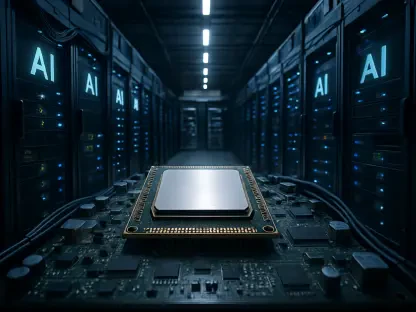
The current revenue surge is largely driven by a massive divergence in investment strategies between massive cloud service providers and traditional brick-and-mortar enterprises. While smaller organizations remain cautious, hyperscalers are funneling billions into specialized systems equipped with discrete accelerators like GPUs. These accelerated systems grew by 59.1% recently and now account for more than half of all global server revenue. This shift marks a significant milestone where high-performance computing is no longer a niche segment but the primary engine of the entire server industry.
Architectural Shifts and the Rise of Non-x86 Systems
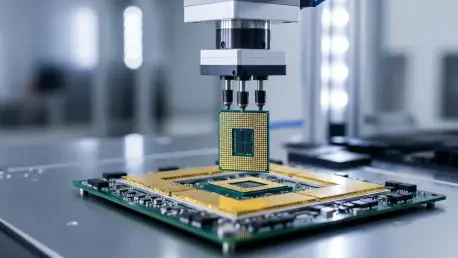
Beyond the sheer volume of sales, a profound change in internal hardware architecture is taking place. While standard x86 systems continue to grow, non-x86 architectures—including ARM-based chips and custom-designed silicon—have seen a meteoric rise of 146.4%. This trend indicates that the industry is moving toward “tailored” hardware that prioritizes energy efficiency and specific AI throughput over general-purpose flexibility. This diversification allows companies to optimize their data centers for specific tasks, though it poses a significant challenge to vendors who remain tethered to older, standardized ecosystems.
Competitive Dynamics: The Realignment of Industry Leaders
The shift toward AI-centric hardware has completely reshaped the leaderboard of server manufacturers. Dell Technologies has secured the top position by capturing 10% of the market with $12.5 billion in quarterly revenue, a success attributed to its early and aggressive adoption of accelerated computing stacks. Meanwhile, Supermicro has used its agility to achieve triple-digit growth, moving into the second-place spot. In contrast, some legacy players have experienced a decline in market share as they pivot toward edge computing and hybrid IT. This realignment shows that success in the current climate depends entirely on a company’s ability to meet the specialized demands of the AI boom.
Future Trends: Supply Constraints and Geopolitical Volatility
Looking forward, the industry faces a period where demand remains high but operational hurdles become more frequent and severe. A persistent gap between hardware needs and manufacturing capacity is expected to define the coming months, particularly regarding high-end GPUs and advanced memory components like DRAM. These shortages are likely to keep unit prices high even if shipment volumes stabilize. Furthermore, global logistics are increasingly complicated by regional instabilities, forcing manufacturers to rethink their supply chain resilience. Companies will need to navigate a volatile environment where securing components is just as important as selling the final product.
Navigating the High-Stakes Server Landscape
To thrive in this new environment, businesses must treat server procurement as a high-stakes strategic initiative rather than a routine utility expense. It is now essential for IT departments to diversify their hardware portfolios to include energy-efficient, non-x86 architectures that can handle AI workloads without spiraling power costs. Organizations should also prioritize long-term relationships with multiple vendors to mitigate the risks of component scarcity. For stakeholders, the focus must remain on the durability of the supply chain, as the ability to actually deliver hardware has become the most critical competitive advantage in a market where demand shows no signs of slowing.
The Enduring Impact of the AI Infrastructure Boom
The record-breaking revenue figures observed recently confirmed that the global shift toward AI was a permanent structural change in the economy. The massive transition toward accelerated computing and bespoke silicon signified that data processing moved into a more intensive and specialized phase. As the industry worked through the complexities of supply chain bottlenecks and shifting geopolitical risks, the underlying requirement for compute power remained the dominant force in the technology sector. Ultimately, the organizations that succeeded were those that recognized the server as the foundational asset of the modern era.