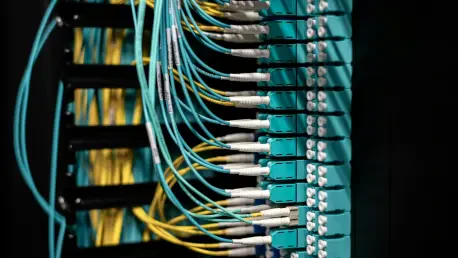

The digital landscape of South Wales is undergoing a profound transformation as high-capacity connectivity moves from the periphery into the very heart of the capital’s commercial district. By extending the next-generation full-fiber network from the existing Core Valley Lines infrastructure into Cardiff’s city center and the Cardiff Bay area, TfW ffeibr is establishing a robust digital spine that bridges the gap between historical industrial hubs and modern financial centers. This initiative does not merely provide faster internet; it creates a unified technological ecosystem designed to foster economic growth across the Cardiff Capital Region through 2026 and beyond. By leveraging the physical routes of the South Wales Metro, this expansion minimizes traditional deployment barriers, allowing for a rapid rollout of high-bandwidth services that connect the Valleys more effectively to the metropolitan economy. Such a strategic alignment of transportation and telecommunications infrastructure ensures that physical mobility is now matched by digital accessibility, creating a foundation for sustained regional innovation.
Technical Foundations for Advanced Digital Operations
The architectural shift toward a full-fiber infrastructure brings a suite of technical capabilities that are essential for the survival of contemporary data-driven enterprises. Unlike older copper-based or hybrid systems, this network offers symmetrical ultrafast upload and download speeds, which are critical for the seamless operation of cloud-based services and real-time data processing. For creative industries located in Cardiff Bay and the city center, this means the ability to transfer massive high-definition files or render complex digital assets without the latency issues that have historically hampered productivity. Furthermore, the network provides resilient pathways to various data centers, ensuring that critical business applications remain online even during peak usage or localized outages. This level of reliability acts as a magnet for tech startups and international firms that require high-availability environments to manage global operations. The presence of such a high-performance backbone effectively future-proofs the city against the increasing bandwidth demands of emerging technologies like artificial intelligence and advanced spatial computing.
Strategic Reinvestment and Regional Sustainability
The economic impact of this network expansion is further amplified by a unique social value model that ensures financial returns remain within the local ecosystem. Instead of siphoning profits to external shareholders, all revenue generated by the ffeibr network is reinvested back into the Welsh public sector through Transport for Wales, creating a self-sustaining cycle of regional development. This approach allows the public sector to modernize its own services—such as health care accessibility and digital education—while simultaneously supporting the private sector’s demand for better connectivity. Collaborative efforts with local build-partners, such as Gforce Telecoms, highlight a commitment to utilizing regional expertise to solve local infrastructure challenges. Looking ahead, stakeholders must prioritize the integration of this fiber spine into broader urban planning strategies to maximize the return on investment. Future considerations should include incentivizing small businesses to adopt these high-speed services and exploring how this infrastructure can support the rollout of 5G small cells and smart city sensors to improve urban management and environmental monitoring across the capital region.