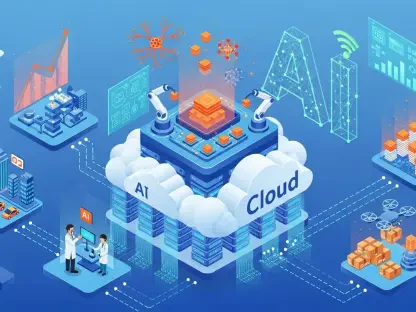

The global telecommunications landscape is currently experiencing a profound structural evolution as operators move beyond basic automated scripts toward fully autonomous systems capable of independent reasoning. While traditional automation has long focused on the execution of static, predefined workflows, true network autonomy requires an intelligent core that understands operator intent and navigates complex trade-offs in real time. NVIDIA has addressed this requirement by launching a comprehensive suite of AI technologies, including the Open Nemotron-based Large Telco Model and specialized Agentic AI Blueprints. These innovations provide the essential framework for self-managing operations, allowing service providers to transition from rigid programming to sophisticated, reasoning-capable architectures. By positioning itself as a primary architect of these self-governing systems, the technology provider offers the tools necessary for networks to act as cognitive entities rather than mere sets of instructions. This shift is critical as modern infrastructure demands higher levels of adaptability to handle the surging data requirements of current digital ecosystems.
Defining the Core Shift Toward Agentic Autonomy
A fundamental component of this strategy involves establishing a clear distinction between simple automation and the more advanced concept of network autonomy. While automation remains a high priority due to its immediate return on investment, achieving true autonomy necessitates an agentic ecosystem where the network possesses a central reasoning brain supported by functional AI agents. These agents must be capable of seamless communication, utilizing advanced simulation tools to validate potential actions and learning from specific operational outcomes over time. This structural framework ensures that artificial intelligence does not merely perform isolated tasks but instead understands the underlying logic and methodology required for complex network management. By moving toward this model, operators can ensure that their infrastructure is capable of high-level decision-making that mirrors the nuance of human intervention while maintaining the speed and precision of digital systems. This approach effectively removes the limitations of static automation, paving the way for a more resilient and responsive telecommunications environment.
The foundation of this burgeoning ecosystem is the Open Nemotron-3 Large Telco Model, a specialized 30-billion-parameter model designed specifically for the unique technical language of the telecommunications sector. Developed in collaboration with AdaptKey AI, this model undergoes extensive fine-tuning on industry standards and synthetic logs to effectively manage critical workflows such as fault isolation and remediation planning. Because the model is offered as an open-source resource, service providers gain unprecedented transparency into its training methodologies and can deploy the system within their own on-premises environments. This level of sovereignty is vital for telecommunications companies that must maintain strict control over proprietary data and ensure the security of national infrastructure. The open nature of the model also allows for deep customization, enabling telcos to integrate their unique operational data into the reasoning process. This creates a bespoke intelligence that is intimately familiar with the specific nuances and requirements of their particular network architecture and service demands.
Bridging the Gap Between Human Expertise and AI
To ensure that AI agents operate with the proficiency and safety-conscious mindset of veteran engineers, a new framework has been established for training these reasoning entities through expert knowledge transfer. In a major partnership with Tech Mahindra, an implementation guide was created to document and convert the experiential knowledge of Network Operations Center staff into structured reasoning traces. These traces capture every micro-decision made by a human expert during an incident resolution, including the specific tools utilized and the logical sequences followed to reach a successful outcome. This process effectively translates decades of human experience into a format that the AI can digest and replicate with high fidelity. By using the NVIDIA NeMo-Skills pipeline, operators can fine-tune their models on these traces, ensuring the resulting agents follow a logical and validated sequence of checks. This prevents the AI from jumping to premature conclusions and ensures that every action taken on the network is backed by a verifiable chain of reasoning that aligns with established best practices.
Building on this foundation of expert knowledge, specialized blueprints have been introduced to serve as reference architectures for high-value use cases like intent-driven energy saving. Within the Radio Access Network, which historically accounts for the vast majority of a mobile operator’s power consumption, these blueprints utilize synthetic traffic data to help AI agents propose energy policies. These policies are not immediately applied to the live environment but are instead tested within a simulated closed-loop system to ensure that power reduction does not negatively impact the subscriber experience. This methodology allows operators to aggressively pursue green initiatives and operational cost reductions without the risk of service degradation. By validating these complex energy-saving strategies in a virtual space before deployment, companies can achieve a more sustainable balance between environmental responsibility and performance reliability. The integration of such specialized agents represents a move toward targeted intelligence that addresses the most pressing financial and environmental challenges facing modern service providers.
Managing Complex Configurations and Global Resilience
The application of these AI blueprints extends beyond energy efficiency to encompass the management of complex, multi-vendor environments and the enhancement of overall network resilience. Global operators are now implementing autonomous platforms that monitor network health in real time and recommend configuration changes with built-in governance safeguards. These systems are designed with automated rollback mechanisms that can instantly revert any configuration if unintended negative consequences are detected during the implementation phase. This level of intelligent oversight is particularly critical during sudden traffic surges or following unexpected outages, where AI agents can intelligently admit users back onto the network in a controlled and prioritized manner. Such strategies prevent the secondary congestion events that often plague manual recovery efforts, ensuring a smoother return to normal operations. By automating the governance of network changes, operators can maintain a high degree of stability even as the underlying technology grows increasingly heterogeneous and difficult to manage through traditional means.
The final element of this technological progression involves the orchestration of multiple specialized agents working in concert across various workloads and distributed containers. Through collaborations with industry partners like BubbleRAN, the focus has shifted toward a multi-agent approach where monitoring, configuration, and validation agents coordinate their actions seamlessly. This democratization of high-level artificial intelligence through open-source initiatives and standardized frameworks, such as those supported by the GSMA, is fostering a new era of transparent and self-managing infrastructure. These advancements represent a practical shift toward the industrialization of AI, addressing the urgent need for lower operational costs and increased infrastructure resilience on a global scale. Leaders in the sector recognized that the future of connectivity depended on the ability to manage these systems with minimal human friction. They established clear pathways for adopting agentic workflows, focused on building local AI expertise, and integrated these reasoning models into existing security protocols to ensure that every autonomous decision remained within the bounds of safety and efficiency.