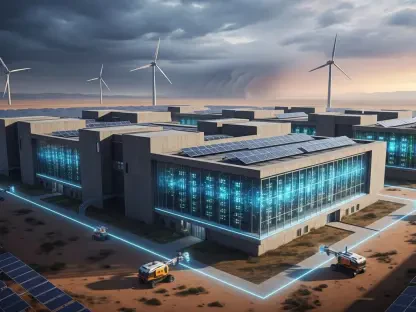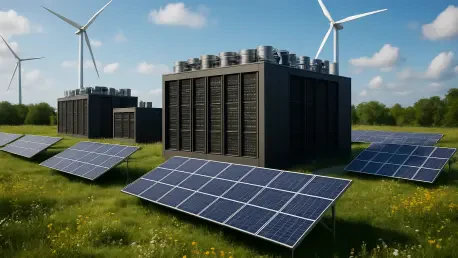

Hidden within the drawers of billions of households lies a latent computational force capable of rivaling the world’s most sophisticated server farms. Every year, millions of high-specification handsets are retired, not because they are broken, but because of the relentless cycle of consumer upgrades. This massive accumulation of silicon and circuitry represents more than just electronic waste; it is a decentralized supercomputer waiting to be activated. By repurposing these devices into organized clusters, the technology sector is beginning to dismantle the idea that data processing must occur in monolithic, energy-hungry warehouses.
The Billion-Device Supercomputer Hiding in Your Pocket
The traditional image of a data center—a monolithic warehouse humming with energy-hungry servers—is facing a challenge from an unlikely source: the recycled smartphone. While society often views old handsets as electronic waste, their sophisticated processors and integrated connectivity are being reimagined as the building blocks of a decentralized digital infrastructure. By clustering the collective power of mobile devices, organizations are discovering that the hardware once used for social media and selfies can function as a high-performance, agile micro data center. These units provide a density of computation that was once reserved for specialized laboratory equipment, yet they operate within a much smaller physical and thermal envelope.
This transition from consumer gadget to infrastructure component represents a fundamental shift in how hardware value is calculated. Instead of a linear path from purchase to landfill, the smartphone now enters a circular lifecycle where its secondary utility as an edge node may last as long as its primary life as a communication tool. The sheer volume of these devices ensures that the potential supply of edge computing power is virtually inexhaustible, provided that the software orchestration layers can keep pace with the hardware availability.
Redefining Infrastructure Through Mobile Decentralization
In an era where “the edge” is the new frontier for technology, the demand for localized processing is skyrocketing. Standard data center models struggle with the high costs of real estate and the massive energy footprints required to bring computing closer to the end-user. Smartphones offer a unique solution to these trends by providing ARM-based efficiency in a compact form factor. This shift matters because it addresses the growing tension between our need for instant data processing and the global imperative to reduce industrial carbon emissions and electronic waste. Localized clusters eliminate the need for long-distance data transmission, which significantly reduces the latency and power consumption associated with cloud-only architectures.
Moreover, the decentralization of hardware reduces the risk of single-point failures that plague massive centralized facilities. By spreading workloads across a fleet of mobile devices, a network becomes inherently more resilient. If one node fails or loses power, the remaining units in the cluster can redistribute the task seamlessly. This level of organic redundancy is difficult and expensive to replicate in traditional server environments but comes naturally to a distributed network of battery-backed mobile handsets.
The Strategic Architecture: Smartphone Micro-Clusters
Unlike massive server farms that require dedicated power grids, smartphone clusters can be deployed in unconventional spaces, from remote field offices to high-density urban environments. This locational flexibility allows for the integration of computing power directly into the existing urban fabric without the need for new, disruptive construction. Billions of smartphones are retired annually; utilizing these devices for edge computing creates a sustainable lifecycle, drastically lowering the cost of entry for building robust infrastructure. Furthermore, mobile chips are designed for thermal efficiency and low power draw, making smartphone-based data centers significantly more sustainable than traditional x86-based server architectures.
By hosting Large Language Models (LLMs) on local mobile clusters, businesses can achieve real-time AI responses while keeping sensitive data within a secure, localized network. This proximity to the data source is vital for applications in autonomous systems, healthcare monitoring, and industrial automation where every millisecond counts. The ability to process complex AI inference locally, using low-power ARM architecture, transforms the smartphone from a mere portal into a sophisticated processing hub that serves the immediate needs of its surrounding environment.
Analyzing the Technical Frontiers: Operational Hurdles
A data center is not defined by its physical footprint, but by its function: the ability to process, store, and manage data at scale. This perspective, shared by emerging infrastructure architects, highlights the viability of ARM-based clusters. However, experts note that the “GPU deficit” remains a primary concern, as mobile GPUs are not yet optimized for the massive parallel processing required by high-end enterprise AI. While mobile chips excel at sequential tasks and energy management, they currently lack the raw throughput of dedicated enterprise graphics cards found in hyperscale facilities.
Research into orchestration tools suggests that while software like Kubernetes is being adapted for mobile, the reliability and redundancy of these clusters still require significant development compared to traditional facilities. Maintaining uptime across hundreds of distinct consumer-grade batteries and power management systems presents a unique engineering puzzle. Thermal management also remains a factor; while mobile chips are efficient, packing dozens of them into a tight enclosure requires innovative passive or active cooling strategies to prevent performance throttling during sustained heavy workloads.
Implementing a Smartphone-Based Edge Strategy
Organizations looking to adopt this paradigm should begin by auditing internal hardware lifecycles to evaluate the volume of retired mobile devices available for a pilot “second-life” cluster. It is essential to prioritize ARM-native workloads, such as web hosting, IoT data aggregation, or lightweight AI inference, which are naturally compatible with these chip architectures. Deploying specialized orchestration layers, such as adapted containerization tools, allows for the management of workloads across hundreds of individual mobile units to ensure system stability. Finally, quantifying the reduction in e-waste and energy consumption helps align the edge computing strategy with broader corporate sustainability goals.
The successful deployment of mobile-edge clusters demonstrated that infrastructure did not have to be rigid or resource-heavy to be effective. Decision-makers realized that the path toward carbon neutrality involved looking at existing resources with a fresh perspective. Instead of waiting for next-generation silicon, companies began integrating repurposed mobile hardware into their operational fabric, which immediately lowered overhead. This evolution in thought proved that sustainability and high-performance computing were not mutually exclusive concepts. Moving forward, the industry prepared for a future where the cloud was no longer a distant warehouse, but a localized, breathing network of devices that lived alongside the users they served.