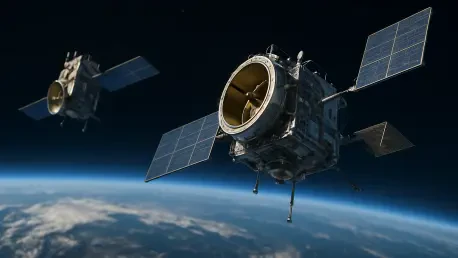

The ambitious goal of blanketing the globe with high-speed, low-latency internet from space presents an unprecedented data processing challenge, requiring networking hardware that is not only immensely powerful but also resilient enough to survive the unforgiving environment of low-Earth orbit. In a landmark collaboration set to redefine the capabilities of satellite internet, Starlink has partnered with Xsight Labs, a frontrunner in high-performance connectivity silicon. This strategic alliance will see Starlink integrate Xsight Labs’ cutting-edge X2 Programmable Ethernet switch into the core of its next-generation Starlink V3 satellites. This move is designed to create a high-speed networking backbone capable of managing the massive data throughput required to deliver gigabit-speed connectivity to users worldwide, effectively overcoming the intricate routing and processing hurdles inherent in a vast, dynamic satellite constellation. The partnership signifies a critical step toward making space-based internet a powerful competitor to terrestrial fiber, especially for rural and underserved communities across the planet.
A Monumental Leap in Orbital Throughput
Starlink’s next-generation V3 satellites represent a quantum leap in capacity, engineered to handle data on a scale previously unseen in commercial space ventures. Each satellite is designed to support over 1 terabit per second (Tbps) of fronthaul throughput, which marks a staggering tenfold increase compared to the capacity of the preceding V2 Mini satellites. This immense bandwidth is essential for managing the intricate web of data flowing through the constellation. Beyond the raw throughput, the system must also process 160 gigabits per second (Gbps) of uplink capacity from ground stations and users. The onboard networking hardware is tasked with a massive volume of real-time computational work, including routing traffic across inter-satellite optical links that form a mesh network in space. Furthermore, the system must execute complex orbital routing decisions and perform adaptive beam steering to dynamically allocate connectivity to a vast and ever-shifting global customer base, ensuring a stable and high-quality connection for every user on the ground.
The operational demands placed upon this orbital network are far beyond what conventional terrestrial hardware can handle, primarily due to the unique combination of extreme performance requirements and the hostile environment of space. The system must achieve ultra-low latency to be competitive with ground-based fiber optics, meaning data must be processed and routed in fractions of a second as it travels thousands of miles. This requires a networking solution that is not only fast but also incredibly power-efficient, as every watt of energy is a precious commodity on a satellite powered by solar panels. The constant exposure to radiation, extreme temperature fluctuations, and the intense vibrations of a rocket launch necessitate hardware that has been specifically hardened for space deployment. These combined challenges have driven the need for a new class of networking silicon, one that blends bleeding-edge performance with an unparalleled level of resilience and adaptability to pave the way for a truly global internet service.
The Engineered Solution for Space
At the heart of Starlink’s next-generation architecture lies the Xsight X2 switch, a silicon marvel specifically engineered to meet the monumental demands of orbital networking. This advanced chip provides a formidable 12.8 Tbps of switching capacity, serving as the central nervous system for the V3 satellite’s data processing operations. Built using TSMC’s advanced N5 manufacturing process and leveraging cutting-edge 100G SerDes technology, the X2 switch creates an ultra-low-latency and remarkably power-efficient data path. This efficiency is critical for extending the operational lifespan and capability of each satellite within the constellation. By providing a robust and high-performance foundation, the X2 switch enables each satellite to function as a powerful, autonomous routing node in the sky. This capability allows the network to intelligently manage data flows, minimize transmission delays, and deliver a seamless, high-speed internet experience to users located anywhere on Earth, effectively bridging the digital divide with unprecedented technological prowess.
What truly sets the Xsight X2 switch apart is its combination of raw power and intelligent design, making it uniquely suited for the dynamic challenges of a low-Earth orbit constellation. A key attribute of the X2 is its fully programmable architecture, which grants Starlink the flexibility to adapt the network’s behavior in real time. This adaptability is crucial for responding to evolving orbital networking demands, deploying new features via software updates, and optimizing performance for diverse workloads without requiring physical hardware changes. Furthermore, the X2 switch has been rigorously validated and hardened for space deployment. It has successfully passed a comprehensive suite of environmental qualification tests designed to simulate the harshest conditions of a mission, including extreme vibration, sustained radiation exposure, and significant thermal stress. This proven resilience ensures that the networking core of the V3 satellites will operate reliably and consistently, forming the dependable backbone required to maintain a global, high-performance internet service for years to come.
A New Era of Satellite Connectivity
The consensus from the leadership of both companies underscored the transformative potential of this collaboration, framing it as a cornerstone for the future of global communications. Michael Nicolls, VP of Starlink Engineering at SpaceX, affirmed that the X2 chip would become an “integral part of the terabit routing needs of the next generation of Starlink satellites,” highlighting the chip’s critical role in realizing the constellation’s ambitious performance goals. This sentiment was echoed by Yossi Meyouhas, CEO of Xsight Labs, who emphasized that the X2 switch was engineered to deliver a high-performance, resilient, and ultra-low-power solution capable of handling the massive data flows and extreme conditions intrinsic to LEO networking. With the X2 switch already available and slated for deployment in the V3 satellites launching aboard SpaceX’s Starship vehicle, this partnership marked a pivotal moment. It represented the successful fusion of cutting-edge silicon design with visionary aerospace engineering, setting a new and formidable standard for the capabilities of satellite-based internet infrastructure.