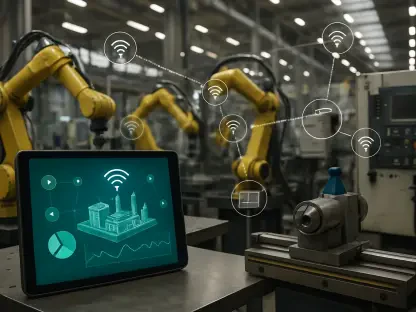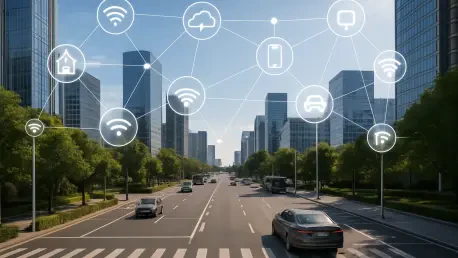

The urban landscape of Tijuana is currently witnessing a profound structural metamorphosis that far exceeds the scope of a standard municipal upgrade or a simple cosmetic renovation of public spaces. As the city moves away from its historical identity as a strictly industrial border hub, it is embracing a future defined by a sophisticated network of interconnected technologies known collectively as the Internet of Things. This transition is not merely about installing new hardware but involves a fundamental reimagining of how a major metropolis functions at its most granular level. By embedding sensors into the very fabric of the city—from the transit systems that ferry thousands of workers daily to the streetlights that illuminate its growing neighborhoods—Tijuana is creating a living, breathing digital nervous system. This evolution is driven by the strategic need to manage rapid population growth while maintaining economic competitiveness in a global market that increasingly rewards digital integration and high-tech infrastructure.
The motivation behind this technological revolution is rooted in a desire to drastically enhance the quality of life for residents while simultaneously optimizing the use of increasingly scarce municipal resources. Tijuana’s unique geographical position on the United States-Mexico border provides a distinct advantage, serving as a high-stakes laboratory for cross-border innovation and attracting significant foreign investment from tech giants looking for a responsive urban partner. However, the successful adoption of these complex systems requires more than just technical proficiency; it necessitates a total overhaul of the city’s governance models. Policy must now move at the speed of innovation to ensure that these new systems are not only efficient but also sustainable and ethically managed. This intersection of urban planning and technological foresight is setting the stage for Tijuana to redefine its role on the international stage as a leader in smart city development.
Strategic Urban Upgrades and Infrastructure
Managing Urban Flow and Public Services
The practical application of IoT in Tijuana finds its most visible expression in the realm of smart traffic management, where the city is tackling the age-old problem of congestion with data-driven precision. By deploying a comprehensive grid of advanced sensors and utilizing big data analytics, municipal planners are creating a fluid traffic environment where signals are no longer dictated by rigid timers but by real-time vehicle density. This adaptive approach allows the city to breathe more easily, reducing the frustrating idle times that contribute to both economic loss and increased carbon emissions. In a metropolis that serves as a vital artery for international trade, maintaining the flow of movement is not just a matter of convenience; it is a critical requirement for maintaining industrial productivity and protecting the environmental health of the region. This shift toward intelligent mobility represents a departure from reactive road expansion toward a more sophisticated, software-oriented solution to urban density.
Beyond the movement of vehicles, Tijuana is also revolutionizing its essential public services through the implementation of “Logistics 4.0” in its waste management systems. By installing fill-level sensors in waste receptacles across the city, the sanitation department has moved away from inefficient, fixed collection schedules toward a highly optimized, on-demand service model. This transition significantly reduces the fuel consumption of collection fleets and prevents the unsanitary overflow of bins, which directly improves public health and the aesthetic quality of urban corridors. Furthermore, this sensor-rich environment extends to environmental monitoring, where continuous streams of data regarding air and water quality are now available to city officials in real-time. These digital tools empower authorities to identify pollution hotspots with surgical accuracy, allowing for proactive interventions before localized issues escalate into widespread public health crises. This data-centric approach to environmental stewardship marks a new era of transparency and accountability in municipal management.
Safety and Energy Efficiency Initiatives
The modernization of Tijuana’s physical infrastructure is perhaps most evident in the massive overhaul of the city’s lighting systems, which now serve as a dual-purpose network for energy efficiency and public safety. By transitioning to a grid of LED streetlights equipped with sophisticated motion sensors and ambient light detectors, the city has successfully slashed its municipal energy consumption by ensuring that electricity is only used when and where it is truly needed. These “smart” lights dim during periods of inactivity and brighten instantly when they detect pedestrians or vehicles, creating a responsive environment that lowers costs without sacrificing visibility. This infrastructure serves as a foundational layer for the city’s digital canopy, providing the necessary power and connectivity points for a variety of other IoT applications. The resulting energy savings are being reinvested into further technological expansions, creating a self-sustaining cycle of innovation that benefits the municipal budget and the environment simultaneously.
Parallel to energy initiatives, the city has integrated connected cameras and acoustic sensors into its public safety framework to provide law enforcement with unprecedented situational awareness. This technology allows for a rapid, data-informed response to emergencies, utilizing gunshot detection systems that can pinpoint the location of an incident within seconds, often before a 911 call is even placed. These sensors provide critical, real-time evidence for investigators and help to shorten response times during life-threatening situations, significantly enhancing the effectiveness of traditional policing. By fostering a more secure urban atmosphere, these technological tools help to build community trust and encourage the use of public spaces, which is vital for the social fabric of a growing city. The integration of these systems demonstrates a commitment to using technology not as a replacement for human oversight, but as a powerful force multiplier that enables a more agile and responsive emergency service infrastructure for all residents.
Governance, Policy, and Political Dynamics
Establishing the SCPolíticas Framework
The term “SCPolíticas” has emerged as the defining label for the regulatory and ethical architecture that supports Tijuana’s digital transformation, serving as a necessary safeguard against technological chaos. Without a robust policy framework, the deployment of pervasive IoT devices risks becoming intrusive or uncoordinated, potentially undermining the very public trust required for its success. These policies are designed to address complex questions of data privacy and ethics, establishing clear guidelines on how information is collected, who owns the resulting datasets, and who is granted access to them. By prioritizing the protection of civil liberties, the city is attempting to ensure that its smart infrastructure remains a tool for empowerment rather than a mechanism for unwarranted surveillance. This proactive stance on data governance is essential for fostering a collaborative relationship between the city government and the citizens whose daily movements generate the data.
To guarantee that the smart city remains adaptable and resilient over the long term, the SCPolíticas framework mandates strict adherence to standards of interoperability between different technological platforms. This strategic requirement prevents the city from falling into the trap of “vendor lock-in,” where a single provider controls a critical piece of infrastructure with proprietary code that cannot communicate with other systems. Instead, Tijuana is championing an open-architecture approach where traffic lights, emergency vehicles, and utility grids can exchange information seamlessly regardless of the manufacturer. Furthermore, this framework actively encourages the formation of public-private partnerships, which are essential for securing the massive capital investment and specialized technical expertise required for such a large-scale project. By promoting open data initiatives, the city is also fueling a local ecosystem of innovation, allowing homegrown entrepreneurs and researchers to build their own applications and solutions on top of the municipal data grid.
Navigating Political Cycles and Public Perception
The momentum of smart city initiatives in Tijuana is inextricably linked to the stability of local leadership and the often-volatile nature of political cycles. A visionary administration can act as a powerful catalyst, accelerating project timelines and clearing bureaucratic hurdles that might otherwise stall the rollout of new technology. However, the inherent risk in these long-term projects is the potential for a shift in political power to lead to the sudden abandonment of digital infrastructure projects initiated by predecessors. Because digital upgrades are often “invisible” compared to traditional ribbon-cutting projects like bridges or parks, they require a specific type of political courage to fund and maintain. Balancing the immediate, visible needs of the electorate with the long-term, strategic benefits of a connected city remains one of the most significant challenges for Tijuana’s current and future decision-makers as they navigate their budgetary priorities.
Public perception plays an equally critical role in determining the political viability of IoT deployments, as the success of these programs depends heavily on community buy-in. If residents perceive smart city technologies as nothing more than expensive surveillance tools or a waste of public funds, the political support for these initiatives can evaporate almost overnight. To counter this, city leaders must engage in what is increasingly known as “digital diplomacy,” a practice of clearly communicating the tangible, everyday benefits of a connected urban environment to the public. When citizens can see measurable improvements—such as a fifteen-minute reduction in their daily commute or a more responsive trash collection service—they are far more likely to support the continued expansion of the smart city grid. This ongoing dialogue between the government and the governed is essential for ensuring that the technological evolution of Tijuana remains aligned with the actual needs and desires of its diverse population.
Future Outlook and Overcoming Obstacles
Addressing Technical and Social Hurdles
Despite the impressive strides made in recent years, Tijuana continues to face several daunting hurdles that could potentially impede the full realization of its smart city ambitions. The most pressing of these is the existence of significant infrastructure gaps, particularly regarding the reliability of the local power grid and the consistency of high-speed internet access in outlying districts. Without a truly robust and universal connectivity layer, the benefits of IoT will remain fragmented, creating “islands of innovation” rather than a cohesive smart territory. Cybersecurity also looms large as a paramount concern; as the city becomes increasingly reliant on digital controls for its water supply, traffic grid, and emergency services, its “attack surface” for potential hackers grows exponentially. Protecting this critical infrastructure requires a level of constant vigilance and the implementation of sophisticated, multi-layered security protocols that must be updated as quickly as the threats against them evolve.
Beyond the technical requirements, there is a critical social imperative to bridge the digital divide to ensure that the smart city transformation is inclusive of all socioeconomic strata. If the most advanced technological features are only deployed in affluent business districts or gated communities, the city risks exacerbating existing inequalities and creating a two-tiered urban experience. Consequently, municipal policies must focus intensely on providing digital literacy programs and ensuring affordable high-speed access for underserved neighborhoods. Furthermore, the task of merging legacy physical systems with cutting-edge IoT platforms is a monumental engineering challenge that requires a highly specialized workforce. To meet this demand, the city is fostering partnerships with local universities to cultivate a talent pipeline of engineers, data scientists, and urban planners who are equipped to manage the complexities of a 21st-century metropolis. This investment in human capital is just as vital as the investment in hardware for the city’s long-term resilience.
Projecting the Next Phase of Integration
As Tijuana moves into the next phase of its evolution, the focus is shifting toward a more granular and predictive integration of data across all municipal departments. Future trends point toward the management of hyper-localized micro-environments, where sensors are utilized to optimize the performance of specific public squares, parks, or even individual buildings in real-time. This level of detail will allow for the precise management of resources, such as irrigation systems that only activate when soil sensors detect a specific level of dryness or public lighting that adjusts to the social patterns of a specific neighborhood. Moreover, the transition from real-time monitoring to predictive analytics marks a significant milestone in urban management. By using artificial intelligence to analyze historical data patterns, the city will soon be able to anticipate traffic bottlenecks or equipment failures before they actually occur, allowing for preemptive maintenance and smoother daily operations for the entire population.
The hallmark of this coming era will be a vastly enhanced level of citizen engagement, facilitated by mobile applications that provide a direct, digital line of communication to city hall. This “participatory urbanism” will allow residents to report localized issues, such as potholes, broken lights, or water leaks, with a simple tap on their smartphones, ensuring that municipal services are more responsive than ever before. This transparency not only improves the efficiency of repairs but also empowers the electorate by giving them a tangible role in the upkeep and improvement of their city. As Tijuana continues to refine its unique blend of aggressive technological adoption and thoughtful policy-making, it is positioning itself as a primary model for other Latin American cities seeking to modernize their infrastructure. The path forward involves a continuous process of learning and adaptation, ensuring that the city’s digital identity remains a reflection of its vibrant, industrious, and forward-looking community.
In retrospect, the initial phase of Tijuana’s digital transformation succeeded because it focused on solving concrete, everyday problems like traffic congestion and waste management through the clever application of sensor technology. Moving forward, the city must transition from these successful pilot programs to a holistic, integrated urban operating system that prioritizes cybersecurity and social equity above all else. Local leaders should prioritize the establishment of a permanent, non-partisan office of digital innovation to ensure that these multi-year projects survive the shifts in political administrations. By investing in a robust cybersecurity framework today and ensuring that high-speed connectivity reaches the most marginalized neighborhoods, Tijuana set a new standard for how border cities can navigate the complexities of the modern era. The focus shifted from merely being a “connected city” to becoming a “resilient city,” where technology serves as a foundation for a more equitable and sustainable urban future.