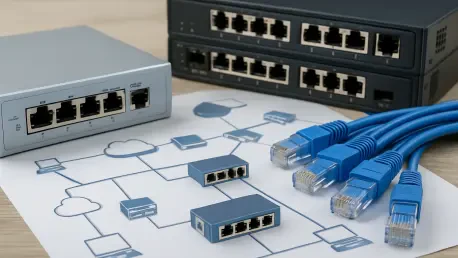

The invisible architecture that powers the modern global economy is undergoing a transformation of unprecedented scale, positioning the enterprise networking market for explosive growth. This critical sector is projected to expand from its current valuation to an estimated $150 billion by 2035, advancing at a steady compound annual growth rate of 5.3% over the coming decade. This surge is far more than a simple increase in spending; it signifies a fundamental reinvention of how businesses connect, secure, and manage their digital operations. A confluence of powerful technological shifts, evolving workplace dynamics, and an ever-present threat landscape is compelling organizations to rethink their networks from the ground up, moving from a traditional utility to the strategic core of their digital enterprise. This evolution is not just about faster speeds but about building intelligent, resilient, and agile infrastructures capable of supporting the next wave of business innovation.
The Core Drivers Fueling Market Expansion
The relentless migration of business operations and data to cloud environments stands as the foremost catalyst propelling the enterprise networking market forward. As organizations increasingly embrace a mix of public, private, and hybrid cloud strategies, the demand for sophisticated networking solutions has become paramount. These solutions must guarantee seamless, high-performance, and secure connectivity between on-premise data centers and disparate cloud platforms. This requirement necessitates advanced network architectures capable of intelligently managing complex traffic flows, optimizing application performance across distributed environments, and providing the agility needed to scale resources on demand. Simultaneously, the global normalization of remote and hybrid work models has profoundly reshaped networking requirements, forcing businesses to provide secure, reliable, and high-speed access to corporate resources for employees located anywhere in the world. This has fueled the widespread adoption of technologies like Virtual Private Networks, Software-Defined Wide Area Networking (SD-WAN), and integrated Secure Access Service Edge (SASE) frameworks, which merge networking and security into a unified, cloud-native service to support a borderless workforce.
Beyond the push for operational agility, defensive imperatives are also forcing significant investment in network modernization. The digital landscape is fraught with increasingly sophisticated cyberattacks, including ransomware, phishing, and persistent network intrusions, making robust network security a non-negotiable aspect of business continuity. Enterprises are compelled to make substantial investments in a multi-layered security posture, spurring demand for next-generation firewalls, intrusion detection and prevention systems, and the implementation of zero-trust networking principles, which operate on the assumption that no user or device is trustworthy until verified. Compounding this challenge is the exponential proliferation of Internet of Things (IoT) devices, from sensors in manufacturing plants to smart devices in corporate offices. This explosion of connected endpoints generates unprecedented volumes of data, requiring enterprise networks that can offer higher bandwidth, lower latency, and unwavering reliability to support the constant information flow and ensure the operational integrity of these complex ecosystems.
Emerging Opportunities for Innovation and Growth
A significant opportunity for growth lies in the migration from traditional, hardware-centric wide-area network (WAN) architectures to more agile, software-defined models that can adapt to the dynamic needs of modern business. SD-WAN and SASE solutions are at the forefront of this transformation, offering centralized management, enhanced application performance, inherent security, and significant cost savings over legacy systems. These technologies are highly attractive to organizations seeking to modernize their network infrastructure, providing the flexibility to prioritize critical application traffic and secure connections for a distributed workforce without the complexities of managing disparate point solutions. This shift represents not just a technological upgrade but a strategic move toward a more responsive and cost-effective operational model, enabling businesses to innovate faster and adapt quickly to market changes. The growing appeal of these software-defined approaches is creating a fertile ground for vendors and service providers that can deliver integrated, easy-to-manage solutions.
The integration of Artificial Intelligence (AI) and Machine Learning (ML) is creating another powerful frontier in network management, paving the way for truly intelligent and autonomous networks. AI-powered platforms can proactively monitor network health, predict potential failures before they occur, automate complex troubleshooting processes, and dynamically optimize bandwidth allocation based on real-time demand. This paradigm of “intelligent networking” helps organizations drastically reduce downtime, improve operational efficiency, and free up skilled IT staff to focus on more strategic initiatives. As network complexity continues to increase, many organizations, particularly small and medium-sized enterprises (SMEs), are choosing to outsource their networking operations, driving strong demand for managed service providers (MSPs). Furthermore, the push to process data closer to its source to reduce latency is fueling the growth of edge computing. This trend creates a demand for enterprise networking solutions that can effectively support highly distributed architectures, connecting and managing countless edge devices and micro-data centers across industries like manufacturing, retail, and healthcare.
Navigating the Markets Inherent Challenges
Despite the immense opportunities, the path to network modernization is not without its obstacles, chief among them being the substantial initial capital expenditure required. The cost of acquiring advanced hardware like next-generation routers and switches, implementing sophisticated security solutions, and recruiting or training IT professionals with the necessary skills presents a significant barrier to entry. This financial hurdle is particularly challenging for small and medium-sized enterprises that operate with more constrained budgets, potentially delaying their ability to adopt the very technologies that could enhance their competitiveness. This economic reality forces many organizations to take a more phased approach to upgrades, balancing immediate needs with long-term strategic goals and carefully evaluating the total cost of ownership against the potential return on investment.
Furthermore, the operational complexity of managing modern IT environments poses a persistent challenge for technical teams. A typical enterprise network today is a heterogeneous mix of on-premise systems, multiple cloud services from different providers, and a variety of remote access solutions. Ensuring consistent performance, unified security policies, and seamless integration across these diverse and often siloed environments requires advanced management tools and a high level of specialized expertise. The threat of vendor lock-in adds another layer of complexity; some vendors create proprietary, closed ecosystems that make it difficult and costly for enterprises to switch to alternative providers or integrate solutions from multiple sources. This lack of interoperability can stifle innovation, limit flexibility, and lead to higher long-term costs, forcing businesses to make difficult strategic decisions about their technology partnerships.
A Look at Market Segments and Key Players
The enterprise networking market is multifaceted, with distinct segments catering to varied organizational needs. By component, the market is divided into Hardware, which forms the foundational physical layer and includes routers, switches, and firewalls; Software, which encompasses network monitoring, management, automation, and security platforms; and Services, a rapidly expanding segment that includes consulting, installation, maintenance, and fully managed network services. Solutions are also categorized by deployment mode, with On-Premise models remaining crucial for organizations with stringent data control and regulatory compliance requirements, while Cloud-Based solutions gain significant traction due to their inherent flexibility, scalability, and cost-efficiency, making them ideal for supporting distributed operations. While Large Enterprises currently dominate market share due to their substantial budgets and complex networking demands, Small and Medium-Sized Enterprises represent a high-growth segment as they increasingly adopt cloud-based and managed solutions to level the playing field.
The competitive landscape is characterized by intense rivalry among established global technology leaders and specialized security vendors. Cisco Systems remains a dominant force with its extensive portfolio of hardware, software, security, and SD-WAN solutions. It faces strong competition from Juniper Networks, which focuses on high-performance networking and automation, and Hewlett Packard Enterprise (HPE), a major player in enterprise wireless and edge networking through its Aruba Networks subsidiary. Other significant players include Huawei Technologies, Dell Technologies, and Extreme Networks, alongside cybersecurity-focused companies like Fortinet, Palo Alto Networks, and Check Point Software. On a regional basis, North America currently leads the global market, benefiting from the presence of major technology vendors and high adoption rates of cloud services. Europe follows as a mature market driven by infrastructure modernization, while the Asia-Pacific region is projected to be the fastest-growing market, fueled by widespread digital transformation and massive investments in 5G and smart city projects.
The Future of Enterprise Connectivity
The trajectory of the enterprise networking market was intrinsically linked to the digital transformation of the global economy, culminating in a decisive shift toward more intelligent, automated, and secure network architectures. The evolution was defined by the widespread adoption of frameworks like SASE and zero-trust security models, which became the standard for providing a unified, cloud-native approach to securely connecting users, devices, and applications regardless of location. This transition was accelerated by significant advancements in wireless technology, as the rollout of Wi-Fi 6/6E and the integration of private 5G networks delivered unprecedented wireless speeds, lower latency, and greater capacity. These capabilities supported more demanding real-time applications and empowered organizations to implement “wireless-first” strategies. Ultimately, the integration of AI became a core component of network operations, where AI-driven analytics provided deep insights, predictive maintenance minimized outages, and automated remediation resolved issues with minimal human intervention. This progression led to the era of self-optimizing and self-healing networks, which solidified the network’s role as the central nervous system of the modern digital enterprise.