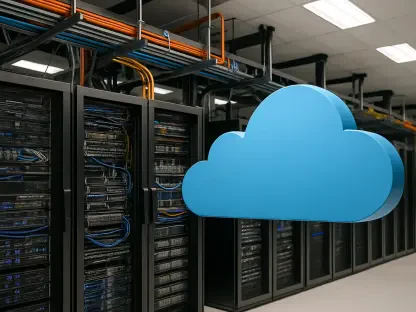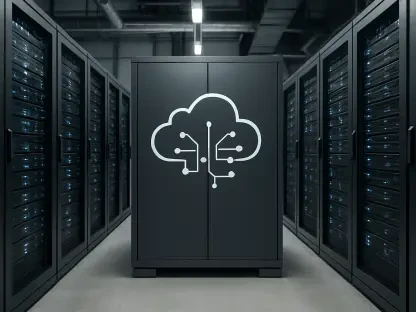

The digital universe, once perceived as a weightless realm of pure information, is now exerting a staggering physical pressure on the real world, bending steel and straining power grids under the immense gravity of artificial intelligence. This year, the abstract algorithms of AI have translated into an insatiable demand for concrete, water, and electricity, creating a construction boom of unprecedented scale. Yet, this explosive growth is running headfirst into the unyielding constraints of the physical world, forcing an industry accustomed to operating in the background into a very public and challenging spotlight. The central tension of 2025 is not whether AI will continue to advance, but whether the physical infrastructure it relies on can possibly keep pace.
When the Cloud Gets Heavy: Can the Physical World Keep Up With AI’s Insatiable Demands?
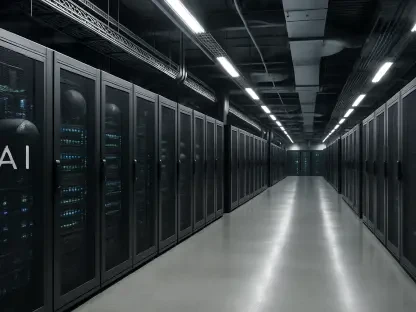
The very nature of artificial intelligence is reshaping the buildings that house it. AI workloads demand denser, more powerful hardware, and these server racks are significantly heavier than their predecessors. This seemingly simple “weight problem” is forcing a radical shift in data center construction, rendering many traditional multi-story facilities with raised floors obsolete before they are even built. The industry is rapidly pivoting toward single-story, slab-on-grade designs, as only these reinforced foundations can reliably support the immense load of modern AI systems. Existing structures are now being re-evaluated not just for their connectivity, but for their fundamental structural integrity.
This challenge of physical density is matched only by the sheer ambition of the industry’s expansion plans. Tech giants are embarking on monumental projects that test the limits of logistics and investment. The “Stargate” initiative, a staggering $500 billion collaboration involving major players like OpenAI, SoftBank, and Oracle, exemplifies this trend. The project aims to construct up to 20 next-generation data centers across the United States, each specialized for AI workloads. While such moonshot endeavors underscore the industry’s commitment to fueling AI innovation, they also highlight a growing anxiety: the pace of infrastructure development is struggling to match the exponential progress of the AI models it is meant to serve.
The New Gold Rush: Why AI Is Fueling an Unprecedented Data Center Construction Frenzy
Artificial intelligence has become the undisputed catalyst for the most significant data center construction frenzy in history. The computational requirements for training and running large language models and other generative AI platforms have created a demand for capacity that far outstrips previous growth cycles driven by cloud computing or big data. This demand is not a gentle curve but a vertical spike, compelling developers to acquire land and break ground at a blistering pace. Industry forecasts from firms like JLL projected that approximately 10 gigawatts of new capacity would begin construction this year alone.
While actual project completions have hovered closer to the 7 gigawatt mark, the sheer volume of planned development signals a period of hyper-expansion that is transforming regional economies and landscapes. This is not merely an incremental increase but a fundamental reordering of the digital infrastructure landscape. The insatiable appetite of AI is the primary economic engine behind this new gold rush, driving a global race to build bigger, faster, and more powerful facilities to host the future of technology.
Hitting the Wall: The Three Physical Bottlenecks Stalling Digital Expansion
The relentless drive for expansion has collided with a trio of hard physical limits, with power availability emerging as the most formidable barrier. In a dramatic shift from past priorities like network latency or proximity to cities, the availability of massive amounts of reliable electricity has become the ultimate gatekeeper for new data center projects. Established markets are finding their electrical grids strained to the breaking point, forcing developers to scout for non-traditional locations with surplus energy capacity. This power scarcity has ignited intense interest in alternative energy sources, particularly Small Modular Reactors (SMRs), as a potential long-term solution. Despite growing investments and partnerships between hyperscalers and energy firms, however, widespread deployment of SMRs remains a distant prospect, with the earliest projects not expected to come online until at least 2027.
Beyond electricity, the industry’s thirst for cooling has made water another critical resource constraint. The immense heat generated by high-density AI hardware requires sophisticated cooling systems, many of which are water-intensive. This has elevated water consumption from an operational detail to a significant credit and environmental risk, especially in water-scarce regions. Consequently, operators are now compelled to prioritize water-efficient designs and explore alternative cooling technologies, turning water rights and availability into a crucial factor in site selection that can make or break a project.
The final bottleneck is the land itself. As data centers proliferate, they are facing a maze of zoning regulations and mounting community pushback. In key regions like northern Virginia and Missouri, local land-use codes, often written decades ago, do not explicitly address the unique characteristics of data centers, leading to ambiguous rules and protracted approval processes. This regulatory friction is compounded by opposition from local residents concerned about noise, resource consumption, and the aesthetic impact of these massive industrial facilities. The once-simple task of acquiring and permitting land has become a complex negotiation involving legal hurdles, public hearings, and intense local politics.
From Blank Boxes to Architectural Statements: How Public Scrutiny and Geopolitics Are Reshaping an Industry
As data centers become more physically prominent, the era of the anonymous, windowless “blank box” is coming to an end. Increased public and regulatory scrutiny is compelling the industry to move beyond purely functional designs and consider how these structures integrate with their surrounding environments. Architecture is no longer an afterthought but a strategic tool for securing community support and a social license to operate. A prime example is the Telehouse TN2 facility in London, which features an exterior cladding designed to mimic a microchip. Such aesthetic enhancements are becoming a competitive differentiator, helping developers navigate contentious zoning boards and attract the skilled talent needed to run these advanced facilities.
This transformation is occurring against a backdrop of growing geopolitical uncertainty that directly impacts the construction process. The prospect of new U.S. tariffs on key materials and equipment imported from China, Mexico, and Canada has introduced significant volatility into supply chains and project budgets. Developers are now forced to factor potential trade policy shifts into their financial models, reassessing costs and sourcing strategies for everything from steel to cooling components. This intersection of local community relations and international trade policy demonstrates how digital expansion is now shaped as much by political forces as it is by technological progress.
Building the Future with the Tools of the Future: Innovative Solutions to a Global Infrastructure Crisis
In response to these immense pressures, the data center industry is turning inward, leveraging the very technology driving the demand to solve its own infrastructure crisis. A landmark development this year was the creation of the first-ever data center blueprint designed entirely by an agentic AI platform. Cove Architecture successfully tasked an AI with designing a 10,000-square-foot facility in Colorado, a complex undertaking that the AI completed in just 30 days—a fraction of the several months this process traditionally requires for human teams.
This achievement represents more than just an increase in speed; it signals a paradigm shift in how digital infrastructure is conceived and built. The AI-driven design not only met all technical specifications but also seamlessly incorporated advanced sustainability features, including a solar array, smart water reuse systems, and agrivoltaic optimization to allow for agriculture on the same land. This demonstrates the profound potential for machine intelligence to streamline complex planning, enhance efficiency, and integrate sustainable practices from the ground up, proving that AI may be both the cause of the industry’s challenges and its most powerful tool for overcoming them.
The year 2025 was a period of reckoning for the data center industry. It was the year the sector fully shed its niche status and was thrust into the global spotlight as a critical, and often controversial, form of infrastructure. The collision between exponential digital demand and finite physical resources defined every major development, from boardroom strategies to zoning board meetings. The challenges of power, water, and land were not merely overcome; they fundamentally reshaped the industry’s geography and design philosophy. This pivotal year revealed that building the future of artificial intelligence demanded more than just technological prowess; it required a new level of innovation in architecture, energy, and community engagement to harmonize the digital and physical worlds.