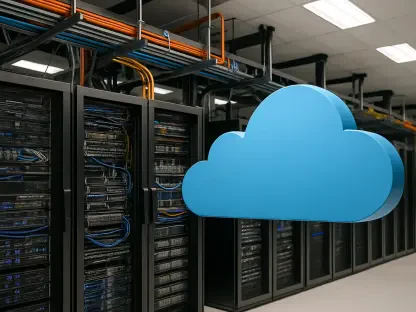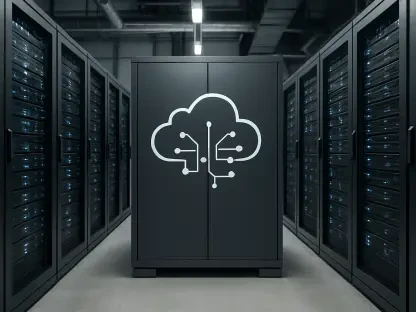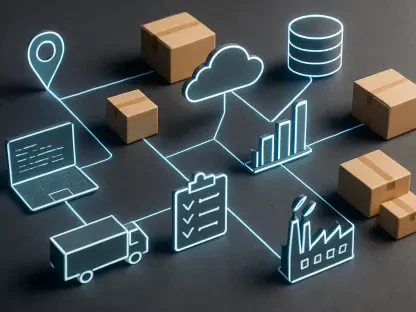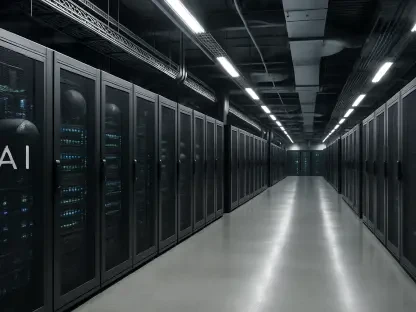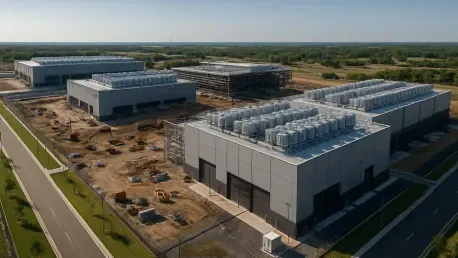

Beneath the quiet hum of servers lies a global construction boom of unprecedented scale, as the voracious computational needs of artificial intelligence are physically reshaping the planet’s infrastructure one gigawatt at a time. This is not merely an upgrade to the digital world’s backbone; it is the dawn of a new era where data centers are being reimagined as AI powerhouses. The insatiable appetite of generative AI models for processing power has ignited a firestorm of investment and development, compelling corporations and nations to secure land, capital, and colossal amounts of energy. This analysis will journey through the powerful forces, strategic locations, and technological innovations that are defining this critical build-out, exploring how a digital revolution is driving a very real-world transformation.
From Digital Backbone to AI Powerhouses a New Infrastructure Era Begins
The fundamental role of the data center is undergoing a radical transformation. For decades, these facilities served primarily as the world’s digital archives and network hubs, designed for efficient storage and data retrieval. The rise of cloud computing accelerated their growth but largely maintained this paradigm. However, the advent of large-scale artificial intelligence has introduced a completely new set of demands. Instead of simply storing data, these new facilities must perform continuous, high-intensity computations, functioning less like libraries and more like supercomputing factories. This shift necessitates a complete overhaul in design, from power density and cooling systems to the very architecture of the buildings themselves.
This foundational change is the primary catalyst behind the current global expansion. Generative AI and high-performance computing (HPC) workloads require specialized, power-hungry processors that operate in dense configurations, generating immense heat and consuming electricity on a scale previously unimaginable. As a result, the industry is witnessing a rush to build facilities that are not just larger but fundamentally different. This build-out is characterized by its immense capital requirements, its complex supply chains, and its strategic importance, turning data centers into critical assets for national competitiveness and economic progress in the 21st century.
Deconstructing the Global Data Center Development Spree
The Gigawatt Imperative How AI’s Computational Thirst Is Redrawing the Power Map
The vocabulary of data center power has been dramatically rewritten. Where once projects were proudly announced in the tens or hundreds of megawatts, the new benchmark for an AI-ready campus is the gigawatt—a unit of power equivalent to a large nuclear reactor. This exponential leap in energy requirements is a direct consequence of the millions of specialized processors needed to train and run advanced AI models. The industry is now planning and executing projects with power capacities that can support entire cities, reflecting a paradigm shift in how computational infrastructure is scaled and energized.
This desperate search for massive energy sources is forcing hyperscale operators to forge unprecedented alliances with the energy sector. A landmark example is Meta’s strategic move to secure up to 6.6 GW of long-term power from nuclear providers, a clear signal that conventional energy contracts are no longer sufficient. This pivot toward immense, stable, and often carbon-free sources like nuclear power is becoming a critical strategy for ensuring future growth. Such deals are not just about volume; they are about securing a predictable and resilient energy supply for decades to come, effectively making energy strategy as important as technology strategy.
Consequently, this gigawatt imperative is placing immense strain on national and regional energy grids, many of which were not designed to accommodate such concentrated, high-demand loads. The sudden appearance of a multi-hundred-megawatt data center can destabilize local power supply, leading to contentious debates among utilities, regulators, and communities. This has ignited an urgent conversation around sustainable power generation for AI, pushing for innovations in green energy and grid modernization to support the digital economy without compromising environmental goals or energy security for the public.
Pinpointing the Epicenters a Look at the Strategic Geography of AI Infrastructure
Certain regions have emerged as magnets for this new wave of hyperscale investment, with Texas standing out as a global epicenter. The state’s unique combination of a favorable regulatory environment, managed by the Electric Reliability Council of Texas (ERCOT), abundant and affordable land, and a robust energy market makes it an ideal location for massive data center campuses. Projects like Galaxy’s 1.6 GW expansion in West Texas and Rowan Digital’s 300 MW campus in Temple illustrate how these advantages are being leveraged to attract billions in investment, solidifying the state’s position as a leader in digital infrastructure.
While North America currently dominates the development landscape, a comparative analysis reveals a rapidly evolving global map. The Asia-Pacific (APAC) region is experiencing explosive growth, with Indonesia poised to host a campus that could scale to 1 GW and Thailand approving over $3 billion in new data center investments. In Europe, investor confidence remains strong, evidenced by KKR’s $2 billion investment into operator GTR and the emergence of Finland as a key Nordic hub. These hotspots demonstrate a global race to build capacity, driven by data sovereignty laws, latency requirements, and the desire to cultivate local AI ecosystems.
The economic ripple effects of this concentrated development are profound and complex. On one hand, these projects bring significant investment, high-tech jobs, and an expanded tax base to local communities, as seen in the ambitious proposal for a $14 billion campus in Bordeaux, France. On the other hand, the immense demand for resources like water and electricity can strain local infrastructure and create competition with residential and other industrial users. This duality presents a challenge for local governments, who must balance the economic benefits of becoming an AI hub with the long-term sustainability and well-being of their communities.
The Trillion Dollar Alliances Unpacking the Capital and Partnerships Behind the Boom
The sheer scale of the AI infrastructure boom is being underwritten by a torrent of capital flowing from a diverse and powerful set of investors. Projections of $3 trillion in data center investments over the next five years are being realized through a complex web of financing. Private equity giants like KKR and sovereign wealth funds are deploying billions, recognizing digital infrastructure as a stable, high-growth asset class. This is complemented by direct, massive investments from the AI leaders themselves, who are pouring capital into securing the physical foundation for their future technologies.
This influx of capital is fostering a new model of strategic collaboration that extends far beyond traditional vendor-client relationships. The partnership between OpenAI and SoftBank to invest $1 billion in SB Energy for a U.S. data center buildout is a prime example. This alliance combines AI leadership, financial muscle, and energy expertise to execute a capital-intensive vision at speed and scale. Such collaborations are becoming the norm, creating powerful ecosystems of tech firms, data center operators, energy providers, and investors all working in concert to overcome the immense logistical and financial hurdles of building AI-ready infrastructure.
It is crucial to challenge the perception that this is a purely tech-driven phenomenon. The data center expansion is, at its core, a convergence of technology, real estate, energy, and finance. Real estate developers are tasked with finding and preparing massive tracts of land, energy companies must engineer new ways to deliver gigawatts of power, and financial institutions are structuring the complex, multi-billion-dollar deals that make it all possible. This multi-sectoral dependency underscores the foundational nature of the build-out, positioning it as a cornerstone of the modern global economy.
Beyond the Concrete Box the Evolution Toward Specialized and Distributed AI Facilities
The traditional model of a monolithic, centralized data center campus is being challenged by innovative designs tailored specifically for AI workloads. In contrast to the sprawling campuses built for cloud storage, a new trend toward modular and scalable architecture is emerging. The deployment of “QAI Moon Pods” across 25 U.S. sites represents a strategic shift toward distributed infrastructure. These smaller, containerized units can be deployed rapidly and closer to where data is generated or consumed, making them ideal for AI inference tasks that require low latency. This approach offers a flexible and efficient alternative to centralized mega-projects.
This architectural evolution is driven by new and demanding technological requirements. The latest generation of AI processors from companies like Nvidia runs hotter and requires more power than ever before, making traditional air cooling insufficient. As a result, advanced liquid cooling solutions are becoming essential, allowing for high-density rack configurations that pack more computational power into a smaller footprint. This shift in thermal management technology is a critical enabler of next-generation AI, fundamentally altering the internal design and engineering of modern data centers.
Looking ahead, the industry appears to be moving toward a hybrid infrastructure model. This future architecture will likely consist of two primary components: massive, centralized campuses dedicated to the intensive task of training foundational AI models, and a distributed network of smaller, edge facilities for running inference workloads. This dual approach would optimize for both raw computational power and low-latency responsiveness, creating a more resilient and efficient global AI infrastructure. The balance between centralized training hubs and decentralized inference nodes will likely define the physical landscape of the internet for the next decade.
Navigating the AI Infrastructure Gold Rush Key Strategies and Actionable Insights
The core findings from this global development spree paint a clear picture of a sector in transformation. The AI-driven expansion is defined by three key characteristics: its unprecedented scale, measured in gigawatts and trillions of dollars; its critical dependence on securing massive, long-term power sources; and its geographically concentrated nature, with specific regions becoming strategic hubs. Understanding these defining elements is the first step for any stakeholder seeking to navigate this complex and fast-moving market. This is not a continuation of past trends but a fundamental reshaping of digital infrastructure.
For stakeholders directly involved in this build-out, a strategic playbook is essential for success. Best practices for site selection now extend far beyond connectivity and land costs to include long-term energy availability and a supportive regulatory environment. Securing multi-decade power purchase agreements, particularly with green energy providers, has become a critical competitive advantage. Furthermore, fostering early and transparent community engagement is vital for mitigating local opposition and ensuring that the economic benefits of a new data center are shared, as demonstrated by Microsoft’s “Community-First Infrastructure” framework.
This rapid expansion presents both immense opportunities and significant risks, requiring a sophisticated framework for evaluation by investors and policymakers. For investors, the key is to look beyond the immediate construction boom and assess the long-term viability of projects based on their power strategies and technological adaptability. For policymakers, the challenge is to create regulatory environments that attract investment while safeguarding energy grids, protecting natural resources, and ensuring that digital infrastructure development aligns with national economic and security interests.
The Dawn of the AI Powered Planet a Conclusive Look at Our New Foundation
The current explosion in data center construction was not a cyclical market trend but the laying of a new foundational layer for the global economy and society. Just as railroads and electrical grids enabled the industrial revolution, this new network of AI-powered computational hubs is becoming the essential infrastructure for innovation, commerce, and communication in the 21st century. The scale and permanence of these investments reaffirmed that the digital and physical worlds are now inextricably linked, with progress in one directly dependent on massive physical investments in the other.
The long-term implications of concentrating such immense computational power in specific geopolitical regions were profound and still unfolding. The strategic geography of AI infrastructure could reshape global economic power balances, creating new centers of technological influence while potentially widening the digital divide between nations. This concentration raised critical questions about data sovereignty, national security, and equitable access to the technologies that will define the future, making the physical location of a data center as strategically important as its digital contents.
Ultimately, the dawn of this AI-powered planet brought with it an urgent and collective responsibility. The challenge ahead was to ensure that this new global digital foundation is built to be sustainable, resilient, and equitable. Meeting the world’s computational needs without compromising environmental stability or social fairness required a concerted effort from technology companies, energy providers, governments, and communities. The work done today in building these AI powerhouses will determine the strength and character of our shared digital future.