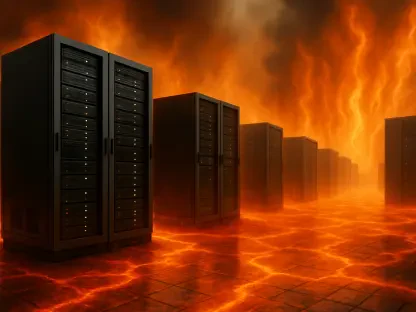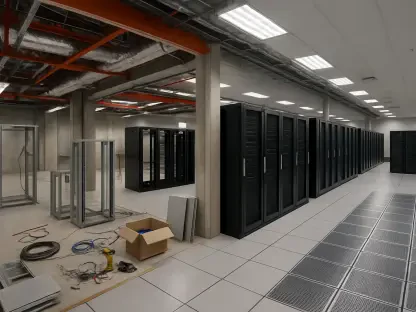
The silent, relentless hum of servers processing trillions of artificial intelligence calculations now echoes with a much louder and more urgent demand: one for environmental accountability. Once a peripheral concern addressed through corporate social responsibility reports, sustainability has abruptly shifted to the core of the data center industry’s operational and strategic agenda. This transformation is not a choice but a necessity, driven by the voracious appetite of AI workloads for power and water, which is pushing digital infrastructure to its absolute resource limits and redefining the very meaning of growth.
The New Digital Foundation: Powering Progress in the AI Era
Data centers have long been the invisible backbone of the global digital economy, housing the critical compute, storage, and networking infrastructure that underpins modern life. The industry’s landscape is diverse, comprising massive hyperscale facilities operated by tech giants, multi-tenant colocation sites offering shared infrastructure, and smaller, dedicated enterprise data centers. This ecosystem serves as the physical home for the cloud, e-commerce, and every digital interaction that connects the world.
The advent of the AI era, however, has exponentially amplified the industry’s strategic importance. Training and running advanced AI models requires computational power orders of magnitude greater than traditional workloads, placing unprecedented demands on this digital foundation. As a result, data centers are no longer just repositories of information but the engines of innovation, and their ability to scale sustainably has become a critical determinant of future technological and economic progress.
The Great Acceleration: How AI Redefined Industry Growth and Priorities
From Corporate Goal to Core Mandate: The Sustainability Tipping Point
For years, sustainability in the data center industry was treated as a laudable corporate goal, pursued through efficiency metrics and renewable energy credits. It was a component of environmental, social, and governance (ESG) initiatives, but rarely a primary constraint on development. The explosive growth of AI changed this dynamic entirely, acting as the catalyst for a fundamental reordering of priorities.
The sheer resource intensity of AI became the tipping point that transformed sustainability from a corporate initiative into a non-negotiable operational mandate. The staggering power and water consumption required to cool racks of high-density GPUs made environmental impact a direct threat to business continuity. Suddenly, securing access to green energy and scarce water resources was not about public relations but about operational viability, risk management, and the fundamental ability to build and operate new facilities.
By the Numbers: Quantifying AI’s Environmental Footprint
The market data clearly illustrates the scale of this new reality. The demand for AI-driven data center capacity is undergoing explosive growth, with projections indicating a multi-billion dollar expansion in the coming years. This surge in compute is directly tied to a parallel surge in resource consumption, creating an environmental footprint of unprecedented scale.
Industry forecasts project that power consumption from data centers is on a trajectory to double in the next few years, placing immense strain on already fragile energy grids. Water consumption, a critical component of many traditional cooling systems, faces similar pressure, with Water Usage Effectiveness (WUE) becoming a key performance indicator. The numbers paint an unambiguous picture: the industry’s growth is creating a resource challenge that demands immediate and innovative solutions.
Navigating the Resource Bottleneck: The Industry’s Core Challenges
Power and Water: The New Hard Constraints on Growth
The primary obstacles to meeting AI-driven demand are no longer just technological; they are logistical and environmental. Securing sufficient power and water has become a formidable hurdle for new data center developments. In many key markets, electrical grids lack the capacity to support new hyperscale projects, leading to multi-year delays for interconnection permits. This power bottleneck directly threatens the industry’s ability to keep pace with AI’s expansion.
Simultaneously, water has emerged as an equally critical hard constraint. In arid or drought-prone regions, the enormous water requirements for traditional cooling systems are simply unsustainable. This scarcity poses significant operational risks, including rising utility costs, regulatory crackdowns, and the potential for operations to be curtailed during water shortages. Consequently, site selection is now as dependent on water availability and stewardship as it is on fiber connectivity and power.
Securing a Social License: Overcoming Community and Environmental Opposition
The industry is also facing a growing challenge from the ground up. As data centers proliferate, public scrutiny and community opposition have intensified. Residents and local governments are increasingly pushing back against new developments, voicing concerns over the immense strain on local power grids, excessive water consumption in water-stressed areas, and persistent noise from cooling equipment.
This opposition complicates the already difficult process of planning and permitting, making community engagement a critical prerequisite for growth. Securing a “social license to operate” is no longer a peripheral task but a central part of the development strategy. Without local buy-in and a demonstrable commitment to responsible resource management, projects face costly delays, public backlash, and outright rejection, turning community relations into a key business risk.
The New Rulebook: How Policy and Regulation are Reshaping Development
In response to the industry’s expanding environmental footprint, policymakers are intervening with greater frequency and force. The regulatory landscape is rapidly evolving, with governments at local and national levels implementing stricter oversight on everything from carbon emissions and energy efficiency to water usage and land-use policies. This new rulebook is fundamentally reshaping how and where data centers can be built.
Compliance with these emerging environmental standards is becoming a decisive factor for investment and operational viability. Projects that fail to meet stringent new requirements for renewable energy integration, water conservation, and emissions reporting risk being denied permits or facing financial penalties. As a result, sustainable design and transparent reporting are no longer optional best practices but core business imperatives essential for navigating the complex regulatory environment and ensuring long-term success.
The Blueprint for a Greener Future: Innovation and Strategic Shifts
Engineering a Sustainable Footprint: From Renewables to Advanced Cooling
Confronted with these challenges, the industry is accelerating a wave of technological innovation aimed at engineering a more sustainable footprint. Operators are deploying a comprehensive playbook of green strategies, including the large-scale integration of on-site renewable energy sources like solar and wind, coupled with battery storage systems to enhance grid stability. Advanced cooling technologies, particularly direct-to-chip liquid cooling, are being widely adopted to dramatically reduce both energy and water consumption.
Furthermore, circular economy principles are gaining traction, with a greater focus on hardware lifecycle management, component reuse, and responsible e-waste disposal. Real-world examples of this integrated approach, such as facilities designed with closed-loop cooling systems and powered entirely by renewables, serve as a practical blueprint for balancing massive computational scale with local environmental stewardship.
Rethinking the Power Paradigm: Colocation, SMRs, and Net-Zero Ambitions
Beyond facility-level engineering, the industry is pursuing strategic shifts in its business and energy models. The colocation model, for instance, has emerged as an effective sustainability strategy. By leveraging shared infrastructure and economies of scale, multi-tenant data centers can achieve greater efficiency and a lower resource intensity per workload compared to disparate, single-tenant builds, reframing colocation as a sound environmental choice.
Looking toward the future, the industry is seriously exploring new energy solutions to meet its decarbonization goals while powering massive AI workloads. Ambitious net-zero data center projects are underway, combining renewable power with cutting-edge efficiency innovations. Perhaps most significantly, Small Modular Reactors (SMRs) are increasingly viewed as a viable long-term option to provide clean, carbon-free, baseload power, moving the industry beyond its reliance on conventional energy grids.
The Unavoidable Conclusion: Integrating Sustainability into the Bottom Line
The convergence of forces is undeniable. The insatiable demands of artificial intelligence, colliding with the hard limits of power and water resources and amplified by mounting regulatory and public pressure, has cemented sustainability as a core business imperative for the data center industry. What was once a line item in an annual report is now a central pillar of corporate strategy, risk management, and financial planning.
The future of digital infrastructure is no longer defined solely by its processing power or speed but by its ability to operate in harmony with the environment. In this new era, long-term success, profitability, and the very license to operate are directly tied to environmental stewardship. The path forward demands a holistic approach where innovation in sustainability is as critical as innovation in computing, ensuring that the digital foundation of tomorrow is built responsibly.