The sudden collision between Alberta’s ambitious technological expansion and its foundational environmental limits has created a complex regulatory and social dilemma that now defines the province’s economic landscape. As global hyperscalers and specialized artificial intelligence firms scout for locations to house massive “AI factories,” they are encountering a reality where the once-abundant water resources of the Canadian prairies are no longer guaranteed for industrial use. This tension is not merely a matter of policy but a direct result of shrinking glacial runoff and persistent droughts that have left regional reservoirs at historic lows throughout the current year. Municipalities that were previously eager to court high-tech investment are now finding themselves forced to choose between the lucrative tax bases offered by data centers and the essential hydration needs of their growing populations. This shift represents a fundamental change in how resource-rich regions must evaluate the true cost of digital infrastructure.
The Infrastructure Crisis: A Regional Tipping Point
Calgary’s recent history of catastrophic water-main failures has served as a wake-up call for the entire province, illustrating the fragility of aging urban systems under the weight of rapid expansion. In February 2026, yet another major breach necessitated emergency repairs and widespread consumption restrictions, reinforcing a public narrative of scarcity that complicates any new industrial development. For the average resident, the sight of heavy machinery repairing subterranean pipes while being told to limit shower times makes the prospect of a high-consumption data center nearby feel like an existential threat. Traditional cooling methods, which rely on the evaporation of millions of gallons of potable water to prevent server processors from melting, are increasingly viewed as an archaic luxury that the province can no longer afford. The environmental stress is compounded by the fact that the hottest summer days, when these facilities require the most cooling, coincide with the peak demand for agricultural irrigation.
Beyond the immediate failures of physical pipes, the broader ecological context of the province indicates a long-term trend toward aridification that challenges the sustainability of current industrial models. Satellite data from 2026 shows that the mountain snowpacks, which act as natural water towers for the region, are melting earlier and faster than in previous decades, leaving river basins vulnerable during the critical late-summer months. This hydrological shift means that even if municipal infrastructure were perfectly maintained, the total volume of available water is fundamentally decreasing. Decision-makers are now grappling with the realization that the era of unhindered resource extraction has been replaced by a period of strict allocation and conservation. As temperatures consistently exceed 25°C in July and August, the pressure on the South Saskatchewan River Basin has reached a level that necessitates a complete overhaul of how water rights are distributed among residents, farmers, and the tech sector.
Community Resistance: Prioritizing Local Resource Security
The rejection of the Rocky View Technology Park by local councilors in late 2025 serves as a definitive turning point for how large-scale industrial projects are vetted within the province. This massive 450-hectare proposal, intended to host nearly a gigawatt of computing power, was defeated not primarily because of its economic footprint, but because of its projected impact on the local water table and agricultural heritage. Residents voiced overwhelming concerns that the facility would siphon off resources needed for livestock and crops, effectively trading long-term food security for short-term digital gains. This 6-1 vote sent a clear signal to the global tech industry that the “move fast and break things” mentality of Silicon Valley would not be tolerated in a region where water is seen as a communal lifeblood. The defeat of such a high-profile project has forced developers to reconsider their approach, moving away from aggressive land acquisitions toward more collaborative, resource-conscious planning.
This wave of community-led opposition is rooted in a growing awareness of the massive disparity between the benefits a data center provides to its owners and the costs it imposes on its neighbors. While these facilities generate significant property tax revenue, they often create fewer permanent jobs per acre than traditional manufacturing or service industries, leading critics to argue that they are resource consumers rather than economic engines. In the wake of the Kineticor rejection, other surrounding counties have begun implementing more stringent environmental impact assessments specifically tailored to the unique demands of high-density AI clusters. These new regulatory hurdles are designed to ensure that any new project can prove, with verifiable data, that its operation will not degrade the quality or availability of water for existing users. Consequently, the social license to operate has become as valuable as a building permit, requiring a level of transparency and community engagement that many international developers were previously unprepared to provide.
Strategic Development: Building Resilient High-Capacity Hubs
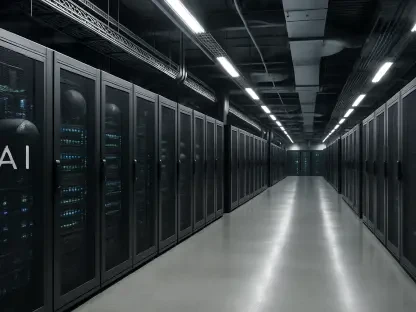
While some regions have opted for caution, others like Chestermere have positioned themselves as the strategic heart of the provincial AI boom by approving massive campuses designed for high-density computing. The approval of the Beacon AI Centers’ $2.78 billion project demonstrates that industrial growth is still possible when developers choose locations that are pre-zoned and equipped with the necessary infrastructure. These projects are part of a broader 1.8 GW pipeline that aims to capitalize on the region’s reliable energy grid while attempting to mitigate some of the most egregious environmental impacts through smarter site selection. By situating these “AI factories” in dedicated industrial zones rather than near sensitive agricultural lands, municipalities are attempting to strike a balance between modernization and preservation. This approach allows for the concentration of resources in areas where they can be managed more efficiently, potentially reducing the overall footprint of the province’s digital expansion over the coming years.
The success of these hubs depends heavily on the ability of developers to integrate their facilities into the existing utility landscape without causing localized shortages. For instance, the proposed 90 MW Cal-3 campus by eStruxture is designed to utilize existing industrial power and water allocations, minimizing the need for new, disruptive infrastructure projects. This strategy of incremental growth within established boundaries appears to be the most viable path forward for the industry in the current 2026 climate. By leveraging existing brownfield sites or pre-planned industrial parks, tech companies can avoid the public outcry that typically accompanies “greenfield” developments in rural areas. This shift toward strategic, high-density hubs also facilitates more efficient energy management, as multiple facilities can share cooling infrastructure and power distribution networks. This centralized model not only lowers the cost of entry for new players but also provides a more predictable framework for municipal planners who are tasked with managing the province’s limited resources.
Technological Shifts: The Implementation of Zero-Water Cooling
A profound technological transition is underway as local experts and international engineers advocate for a move toward “zero-water” cooling systems to ensure operational stability in an arid climate. Traditional evaporative towers, which consume vast quantities of water to dissipate heat, are being replaced by closed-loop systems that utilize advanced refrigerants and air-cooled heat exchangers. Given that Alberta’s geography places it within northern climate zones, the province is uniquely suited for “free cooling,” where the cold ambient air can be used for the majority of the year. During the freezing winter months, these systems require almost no external resources to maintain optimal temperatures for high-performance AI chips. The challenge lies in managing the peak summer heat, but even then, microchannel condensers and pumped-refrigerant economizers can reject heat into the atmosphere without evaporating a single drop of municipal water, providing a sustainable alternative to outdated industrial methods.
The transition to these water-independent technologies is no longer just a recommendation but a necessity for data center operators who want to avoid the risks of municipal supply shut-offs. In a world where water is increasingly prioritized for human consumption and food production, an industrial facility that remains tethered to the public tap is vulnerable to sudden regulatory changes and public backlash. By investing in closed-loop systems, companies effectively future-proof their operations against the unpredictability of climate change and infrastructure failure. This shift also opens the door for liquid-to-chip cooling, a more efficient method that circulates cooling fluids directly over the hardware. While the initial capital expenditure for these systems is significantly higher, the long-term savings in water procurement costs and the elimination of the risk of being forced offline during a drought make them a superior investment. This technological pivot is defining the next generation of data center architecture in Alberta and beyond.
Economic Risk Management: Balancing Capital and Sustainability
The economic landscape of the data center industry in 2026 is increasingly defined by a sophisticated understanding of resource risk and long-term viability. While traditional developers often prioritized the lowest possible capital expenditure, modern investment strategies now account for the “hidden costs” associated with environmental instability and social friction. A facility that relies on water-intensive cooling might be cheaper to build, but it faces the constant threat of being decommissioned or restricted during a regional crisis, leading to millions of dollars in lost computing time. Consequently, major financial backers are beginning to favor projects that demonstrate high levels of resource independence. This shift in the investment climate is forcing a change in behavior across the entire supply chain, as developers realize that the ability to operate without straining local utilities is a key competitive advantage that justifies the higher upfront costs of advanced, sustainable infrastructure.
Furthermore, the preservation of a “social license to operate” has become a core component of the business model for major tech firms looking to establish a presence in Alberta. Companies that can truthfully market their data centers as “water-positive” or “net-zero” find it much easier to gain the support of local governments and avoid the costly delays associated with public protests and legal challenges. This trend suggests that the industry is maturing, moving away from a purely extractive relationship with local resources toward one that is more integrated and respectful of the regional environment. As the AI boom continues to accelerate, the most successful firms will be those that can prove their projects are not just technologically advanced, but also ecologically responsible. This holistic approach to development is essential for maintaining the stability of the province’s digital economy while ensuring that the benefits of the artificial intelligence revolution are not achieved at the expense of the region’s fundamental environmental security.
Integrating Regional Strategy: A Future-Oriented Conclusion
The intersection of energy production and water management reached a critical stage where the viability of one was inextricably linked to the preservation of the other. Authorities recognized that the massive power requirements for AI hubs, often met by natural gas-fired plants, necessitated their own set of resource considerations that could not be ignored. To navigate this complexity, the province moved toward a unified regional strategy that prioritized the construction of infrastructure in areas with resilient utility networks. This shift discouraged the haphazard development of isolated facilities and promoted the creation of concentrated industrial zones where resources could be recycled and shared. By integrating water-independent cooling standards into the provincial building code, policymakers ensured that new developments contributed to, rather than detracted from, regional water security. This proactive stance allowed the province to retain its status as a technological leader while addressing the very real environmental constraints of the modern era.
Stakeholders ultimately realized that the sustainable path forward required a commitment to transparency and the adoption of cutting-edge hardware that minimized environmental footprints. This transition was facilitated by a series of incentive programs that rewarded developers for implementing closed-loop cooling and utilizing reclaimed water for any residual industrial needs. As a result, the conflict between the tech sector and local communities began to subside, replaced by a model of industrial growth that respected the limits of the natural world. The lessons learned during this period of transition provided a blueprint for other regions facing similar challenges, demonstrating that technological advancement and environmental stewardship were not mutually exclusive. By fostering a culture of innovation that extended beyond the server rack and into the very pipes and power lines of the province, Alberta successfully secured its digital future without sacrificing the essential resources that sustained its people.