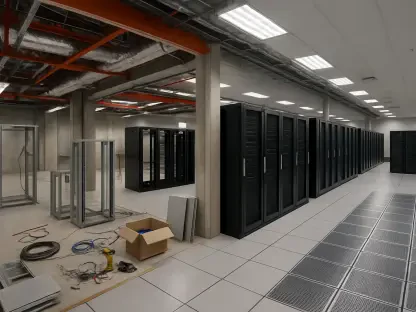

The inherent fragility of modern internet infrastructure becomes painfully obvious whenever a major cloud provider experiences a momentary glitch that cascades into global service outages affecting millions. While centralized data centers have historically offered efficiency and rapid scalability, they have inadvertently created massive targets, or “honeypots,” that attract both technical failures and sophisticated cyberattacks. This concentration of power means that a single point of failure in a northern Virginia data center can silence communication across entire continents, disrupting everything from supply chains to emergency services. In response to this systemic vulnerability, a new paradigm known as Decentralized Physical Infrastructure Networks, or DePIN, has emerged to redistribute the fundamental building blocks of the digital world. By shifting away from consolidated hubs, these networks aim to create a more resilient, community-owned internet that remains functional even when individual parts of the grid go dark. This transition represents a shift from a brittle, top-down architecture toward a fluid, distributed model where the loss of one node does not compromise the integrity of the whole. Ultimately, the goal is to transform the internet into a truly decentralized public utility that is no longer beholden to a handful of massive tech corporations.
The Architecture of Resilience: Moving Beyond Centralized Hubs
At the forefront of this movement is NodeLink, an initiative dedicated to eliminating the vulnerabilities inherent in centralized digital systems by deploying a global, self-healing mesh of independent nodes. Unlike traditional cloud services that rely on massive server farms, this approach leverages thousands of individual units that operate autonomously while remaining part of a cohesive whole. This modular computing layer ensures that if a specific region suffers a catastrophic hardware failure or a connectivity blackout, the network logic automatically reroutes tasks through other active nodes in real-time. This level of uptime is historically difficult for centralized providers to maintain, as their failure points are often deeply embedded in shared power grids or single-source software dependencies. By distributing the workload across a vast geographical and technical landscape, the system effectively mimics biological structures that can continue to function despite localized damage. This robust architectural shift turns the network into a living organism that evolves and repairs itself without the need for manual intervention from a central authority. Such a configuration not only enhances reliability but also ensures that the digital backbone of society remains unshakable regardless of isolated disruptions.
Furthermore, the decentralized model significantly alters the risk landscape for cybersecurity by fragmenting potential targets into millions of smaller, less lucrative pieces. In a centralized environment, an attacker only needs to breach a single firewall or exploit one misconfigured server to gain access to petabytes of sensitive user data, creating a high-reward scenario for malicious actors. Conversely, a DePIN architecture scatters data and processing power across a diverse array of residential and commercial nodes, making a large-scale breach exponentially more difficult and expensive to execute. Each node acts as a micro-fortress, requiring a hacker to compromise thousands of individual devices simultaneously to achieve the same impact as a single cloud breach. This structural defense mechanism effectively devalues the “honeypot” effect, as the cost of attacking such a distributed network far outweighs the potential gains. As a result, the transition toward decentralized physical infrastructure provides a proactive defense against the rising tide of sophisticated cyber threats that currently plague traditional systems. This security-by-design approach ensures that the fundamental integrity of the network is protected by its very distribution, rather than relying solely on the perimeter defenses of a corporate data center.
Empowering the Edge: Incentives and Hardware Integration
The realization of this decentralized vision relies heavily on the deployment of specialized hardware, such as the NX1 device, which serves as a foundational bridge between residential resources and global demand. These compact devices are designed to tap into idle capacity, including unused RAM, CPU cycles, and bandwidth, effectively turning ordinary households into active participants in the global computing grid. By aggregating these dormant resources, the network creates a powerful modular computing layer that can rival the output of massive data centers without the associated overhead of cooling and maintaining centralized facilities. This symbiotic relationship between the network and its participants is fueled by a robust incentive structure, where users are rewarded for their contributions to the ecosystem. Beyond financial rewards, participants gain access to premium services such as advanced AI security, decentralized VPNs, and encrypted password management. This approach ensures that while individuals take steps to secure their own digital environments, they are simultaneously strengthening the security and capacity of the entire global grid. It marks a shift in how infrastructure is built, moving from a model of corporate ownership to one of communal contribution where every added node increases the value for everyone else.
Looking toward the future development of this ecosystem, NodeLink positions itself as the “DePIN of DePINs,” providing a foundational layer that can host a diverse range of secondary decentralized projects. This multi-layered strategy allows developers to build specialized applications—ranging from decentralized storage to global sensor networks—on top of an already established and secure infrastructure. By 2026 and through 2028, the expansion of this network will likely foster a more stable and versatile digital landscape where each new project adds further utility and redundancy to the overarching system. This cooperative growth model ensures that the infrastructure remains adaptable to changing technological needs, as the community-powered grid can be repurposed or scaled dynamically. The transition from a centralized commodity to a shared, robust resource represents the next evolution of connectivity, where the strength of the internet is derived from the collective participation of its users. This shift not only addresses the immediate technical challenges of outages and security breaches but also lays the groundwork for a more democratic and resilient digital world. The focus moved toward establishing standardized protocols that allow diverse hardware types to communicate seamlessly, ensuring that the decentralized grid remains cohesive as it scales to meet the rising demands of a high-tech society.