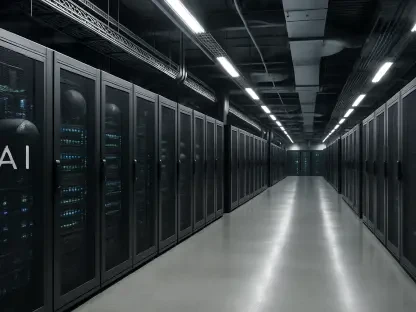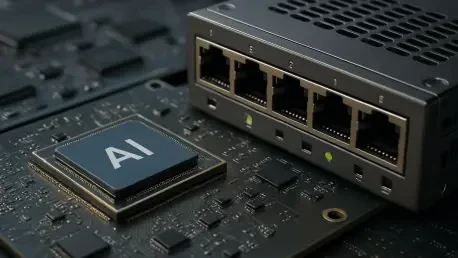

The insatiable demand for computational power driven by large-scale artificial intelligence has pushed data center infrastructure to its breaking point, transforming the network from a simple transport layer into the central nervous system of modern AI clusters. Cisco’s AI Fabric Technology represents a significant advancement in this specialized domain. This review will explore the evolution of the technology, its key features, performance metrics, and the impact it has had on AI/ML applications. The purpose of this review is to provide a thorough understanding of the technology, its current capabilities, and its potential future development.
An Introduction to Cisco’s AI Networking Architecture
Cisco’s approach to AI networking is rooted in the principle that the network must evolve to become an intelligent and integrated component of the AI compute stack. The strategy moves beyond simply providing higher bandwidth, focusing instead on creating a cohesive fabric that can efficiently manage the unique, bursty traffic patterns generated by large-scale GPU clusters. This architecture is built upon the Silicon One portfolio, a family of programmable networking silicon designed to serve as flexible “building blocks” for next-generation data centers.
The core of this strategy is to enable a more holistic system design where silicon, hardware, optics, and software work in concert to eliminate performance bottlenecks. By engineering solutions that address efficiency, power consumption, and manageability from the ground up, Cisco is positioning its architecture not just as a set of individual products, but as a foundational platform. This platform is designed to support the exponential growth in AI-driven data traffic for a diverse range of customers, from hyperscalers to sovereign cloud providers.
Core Silicon and System Innovations
The Flagship Silicon One G300 Chip
At the heart of Cisco’s latest AI networking push is the Silicon One G300, a programmable switching chip delivering a massive 102.4 Tbps of performance. This silicon is engineered to be the engine for the next wave of Ethernet-based AI networks, incorporating features specifically tailored to the demands of large-scale model training and inference. Its high-radix scaling, supporting up to 512 ports, enables the construction of “flatter” network topologies that connect more GPUs closer to the network edge, thereby minimizing latency and simplifying the overall fabric design.
Beyond raw throughput, the G300 introduces intelligent collective networking capabilities. These include advanced path-based load balancing, shared packet buffers, and proactive telemetry designed to handle the unpredictable, high-volume data flows characteristic of AI workloads. Simulations have demonstrated that these features can significantly improve network efficiency. The larger packet buffer alone has shown the potential to increase network throughput by over 30%, which directly translates to better GPU utilization and a lower capital expenditure per deployed GPU.
New G300 Powered Switching Systems
To bring the power of the G300 to market, Cisco has introduced new hardware platforms that address the practical challenges of modern data centers. The portfolio now includes the Cisco 8133, a 3RU air-cooled switch, and the Cisco 8132, a 2RU system that represents the company’s first commercially available water-cooled switch. This dual offering acknowledges the diverse thermal management strategies employed across the industry.
The introduction of a water-cooled system is particularly significant. As AI clusters become denser and more powerful, managing the immense heat generated by GPUs and networking hardware has become a primary operational hurdle. The Cisco 8132 provides a direct solution for environments where air cooling is no longer sufficient, enabling customers to build more compact and powerful AI pods without compromising on thermal stability or performance. These systems provide the physical foundation for building high-performance AI fabrics for hyperscalers, enterprises, and emerging sovereign clouds.
Expanded Portfolio and High Density Optics
Cisco’s strategy extends beyond a single flagship chip, encompassing a tiered expansion of the entire Silicon One family. The G-Series now includes the 51.2 Tbps G200 for spine and aggregation roles and the 25.6 Tbps G100 for leaf operations, allowing for a mix-and-match approach to network design. Moreover, the P-Series silicon, which powers systems running IOS XR software, has been enhanced to better support core routing and data center interconnect applications, bridging the gap between internal AI fabrics and external networks.
A critical advancement in this expanded portfolio is the adoption of 800G Linear Pluggable Optics (LPO). LPO technology reduces power consumption and complexity by removing the digital signal processor from the optical module in certain direct-link scenarios. This innovation, coupled with new high-density line cards capable of delivering up to 28.8T of capacity, allows for unprecedented system bandwidth. When combined with 800G ZR/ZR+ coherent optics, these systems can connect data centers over vast distances, providing the immense density required for modern interconnects.
The Software Layer Nexus One for AI Fabric Management
Hardware advancements are only effective when complemented by a sophisticated software and management plane. To this end, Cisco has significantly enhanced its Nexus One platform to provide comprehensive control and visibility over complex AI fabrics. The latest version extends support to a variety of network environments, including Nexus Hyperfabric and SONiC, centralizing operations through the Nexus Dashboard to create a unified management experience.
A key innovation within Nexus One is the introduction of job-aware, network-to-GPU visibility. This powerful feature correlates network telemetry directly with the performance of AI workloads running on specific GPUs, giving operators unprecedented insight into potential bottlenecks and performance degradation. Furthermore, a native integration with the Splunk platform allows customers to analyze this rich telemetry data in place, a crucial capability for sovereign cloud deployments and other environments with strict data locality requirements.
Real World Applications and Target Markets
The applications for Cisco’s AI Fabric technology are as diverse as the markets it serves. In hyperscale environments, the technology is used to build massive, flat network fabrics for training foundational models with tens of thousands of GPUs. The high throughput and intelligent load balancing of the G300 are critical for maximizing the utilization of these expensive compute resources and accelerating job completion times.
For enterprises and sovereign clouds, the technology offers a scalable and efficient path to building powerful, on-premises AI infrastructure. Use cases range from running large-scale inference workloads to supporting high-bandwidth data analytics and simulations. Additionally, the enhanced P-Series systems and high-density optics provide robust solutions for data center interconnects, enabling organizations to create geographically distributed AI clusters and resilient disaster recovery architectures.
Addressing Key Industry Challenges
Overcoming Network Bottlenecks and Inefficiency
A primary challenge in large-scale AI is preventing the network from becoming a bottleneck that starves GPUs of data. Cisco’s technology addresses this head-on with features designed to maintain high throughput and low latency under pressure. The G300’s larger packet buffers and advanced congestion management algorithms help absorb the traffic bursts common in AI training, preventing packet drops and ensuring a smooth flow of data.
Furthermore, intelligent load balancing mechanisms distribute traffic evenly across all available network paths, preventing the formation of hotspots that can slow down an entire job. By reducing job completion times, this increased network efficiency directly improves the return on investment in expensive AI compute clusters. This allows organizations to train models faster and run more experiments, accelerating the pace of innovation.
Managing Power Consumption and Thermal Density
As AI clusters grow in scale, power consumption and heat dissipation have emerged as critical limiting factors. The immense thermal density of modern GPUs and high-speed networking equipment can overwhelm traditional air-cooling systems, creating operational challenges and increasing energy costs.
Cisco tackles this challenge through a multi-pronged approach. The development of water-cooled systems like the Cisco 8132 provides a highly effective solution for managing heat in dense deployments. Concurrently, innovations like 800G Linear Pluggable Optics (LPO) contribute by significantly reducing the power consumption of the network interconnects themselves. This dual focus on both cooling and component-level efficiency helps mitigate the growing environmental and financial costs associated with high-performance AI compute.
Future Outlook and Strategic Direction
The trajectory for AI networking technology is set toward even greater speeds and deeper intelligence. The industry is already looking ahead to 1.6T Ethernet as the next standard, and silicon like the G300 is built with this future in mind. This continuous push for higher bandwidth will be essential to keep pace with the ever-increasing performance of next-generation accelerators.
Beyond raw speed, the importance of sophisticated, job-aware telemetry will continue to grow. As AI workloads become more complex, the ability to gain deep, real-time insights into the interaction between the network and the application will be crucial for performance tuning and troubleshooting. In the long term, these advancements are poised to reshape data center architecture, enabling the creation of more efficient, scalable, and manageable AI supercomputers.
Conclusion and Overall Assessment
Cisco’s AI Fabric technology represented a comprehensive and forward-looking approach to one of the most significant challenges in modern computing. By integrating innovations across silicon, systems, optics, and software, the company had built a robust platform capable of meeting the extreme demands of AI and ML workloads. The introduction of the G300 chip, coupled with new hardware and management tools, provided the essential building blocks for next-generation data center networks.
The focus on solving real-world problems such as network congestion, power consumption, and thermal density demonstrated a deep understanding of the market’s needs. The technology’s potential to significantly improve AI compute efficiency and reduce operational costs positioned it as a major force in the industry. Ultimately, Cisco’s strategic direction provided a clear and compelling vision for the future of AI networking, promising to unlock new levels of performance and scalability for years to come.