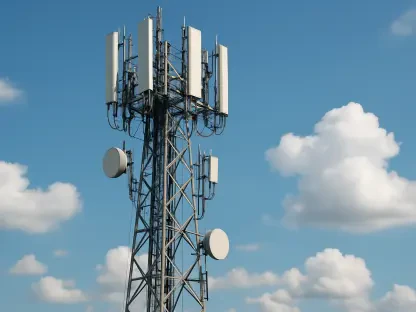

Amidst the relentless expansion of the Internet of Things, a specialized wireless technology has quietly reached a critical mass, now connecting 125 million devices across the globe and forcing the industry to reconsider the very foundations of digital connectivity. This technology, LoRaWAN, is not aiming to replace the familiar pillars of Wi-Fi, Bluetooth, or cellular. Instead, its proponents are positioning it as an essential fourth pillar, one built from the ground up to solve a persistent and growing challenge that the others were never designed to address: providing long-range, low-power connectivity for a new generation of smart devices. As its adoption accelerates, the question is no longer if LoRaWAN has a place in the wireless landscape, but how foundational its role will become.
A New Pillar for a Specific Purpose
The concept of a “fourth pillar” frames LoRaWAN not as a competitor but as a crucial complement to existing wireless standards, filling a specific and previously underserved niche. While technologies like Wi-Fi and cellular excel at transferring large amounts of data at high speeds, they are poorly suited for the demands of massive-scale sensor networks where devices must operate for years on a single battery. LoRaWAN was conceived to solve this exact problem. As a low-power, wide-area network (LPWAN) standard ratified by the International Telecommunication Union (ITU), its entire architecture is optimized for connecting vast numbers of low-bandwidth devices over extensive distances. This purpose-built design prioritizes multi-year battery life, deep indoor penetration, and low infrastructure costs, allowing for deployments in environments and at scales that were previously economically or technically unfeasible. By focusing on this unique value proposition, LoRaWAN provides the missing link needed to unlock the full potential of industrial and enterprise IoT.
This specialized focus becomes even clearer when LoRaWAN is directly compared to its more established counterparts. Wi-Fi, the backbone of local area networking, is notoriously power-hungry and has a limited range, making it impractical for scattered, battery-powered sensors. Cellular networks offer broad coverage but come with recurring data costs, potential coverage gaps in remote or indoor locations, and power consumption that is often too high for long-life IoT devices. Bluetooth, while extremely power-efficient, is restricted to short-range personal area networks, limiting its utility to device-to-device communication in close proximity. LoRaWAN systematically overcomes these limitations. It operates on unlicensed spectrum, which eliminates carrier fees, and its modulation technique allows signals to travel miles and penetrate deep into buildings, all while consuming a minuscule amount of power. This unique combination of attributes makes it the superior choice for applications where longevity, range, and cost-effectiveness are the most critical factors.
Gaining Ground in the Real World
The theoretical advantages of LoRaWAN are translating into concrete market success and sustained momentum. The technology is experiencing a 25% compound annual growth rate (CAGR), a clear indicator of its accelerating adoption across various sectors. This growth is bolstered by a rapidly expanding ecosystem managed by the LoRa Alliance, a non-profit organization that has swelled to over 360 members. The inclusion of industry titans such as Verizon, AWS, and Comcast lends significant credibility and signals a broad-based confidence in the standard’s future. Beyond membership numbers, the technology is proving its mettle in the field with large-scale, multi-million-device networks already in production, managed by prominent members like Zenner, Actility, and Veolia. These deployments demonstrate that LoRaWAN is no longer an emerging technology but a mature, scalable solution capable of supporting some of the world’s most demanding IoT applications.
This market traction is particularly evident in verticals where traditional wireless solutions have fallen short. LoRaWAN has organically become the dominant technology for smart building and facility management, a testament to its ability to connect sensors for monitoring everything from air quality to occupancy without the need for complex wiring or frequent battery changes. A prime example is AT&T’s launch of its Connected Spaces product, a LoRaWAN-based solution for enterprise facility management. While smart buildings represent a key growth area, the utilities sector remains the single largest vertical for LoRaWAN deployments. Its long-range and low-power characteristics have made it the go-to standard for smart water metering and monitoring, enabling utility companies to reduce waste, detect leaks, and optimize distribution networks across vast geographic areas with unprecedented efficiency and at a manageable cost.
Innovating for Tomorrow’s IoT
The LoRaWAN standard is not a static entity; it is continuously evolving to meet the increasingly sophisticated demands of the modern IoT landscape. The 2025 specification update introduced two new higher data rates specifically to address the growing density of indoor deployments. In environments like smart buildings or factories where sensors are closer to gateways, LoRaWAN’s adaptive data rate mechanism can automatically increase throughput. This not only improves network capacity and reduces congestion but also enhances power efficiency by shortening the time a device needs to be active to transmit its data. In parallel, the ecosystem is aggressively pushing intelligence to the network edge. Device manufacturers like Honeywell and I See Studio are now embedding machine learning capabilities directly onto their sensors. This allows devices to perform complex local analysis—such as interpreting machinery vibrations or counting building occupants—and transmit only concise, actionable results, dramatically reducing data traffic and further extending battery life.
Perhaps the most transformative development on the horizon is the integration of LoRaWAN with non-terrestrial networks (NTN), primarily through low Earth orbit (LEO) satellite constellations. This initiative promises to achieve near-complete global coverage, finally solving the challenge of connecting devices in the world’s most remote and inaccessible locations, such as open oceans, vast agricultural fields, or rugged alpine terrain where terrestrial networks are impractical. Alliance members like Lacuna Space and Plan-S are already offering commercial satellite-based LoRaWAN services. Critically, standard LoRaWAN end devices can communicate with these satellites without any hardware modifications, creating a seamless path to ubiquitous connectivity. This capability unlocks a new frontier of use cases, from monitoring transcontinental pipelines and railway lines to enabling precision agriculture and enhancing border security, solidifying LoRaWAN’s role as a truly global IoT standard.
The Road Ahead Challenges and Vision
Despite its impressive growth trajectory and technological advancements, the path to ubiquitous adoption for LoRaWAN was not without its obstacles. A primary challenge remained one of awareness; many potential enterprise users were simply unfamiliar with the technology’s distinct capabilities and how it could address their specific connectivity issues. This knowledge gap was compounded by a hurdle affecting the entire IoT industry: the inherent complexity of deploying a complete, end-to-end solution. A successful IoT implementation required that every link in the value chain—from the physical sensor and the network to the application platform and support infrastructure—functioned together seamlessly. A failure at any single point could undermine the entire system, making the transition from a pilot project to a full-scale deployment a significant undertaking for many organizations.
To navigate these challenges, the LoRa Alliance outlined clear strategic priorities aimed at scaling existing successes while breaking new ground. The organization focused on further developing the smart home vertical, its least developed market, recognizing the potential for synergy where a single home network could also serve utility meters and city-wide asset trackers. The long-term vision articulated was for LoRaWAN to evolve into an invisible, ubiquitous utility layer for IoT connectivity. In this envisioned future, a consumer or enterprise could purchase any LoRaWAN-enabled device, activate it by simply pulling a battery tab, and have it connect automatically and reliably to a vast, interoperable network of networks—one that seamlessly integrated home, city, utility, and satellite gateways without requiring any user configuration. This ambition set the stage for a world where connectivity was no longer a barrier but a given.