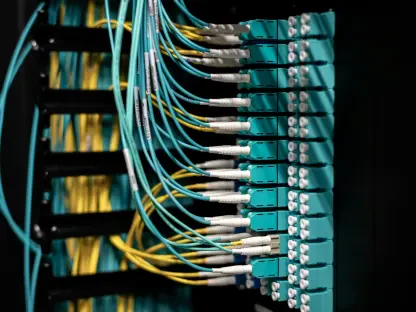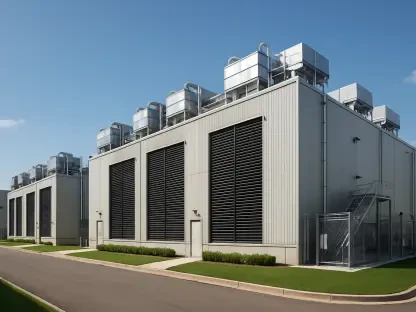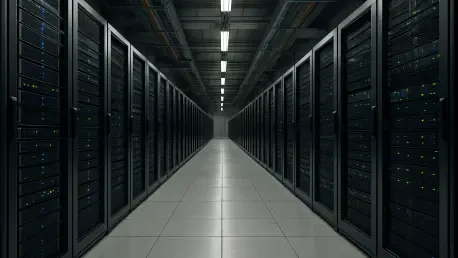

The global appetite for computational power has transformed once-obscure electrical equipment manufacturers into the indispensable titans of the modern industrial economy, commanding market valuations that rival the tech giants they serve. While software and silicon often capture the public imagination, the physical reality of generative artificial intelligence and cloud expansion relies on a massive, tangible foundation of copper, transformers, and cooling systems. This surge in demand has shifted the narrative of industrial growth, turning legacy firms into high-growth engines that are currently reshaping the global supply chain to accommodate a relentless digital expansion.
The “hyperscale” effect is no longer a localized phenomenon but a global economic driver characterized by unprecedented capital expenditure. Major tech entities are projected to direct approximately $650 billion this year toward data center infrastructure, a figure that has overwhelmed traditional manufacturing capacity. As these companies race to build the physical homes for artificial intelligence, the shift from commodity hardware to mission-critical infrastructure has become absolute. Every component, from high-voltage switchgear to complex thermal management units, is now treated as a strategic asset rather than a simple utility.
The $650 Billion Power Surge Redefining Industrial Growth
The rapid transformation of legacy manufacturers into tech-adjacent powerhouses has caught many market observers by surprise. Companies that previously focused on steady, incremental improvements in electrical grids are now operating at the breakneck speed of the Silicon Valley development cycle. This shift is driven by the sheer scale of modern server farms, which require energy inputs equivalent to small cities. Consequently, the industrial sector has moved away from low-margin hardware toward specialized, high-performance systems designed to prevent even a millisecond of downtime in the global digital nervous system.
This capital influx has fundamentally altered how global supply chains prioritize production. With tech giants placing massive, multi-year orders to secure their future capacity, smaller industrial players are finding themselves pushed to the periphery. The sheer volume of investment has turned the procurement of power equipment into a high-stakes competition. Manufacturers are no longer just selling products; they are providing the foundational elements that allow the modern economy to function, placing them at the very center of the current technological revolution.
The Digital Backbone: Why Power Infrastructure Is the New Oil
In the current economic landscape, high-capacity computing has emerged as a resource as vital as any physical commodity. The indispensable role of data processing in every sector, from finance to healthcare, means that the physical constraints of the electrical grid are now the primary barriers to progress. As cloud services expand, the connection between digital ambition and physical power availability has become a critical point of friction. Without a robust and scalable power infrastructure, the most advanced software in the world remains inert, making the equipment that bridges this gap more valuable than ever.
Market leverage has decisively migrated from the buyers of technology to the specialized suppliers of the equipment that powers it. Historically, tech companies dictated terms to their industrial partners, but the scarcity of high-grade electrical components has reversed this dynamic. Today, the ability to deliver a transformer or a modular cooling unit on schedule is worth more than the brand name on the box. This transition marks a new era where the physical constraints of electricity and heat dissipation define the speed of innovation, rather than the speed of coding or chip design.
Financial Windfalls and the Architecture of a Seller’s Market
The financial results of this infrastructure rush have been nothing short of extraordinary, with firms like Vertiv and Eaton reporting record-breaking metrics. Vertiv recently saw a 252% surge in orders, while Eaton and GE Vernova have posted triple-digit and high double-digit growth respectively. These numbers are not just temporary spikes but represent a structural shift in revenue generation. The market has moved into a sustained period of high demand where the primary challenge for these manufacturers is not finding customers, but finding the capacity to fulfill the orders they already have.
The “bloated backlog” phenomenon has become a hallmark of the current industrial climate, providing a level of financial visibility that was previously unheard of in this sector. Many major manufacturers have already secured their revenue through the end of 2026 and well beyond, with backlogs often exceeding 100% of their projected annual sales. This long-term certainty has led to a significant realignment in the stock market, where industrial firms are frequently outperforming traditional tech stocks. Investors are beginning to realize that the “picks and shovels” of the AI gold rush are made of heavy-duty copper and steel.
Expert Perspectives on Constraints and Sustainability
Despite the soaring profits, the industry is navigating a complex “power bottleneck” that threatens to slow the pace of deployment. Analysts point to increasing local opposition to massive data center projects and the soaring costs of electricity as major hurdles. In many regions, the existing grid simply cannot handle the load of a new hyperscale facility without multi-year upgrades. This physical limitation is creating a geographical shift in where data centers are built, as developers hunt for locations with both available land and a stable, high-capacity power supply.
The environmental paradox of this boom remains a central point of debate among industry experts and regulators. While the demand for digital innovation is insatiable, the carbon footprint of these energy-intensive facilities is under intense scrutiny. Balancing the need for rapid technological advancement with sustainability goals has led to a surge in demand for more efficient cooling technologies and renewable energy integration. Although 2024 and 2025 were characterized by a historic anomaly in deployment speed, the industry is now searching for a more sustainable, long-term growth model that satisfies both tech hunger and environmental mandates.
Strategic Frameworks for Long-Term Market Dominance
To maintain their dominance beyond the initial construction surge, leading manufacturers are pivoting toward service-based revenue models. By expanding their specialized maintenance and monitoring divisions, these companies are ensuring a steady stream of recurring income long after the initial hardware is installed. This strategy mimics the software-as-a-service model, turning one-time sales into decades-long partnerships. Such an approach provides a crucial hedge against any potential cooling in the construction cycle, cementing the manufacturer’s role within the digital ecosystem.
Future-proofing production also involves scaling capacity with extreme precision to avoid overextension in a volatile regulatory environment. Manufacturers are investing in modular factory designs and localized supply chains to remain agile as international trade policies and energy regulations evolve. By diversifying their operations and building a permanent foothold in the infrastructure that supports the internet, these firms are positioning themselves to thrive regardless of the specific software trends that may follow AI. The goal was to build a resilient industrial base that could support the world’s digital needs through the end of the decade.