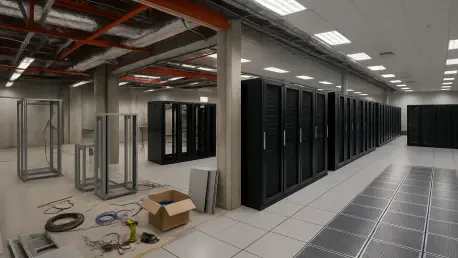

The global rush to construct the physical backbone of the artificial intelligence revolution is hitting a massive wall of legal scrutiny and bureaucratic delay. While the push for generative artificial intelligence promises a $7 trillion infrastructure boom by 2030, the physical reality of building these “digital engines” is colliding with a complex web of legal and environmental restrictions. Every new acre of data center space is now scrutinized by local regulators, utility providers, and environmental advocates who fear the implications of such rapid growth. For developers, the challenge is no longer just a matter of securing hardware and minimizing latency; it is about navigating a high-stakes legal battlefield where national security interests frequently clash with community preservation.
This digital gold rush represents a pivot in how society views industrial infrastructure. The sheer scale of modern hyperscale facilities requires land, water, and power on a level that few municipalities were prepared to host even a few years ago. As the demand for processing power continues to skyrocket, the industry finds itself at a crossroads. Can the sector scale fast enough to meet AI demands when the permitting process for a single facility can take years? This tension highlights a growing divide between the digital future envisioned by tech giants and the physical constraints of the towns and cities that must house the hardware.
The $7 Trillion Digital Gold Rush Meets a Wall of Bureaucracy
The economic promise of AI infrastructure is staggering, yet the path to realization is fraught with systemic friction. Developers are finding that the “digital engines” of the next decade require physical footprints that challenge existing land-use laws. In many jurisdictions, the sudden arrival of a multi-billion-dollar project triggers immediate pushback from residents who worry about noise pollution, the strain on local power grids, and the aesthetic impact on rural landscapes. This friction has turned what used to be a technical construction project into a protracted legal struggle that requires as much expertise in municipal law as in electrical engineering.
Moreover, the timeline for these projects often runs counter to the pace of government oversight. While a tech firm might want to go from groundbreaking to operations in eighteen months to maintain a competitive edge, local planning commissions often operate on much longer cycles. This mismatch creates a bottleneck that threatens the global competitive advantage of firms reliant on rapid AI deployment. As a result, the industry is seeing a shift in focus toward “legal readiness,” where the ability to win a zoning battle is considered just as critical as the ability to design a more efficient cooling system.
The Friction Between Federal Velocity and Local Accountability
A fundamental rift in governance has emerged, pitting federal mandates for technological dominance against local interests in resource management. At the federal level, data centers are increasingly categorized as critical infrastructure essential for national security and economic stability. This perspective has led to aggressive attempts at deregulation and the streamlining of federal environmental reviews. The logic is simple: the nation that wins the AI race secures its place at the top of the global order, and data centers are the factories of that victory.
Conversely, state and local jurisdictions view these massive facilities through a much more localized lens. They are concerned with the long-term impact on water tables, residential utility rates, and the sustainability of local tax structures. When a single data center consumes as much electricity as a small city, local officials must weigh the tax revenue against the potential for rolling blackouts or increased costs for their constituents. This tension is transforming data center development from a standard construction process into a volatile regulatory mission where developers must satisfy two very different sets of masters.
A Fragmented Landscape of Regulation and Resistance
The regulatory environment is currently a patchwork of federal fast-tracking and local defensive measures. Recent executive orders, such as EO 14318, have sought to reclassify data center infrastructure to expedite permitting by emphasizing “dispatchable baseload energy” like natural gas and nuclear power. This federal push is supported by administrative shifts, such as new interpretations from the US Army Corps of Engineers. Under the Clean Water Act, machine learning facilities are now often categorized as commercial developments, which allows for streamlined federal environmental reviews that bypass some of the more exhaustive individual assessments previously required.
However, a state-level counter-movement is gaining momentum. Several states are implementing their own hurdles to protect residential utility rates and to ensure that massive new energy users do not jeopardize ambitious carbon-neutrality targets. In regions like “Data Center Alley,” local governments are moving beyond traditional permits to create specialized ordinances. These new rules regulate everything from the specific decibel levels of cooling fans to the visual aesthetics of the building facades and the overall physical footprint of hyperscale facilities. This fragmentation means that a strategy that works in one county might be completely unviable in the next.
Litigation Trends and Expert Insights from the Field
The legal landscape is increasingly defined by “fast-track” litigation, with projects in California serving as primary case studies. A $10 billion development recently became a flashpoint for whether massive data centers can be classified as “ministerial” to bypass lengthy environmental impact reports. Opponents argue that the sheer scale of these projects demands discretionary review, which provides the public with more opportunities to challenge the environmental and social costs. This legal distinction has become the primary “pressure point” for the industry, capable of stalling multi-billion-dollar investments regardless of federal support.
In response, developers are beginning to fight back with civil rights lawsuits and claims of “administrative obstruction.” They cite billions in lost tax revenue and thousands of unrealized jobs as damages caused by what they describe as retaliatory or arbitrary local delays. Legal experts have also observed a shift toward “global settlement” strategies. These involve court-approved agreements that “run with the land,” ensuring that environmental protections and community benefits remain binding even if the facility changes ownership. This move toward negotiated peace reflects the reality that litigation has become a standard, albeit expensive, part of the development lifecycle.
Strategies for Navigating the Modern Regulatory Framework
To survive this era of intense scrutiny, successful developers prioritized the creation of proactive Community Benefit Agreements (CBAs). These firms moved beyond simple legal compliance by negotiating binding contracts that provided tangible benefits to local schools, parks, and transportation infrastructure. By treating the community as a stakeholder rather than an obstacle, they were able to reduce the likelihood of the protracted litigation that had paralyzed other projects. This collaborative approach turned potential opponents into partners who saw a direct link between the data center’s success and their own quality of life.
The most resilient organizations also refined their site selection processes to account for the “legal climate” of a jurisdiction. They prioritized areas with established data center zoning frameworks to avoid the procedural delays inherent in territory without clear rules. Furthermore, early engagement with environmental statutes became a standard practice; many firms conducted voluntary, comprehensive reviews even when exemptions were available, effectively “bulletproofing” their projects against future legal challenges. Finally, by diversifying their energy mix to align with state-level green mandates, developers reduced political friction. This comprehensive shift in strategy allowed the industry to maintain its momentum while respecting the regulatory boundaries that protected local resources. These actions ensured that the buildout of the digital future remained both legally sound and socially sustainable.