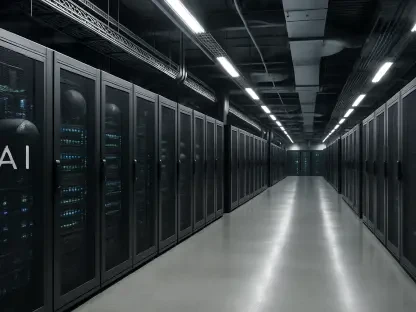

A new report from the Union of Concerned Scientists delivers a stark warning that the rapid proliferation of data centers, driven by the explosive growth of artificial intelligence and cloud computing, is on a collision course with Illinois’s economic stability, public health, and environmental goals. The comprehensive analysis, titled “Data Center Power Play,” serves as an urgent call to action for state lawmakers, urging them to implement proactive policies to manage the immense energy demands of this burgeoning industry before its consequences become a significant burden on the state’s residents and resources. Without swift legislative intervention, the digital revolution powering modern life could come at an unacceptably high price for the people of Illinois.
The Soaring Economic Costs for Consumers
The financial strain that unchecked data center development could place on Illinois is staggering, with projections indicating a potential increase in electricity system costs of $24 billion to $37 billion between 2026 and 2050. According to the analysis, these substantial expenses are likely to be passed on from data center operators to the general public, leading to higher utility bills for both households and other businesses. The magnitude of this energy consumption is unprecedented; data centers are forecast to account for as much as 64 percent of all electricity demand growth in the state by 2030. This surge threatens to overwhelm the existing grid and its financial framework, which experts argue is not equipped to handle such a concentrated and massive new industrial load, creating an urgent need for robust ratepayer protections.
This challenge extends far beyond Illinois, reflecting a national trend with significant economic implications for the entire country. The report estimates that across the United States, wholesale electricity costs directly attributable to data center expansion could swell to between $886 billion and $978 billion by 2050. However, the analysis also presents a critical counter-narrative, emphasizing that federal policy can play a pivotal role in mitigating these financial pressures. By restoring and strengthening federal clean energy tax credits, the projected national costs could be more than halved to approximately $202 billion by 2035, even while successfully meeting the industry’s escalating electricity demand. This highlights a viable path for managing this growth affordably and sustainably, preventing a nationwide surge in energy costs.
A Looming Threat to Public Health and the Environment
Beyond the significant economic figures, the report identifies severe environmental and public health consequences stemming from the industry’s growth. Power grid modeling indicates that without intervention, escalating electricity demand will inevitably lead to increased reliance on Illinois’s existing fossil fuel power plants, particularly those burning coal and natural gas. This reversal of progress would not only jeopardize the state’s clean energy goals but would also directly harm public health by increasing emissions of pollutants like nitrogen oxides (NOx) and sulfur dioxide (SO₂). Researchers have directly linked these emissions to higher incidences of respiratory illnesses, cardiovascular conditions, heart attacks, and even premature deaths, turning the digital boom into a tangible health crisis for nearby communities.
To avert this crisis, the UCS report outlines a specific and pivotal policy shift that would require new data centers to be financially responsible for their own energy consumption and infrastructure needs. This would involve mandating that these facilities secure their own sources of new, carbon-free electricity, ensuring their demand is met with new generation capacity rather than straining existing resources. Additionally, the proposal recommends that data centers bear the full cost associated with connecting to the state’s power grid, preventing these expenses from being socialized across the entire ratepayer base. Adopting this cleaner path could yield immense benefits, with the potential for Illinois to achieve up to $2.8 billion in public health savings and prevent an estimated $112 billion in global climate damages by 2050.
A Path Toward Sustainable Development
The analysis ultimately underscores a growing social and governance concern regarding the lack of transparency and community involvement in the data center approval process. It notes that communities across the country, including those in Illinois, are becoming increasingly worried about the rapid pace of development and the limited information they receive before these massive facilities are approved. The policy recommendations put forth are presented as a direct solution, arguing that clear rules requiring data centers to source clean energy and pay their own way would create a more level playing field. This framework aims to provide much-needed clarity for developers and communities, empowering residents to shape their local energy future and ensuring that Illinois can accommodate this new wave of industrial growth in a way that is sustainable, equitable, and aligned with its long-term interests.