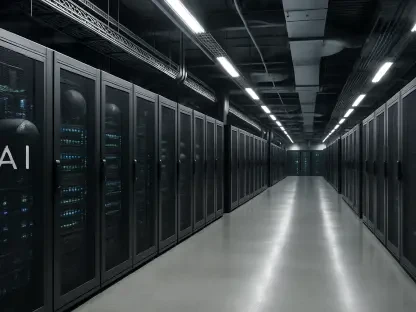

The digital heartbeat of our modern world no longer resides solely in the abstract realm of code; it is anchored in sprawling physical campuses that have become primary targets for global disruption. While cybersecurity dominated the conversation for decades, recent incidents involving drone incursions and coordinated sabotage at major facility hubs have redefined the risk profile for 2026. Data centers are the massive, tangible engines of the global economy, and their vulnerability to physical interference poses a threat that firewalls simply cannot mitigate.
This shift toward holistic defense marks a departure from traditional security models that treated physical access as an afterthought to digital encryption. In an age characterized by fluctuating geopolitical tensions and increasingly bold non-state actors, proactive best practices are no longer optional for maintaining uptime. Operators must now navigate a landscape where high-tech surveillance meets heavy-duty engineering to ensure that the hardware powering artificial intelligence and international finance remains untouched by external or internal malice.
The Critical Importance of Hardening Physical Infrastructure
Treating a data center as a mere warehouse for servers is a mistake that can lead to catastrophic failure in the face of modern threats. As these facilities become more centralized and powerful, they transition into high-value critical infrastructure, much like power plants or water treatment centers. Protecting them is not just about safeguarding metal and silicon; it is about ensuring global business continuity and preventing the cascading economic fallout that follows a major regional outage.
Moreover, a robust physical defense serves as a powerful psychological deterrent. When state-sponsored actors or sophisticated criminal syndicates evaluate a target, the presence of visible, redundant, and technologically advanced barriers often shifts the cost-benefit analysis in favor of the defender. Maintaining client trust in a colocation environment depends entirely on the provider’s ability to prove that the “cloud” is actually a fortified fortress capable of withstanding physical aggression.
Actionable Best Practices for Modern Data Center Defense
Implementing Multi-Layered Perimeter and Environmental Design
The first line of defense begins long before a visitor reaches the front door, utilizing a “defense-in-depth” strategy that starts at the property line. High-security facilities now employ anti-climb fencing integrated with vibration sensors and multi-layered gate systems that force vehicles and pedestrians through a series of checkpoints. This tiered approach ensures that if one barrier is breached, security personnel have sufficient time to react before the intruder reaches the primary structure.
Beyond mechanical barriers, the application of Crime Prevention Through Environmental Design (CPTED) is transforming the aesthetic of modern security. By utilizing strategic landscaping, such as reinforced berms and specialized lighting, operators can reduce a facility’s profile and eliminate blind spots. This method focuses on making the environment inherently hostile to unauthorized activity while maintaining an professional appearance that does not broadcast the facility’s vulnerability to the public.
Mitigating Vehicle-Borne Threats Through Strategic Stand-Off Distances
Modern facility layouts prioritize the concept of stand-off distance to neutralize the threat of vehicle-ramming or explosive-laden cars. By placing the actual data halls deep within a site, operators create a buffer zone that prevents any vehicle from getting close enough to cause structural damage. This design is reinforced by heavy-duty, crash-rated bollards and serpentine access roads that prevent vehicles from gaining the speed necessary to penetrate perimeter walls.
Neutralizing Internal Risks and the Insider Threat
While the exterior walls capture the most attention, the risk often originates from those who already hold the keys to the kingdom. Managing authorized personnel requires a rigorous framework of internal protocols that go beyond simple background checks. Every person entering a sensitive area, whether a full-time engineer or a third-party contractor, must be subject to strict limitations regarding portable media and access to critical mechanical, electrical, and plumbing systems.
The management of these “insiders” involves creating a culture of accountability where every action is logged and verified. For instance, administrative zones should be physically isolated from the white space where server racks reside. This ensures that even a compromised employee cannot wander into a high-value area without triggering an alert or requiring secondary authentication from a separate department.
Preventing Hardware Sabotage Through Granular Access Control
Granular control is best demonstrated through the implementation of “no-USB” zones and the use of biometric locks on individual server cabinets. In a scenario where a technician might be coerced or incentivized to tamper with hardware, these physical restrictions serve as a final, immovable hurdle. By monitoring every equipment rack with overhead cameras and weight-sensitive floor tiles, facilities can detect even the slightest unauthorized modification to the physical hardware stack.
Deploying Advanced Surveillance and Detection Technologies
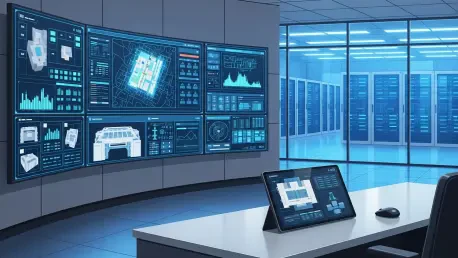
The evolution of surveillance has moved from passive recording to active, AI-driven intelligence. Modern data centers utilize video analytics to scan for “abnormal” behaviors—such as loitering in restricted zones or the appearance of unrecognized objects—and immediately alert security teams. This technology removes the human element of fatigue, ensuring that a thousand camera feeds are monitored with the same level of scrutiny twenty-four hours a day.
Aerial threats have also forced a change in the technological toolkit, leading to the adoption of drone detection systems. While legal frameworks often limit the use of active jamming or kinetic countermeasures, having early warning radar and radio-frequency sensors allows security teams to move into a defensive posture. This might involve closing external vents, locking down entrances, or contacting law enforcement before a drone can even reach the facility’s airspace.
Transitioning from Passive Observation to Real-Time AI Response
The integration of AI allows a facility to transition from merely recording a crime to actively preventing one. When a perimeter breach is detected by an intelligent sensor, the system can automatically trigger floodlights, broadcast audible warnings, and dispatch a security drone to intercept the intruder. This rapid response capability ensures that threats are identified and neutralized at the furthest possible point from the critical server infrastructure.
Final Evaluation: Adapting to an Evolving Risk Landscape
The transition from a static security model to a dynamic, risk-aware posture proved to be the defining factor in data center resiliency. Operators who moved away from “set-and-forget” physical security found that regular risk assessments were the only way to keep pace with the inventiveness of modern adversaries. The synthesis of environmental design and intelligent surveillance created a defense that was both formidable and flexible, allowing for the rapid adoption of new defensive tools as they became available.
Industry leaders recognized that the long-term return on investment for resilient physical infrastructure outweighed the initial capital expenditure. By navigating the complexities of local legal frameworks regarding drone defense and internal privacy, providers successfully built environments where digital assets remained safe from physical interference. This shift in strategy ultimately ensured that the physical backbone of the digital economy remained secure against an increasingly unpredictable world.