
The emergence of glass-based data storage represents a significant advancement in the archival industry, offering a solution designed not for decades, but for millennia. This review will explore the evolution of this technology, its key features, performance metrics, and the impact it is poised to have on long-term data preservation. The purpose of this review is to provide a thorough understanding of the technology, its current capabilities, and its potential future development.
An Introduction to a Millennial-Scale Storage Solution
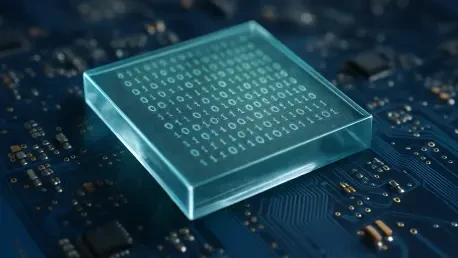
Glass-based data storage is an archival technology that uses femtosecond lasers to encode data into permanent, three-dimensional nanostructures within durable glass, such as borosilicate. It has emerged in response to the exponential growth of global data and the inadequacy of current media, like magnetic tape, to provide cost-effective, long-term permanence. Its relevance lies in its potential to create a “write-once, read-forever” storage tier, fundamentally changing the economics and logistics of preserving humanity’s digital heritage.
This approach transforms a common material into an ultra-durable archive by physically altering its internal structure. Unlike traditional media that rely on magnetic or optical layers susceptible to decay, glass storage embeds information within the very fabric of the medium. This intrinsic durability makes it an ideal candidate for preserving critical data—from cultural archives and scientific research to corporate records—without the need for constant maintenance or migration.
Core Technology and Key Innovations
The Shift to Borosilicate Glass
The most critical innovation paving the way for commercial viability was the transition from expensive, high-purity fused silica to common borosilicate glass. Fused silica, while effective, is a specialty material with a limited supply chain, making it prohibitively costly for large-scale archival. The successful adaptation of the technology to borosilicate—the same type of glass used in laboratory equipment and cookware—dramatically lowers the material cost and broadens sourcing options.
This development is more than a simple material swap; it represents the removal of a fundamental economic barrier to adoption. By leveraging a widely available and affordable medium, the technology moves from a theoretical novelty to a practical solution. This shift significantly improves its accessibility for a wider range of industries and organizations that require permanent, cost-effective data preservation.
Encoding Data with Femtosecond Lasers
The core of the technology lies in using ultra-fast femtosecond lasers to create multi-layered, three-dimensional nanostructures called “voxels” inside the glass. These lasers emit pulses so brief that they can modify a microscopic point within the glass without affecting the surrounding material or its surface. This precision allows for the creation of hundreds of data layers within a thin glass platter, achieving incredible information density.
A single glass platter, roughly the size of a drink coaster, can hold terabytes of data. This high density is a key advantage, minimizing the physical footprint required for storing vast archives. The process encodes data by altering the optical properties of the glass at each voxel, creating a permanent record that can be read by shining light through the platter and analyzing the resulting changes.
Advanced Data Writing and Retrieval Methods
Researchers have refined two primary encoding techniques to write data into the glass. The first, using birefringent voxels, modifies the polarization of the glass. While effective, this method proved less suitable for the more accessible borosilicate glass. In response, a novel phase voxel method was developed, which alters the phase properties of the glass and functions effectively with borosilicate using a single laser pulse per voxel.
To read the data encoded with the phase voxel method, a sophisticated machine learning model was developed to overcome high levels of inter-symbol interference and ensure accurate retrieval. Concurrently, the reading hardware has been streamlined, evolving from a complex multi-camera system to a more efficient single-camera setup. This end-to-end refinement of both writing and reading processes demonstrates a mature, fully functional archival system.
Unprecedented Longevity and Durability
Achieving a 10,000-Year Lifespan
Perhaps the most compelling feature of glass-based storage is its projected multi-millennia lifespan. Through a combination of accelerated aging tests and advanced non-destructive optical measurement methods, data stored in borosilicate glass is projected to remain intact for at least 10,000 years. This longevity stands in stark contrast to traditional media, where data permanence is measured in mere decades.
This generational durability eliminates the need for periodic data migration, a costly and complex process required for tape and other media. By creating a truly permanent record, glass storage addresses the core challenge of digital preservation: ensuring that information outlives the technology and systems that created it. For cultural institutions and long-term scientific projects, this offers a level of certainty previously unattainable.
Resilience to Environmental Threats
The inherent physical properties of glass make it an exceptionally robust storage medium. It offers powerful resistance to the most common environmental factors that degrade and destroy other forms of archival storage over time. Unlike magnetic tape, glass is unaffected by magnetic fields, eliminating the risk of accidental data erasure from exposure to powerful magnets.
Furthermore, glass is impervious to water and can withstand extreme temperatures, making it suitable for storage in environments that would be catastrophic for other media. This resilience reduces the need for costly, climate-controlled data centers, which consume significant energy to maintain strict temperature and humidity levels. The stability of glass ensures that data remains safe from floods, fires, and other environmental threats.
Market Context and Competitive Landscape
Addressing the Global Data Explosion
The necessity for a technology like glass storage is underscored by industry research showing that the volume of global data is doubling approximately every three years. This relentless growth places immense strain on existing archival systems, pushing them beyond their intended limits. Organizations across legal, financial, and scientific sectors are now facing mandates for multi-decade data retention, a requirement that current technologies struggle to meet economically.
This data explosion creates a pressing need for a new storage tier designed specifically for long-term, low-access archives. As the cost and complexity of managing ever-growing tape libraries escalate, the demand for a more sustainable, “set it and forget it” solution becomes increasingly urgent. Glass storage is positioned to meet this demand by offering a stable and permanent home for this expanding universe of data.
Comparison with Magnetic Tape
For decades, LTO magnetic tape has been the industry standard for data archival, but it has significant limitations. A modern tape cartridge has a rated shelf life of only 30 years and requires a strictly controlled climate to prevent degradation. The most significant drawback, however, is the operational cost associated with mandatory data migration cycles every five to ten years to combat media decay and technology obsolescence.
This constant cycle of refreshing archives consumes substantial resources, including labor for managing media, costs for new hardware, and complex data reconciliation processes. In contrast, glass-based storage aims to eliminate this entire operational burden. Its physical permanence and environmental resilience offer a total cost of ownership model that could prove far more economical over the long term, despite potentially higher upfront costs.
The Gap in Long-Term Optical Storage
The market for durable, long-term optical storage has a noticeable void. Competing solutions, most notably Sony’s Optical Disc Archive, which offered a 100-year shelf life, were discontinued in 2025. This withdrawal left many organizations searching for a reliable alternative that could bridge the gap between short-term tape archives and true generational data preservation.
This market vacuum creates a clear opportunity for glass-based storage to establish itself as the definitive solution for organizations seeking stable, long-lasting archival media. With the primary optical competitor no longer available, glass storage is uniquely positioned to fill the demand for a medium that combines the permanence of physical inscription with the density of modern digital technology.
Challenges and Practical Limitations
Write Speed and Throughput Constraints
Despite its many advantages, glass-based storage currently faces limitations in its write performance. The process of precisely etching voxels with a laser is materially slower than writing data to modern tape drives. This throughput constraint means it is not a direct replacement for all archival tiers, particularly those that require rapid ingestion of large data volumes.
This positions glass storage primarily as a solution for “ultra-cold” archives—data with low ingestion rates that is rarely, if ever, accessed once written. Use cases include final-state legal records, cultural heritage assets, and foundational scientific data. For these applications, write speed is a secondary concern to longevity and immutability.
Building a Full-Stack Ecosystem
For glass storage to achieve widespread adoption, the development of the physical media alone is not enough. A complete ecosystem of compatible hardware, software, and standardized operational models is required. This includes the creation of industry-standard readers and writers, software for managing and indexing glass-based archives, and competitive full-stack economics that make it a compelling choice for enterprises.
Building this ecosystem will require collaboration across the industry to ensure interoperability and drive down costs. Without a comprehensive and standardized platform, glass storage risks remaining a niche technology. Its long-term success will depend on its ability to integrate seamlessly into existing data management workflows and offer a clear, compelling value proposition beyond media longevity.
Enterprise Implications and Future Outlook
A Paradigm Shift for Ultra-Cold Archival
For enterprises, the introduction of glass storage could revolutionize the economics of long-term data retention. By eliminating the need for periodic migration, it has the potential to drastically reduce costs associated with labor, data reconciliation, and the operational overhead of managing tape libraries. This creates a paradigm shift for ultra-cold archival, transforming it from an ongoing operational expense into a one-time capital investment.
This change would allow organizations to predictably budget for long-term data preservation without factoring in the recurring costs of refreshing media every few years. The ability to write data once and store it permanently without further intervention simplifies archival management and frees up resources for more strategic initiatives.
Inherent Security and Data Immutability
The “write-once” nature of glass storage offers significant security advantages. Because data is encoded by physically and permanently altering the glass, it is inherently immutable. This makes the storage medium resistant to ransomware and other malicious attacks that rely on overwriting or encrypting existing data. Once information is written to glass, it cannot be changed, providing a tamper-proof record.
This physical immutability is a powerful feature for compliance and data integrity, ensuring that archival records remain authentic and unaltered over time. However, this does not eliminate the need for robust governance. Enterprises must still maintain disciplined practices for managing encryption keys, metadata indexing, and audit trails to ensure the security and accessibility of the data stored on the media.
The Path to Commercialization
While the research phase of this technology has demonstrated its viability, a clear roadmap for commercialization has not yet been established. This positions glass-based storage as a future-facing rather than an immediately available solution. The next steps will involve scaling up manufacturing, developing commercial-grade hardware, and building the surrounding software ecosystem.
Industry analysts anticipate that glass storage will not replace tape outright but will emerge as a specialized, premium tier for ultra-long-term retention. Its path to market will likely be gradual, with early adoption driven by organizations with extreme longevity requirements. As the technology matures and the ecosystem develops, it could become a standard component of enterprise archival strategies.
Conclusion: The Future is Written in Glass
This review has summarized the transformative potential of glass-based data storage as a durable, high-density solution for millennia-long archival. While its current write speeds and the need for a mature ecosystem positioned it as a specialized tier for ultra-cold data, its ability to eliminate costly migration cycles and provide unparalleled data permanence marked it as a pivotal technology. Its development has addressed a critical and growing need in the archival industry, promising a future where digital information can finally be preserved for generations.