
Matilda Bailey brings decades of high-level experience to the forefront of global network architecture, having navigated the evolution of telecommunications from the early days of fiber expansion to the current explosion of artificial intelligence. As a specialist in next-gen solutions, she understands that the physical backbone of the internet is the silent partner in every AI breakthrough, providing the essential “highways” for data. In this discussion, we explore the shifting demands of the industry as workloads migrate from massive centralized training hubs to the distributed edge, analyzing how infrastructure must adapt to support the next generation of intelligent systems.
We examine the distinct structural requirements for high-capacity optical transport in remote training facilities versus the low-latency needs of urban inference centers. The conversation covers the technical challenges of managing bursting east-west traffic patterns, the role of coherent pluggables in scaling interconnection, and the strategic parallels between current AI deployments and the historical rise of content delivery networks.
Centralized AI training often occurs in remote areas with access to affordable power. How do you design high-capacity optical transport for these “highways,” and what specific metrics or milestones indicate that a network underlay is ready to support massive GPU clusters? Please elaborate with a detailed step-by-step approach.
Designing these “highways” starts with prioritizing raw capacity and throughput over immediate latency, as training centers are often located in remote regions specifically for their access to cheap power. The first step involves deploying high-capacity optical transport systems that utilize coherent pluggables to maximize the data rate per wavelength across long-haul distances. Once the physical fiber is in place, we focus on the network underlay, ensuring it can handle the massive datasets required to feed GPU clusters without bottlenecks. A critical milestone for readiness is the achievement of stable, high-bandwidth interconnects that can maintain sustained data transfers of hundreds of terabytes during intensive training runs. Finally, we validate the system’s ability to scale data center interconnection (DCI) capacity, ensuring that the foundational underlay can keep pace with the energy-intensive processing demands of large-scale AI models.
Transitioning from centralized training to distributed inference requires shifting workloads to “country roads” near population centers. What specific strategy ensures low-latency delivery for enterprise AI agents, and how do you maintain high availability when replicating models across regional edge locations? Please share an anecdote or practical example.
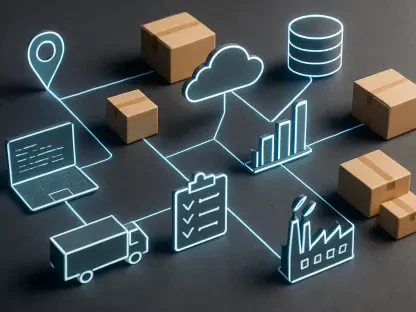
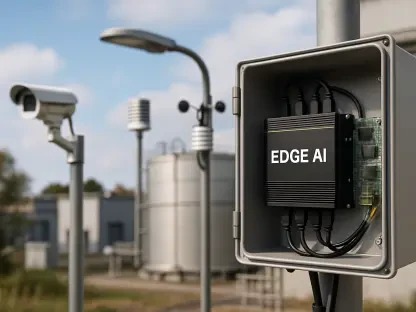
The strategy for shifting to “country roads” focuses on proximity and redundancy rather than just sheer volume, moving the model copies closer to the end user to minimize the physical distance data must travel. To ensure low-latency delivery for enterprise AI agents, we leverage backbone connectivity to link smaller, regional data centers together, creating a coordinated system that distributes the trained model across multiple edge nodes. We maintain high availability by implementing a replication protocol where, if one regional node experiences an outage, the traffic can instantly failover to a neighboring edge location without the user noticing a lag in the chatbot or co-pilot response. I often think of this like a retail distribution network; while the “factory” or training center might be in a rural area, the “storefront” must be on every corner to serve the customer immediately. This distributed architecture ensures that even if one path is blocked, the service remains resilient and responsive.
AI environments generate immense east-west traffic and large bursts during training, contrasting with the smaller, redundant flows needed for inference. How do these differing traffic patterns reshape your backbone architecture, and what trade-offs are involved in supporting both simultaneously? Please provide at least four sentences of technical detail.
The backbone architecture must evolve into a dual-purpose system that handles both the massive, bursty datasets of training and the constant, low-latency needs of inference. For training, we prioritize “thick” pipes that can accommodate immense east-west traffic volumes between compute resources, often accepting less sensitivity to downtime in exchange for maximum bandwidth. Conversely, for inference, the architecture shifts toward a more mesh-like structure with high redundancy to ensure that smaller traffic flows are never interrupted. Supporting both simultaneously requires a careful trade-off in resource allocation, where we must balance the cost of high-capacity long-haul links with the investment in dense, local connectivity near population centers. This necessitates a hybrid approach where the network can dynamically manage heavy bursts without starving the latency-sensitive inference agents of the priority they require.
**The shift of AI workloads toward the edge mirrors earlier cloud and content delivery network adoption cycles. In what ways are today’s emerging neoscalers following this path, and how must network visibility evolve to support these hybrid architectures? Please include specific metrics or benchmarks in your explanation. **
Today’s neoscalers are following the cloud blueprint by initially building massive, centralized training clusters and then gradually expanding their footprint outward as their services move into the inference phase. Just as CDNs emerged to move content closer to users, we are seeing AI services transition from hyperscale hubs to regional edge locations to reduce latency. To support this, network visibility must move beyond simple uptime metrics to focus on real-time latency benchmarks and granular packet-loss data across hybrid environments. We look for specific performance indicators, such as sub-millisecond response times between the edge and the end user, to ensure the backbone is effectively tying these distributed resources together. Without improved visibility into these regional interconnections, operators cannot guarantee the resilience required for enterprise-grade AI agents.
Scaling data center interconnection relies heavily on coherent pluggables and advanced optical transport. What are the practical implications of using these technologies to increase capacity, and how do you ensure the network remains resilient as latency requirements for user-facing systems tighten? Please describe the implementation process in detail.
The practical implication of using coherent pluggables is the ability to significantly increase capacity within existing fiber footprints, which is essential for scaling DCI without expensive new builds. The implementation process begins with integrating these pluggables directly into routers and switches, allowing for 400G or even 800G waves to be transported over the backbone with high spectral efficiency. To ensure resilience as latency requirements tighten, we implement a multi-layer protection strategy where the optical layer can automatically reroute traffic in the event of a fiber cut. We also focus on shortening the logical path between data centers by optimizing the transport layer to reduce “hops,” ensuring that user-facing systems like chatbots receive data via the most direct route possible. This combination of high-capacity hardware and intelligent pathing allows the network to stay robust even as the volume of AI-driven traffic scales.
What is your forecast for AI backbone infrastructure?
I forecast that the backbone will become increasingly decentralized, moving away from a “hub-and-spoke” model to a highly interconnected “web” that treats every regional data center as a critical node. We will see a massive surge in investment for “country road” connectivity, where the ability to serve users in local markets with sub-10ms latency becomes the primary competitive advantage for network operators. As AI agents become more integrated into daily enterprise workflows, the distinction between “the network” and “the computer” will blur, with the backbone acting as the distributed nervous system for global intelligence. Ultimately, the winners in this space will be those who can provide a seamless, resilient fabric that scales both the high-capacity “highways” for training and the ultra-reliable “local roads” for inference.