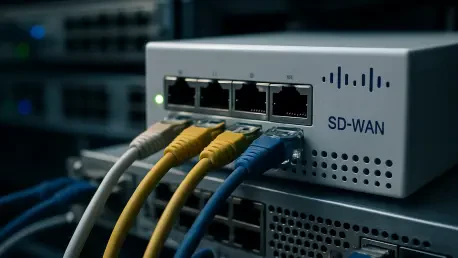

Modern enterprise connectivity relies on a delicate balance between accessibility and defense, yet recent discoveries regarding Cisco Catalyst SD-WAN systems reveal a sobering reality about how easily that balance can be shattered. Security researchers have confirmed that a critical vulnerability, carrying a maximum severity rating of 10.0, has been weaponized by sophisticated threat actors to bypass authentication and seize total administrative control over core networking infrastructure. This exploitation does not merely represent a localized glitch; it signifies a systemic failure in the perimeter defenses of large-scale corporate and government entities that have relied on these tools for secure branch-to-cloud communication. Since the initial unauthorized access began in 2023, the scope of the intrusions has grown to include vital sectors of national infrastructure, where the compromise of a single gateway can provide a permanent foothold for espionage. The urgency of this situation highlights a shift in adversary tactics away from simple phishing toward the direct subversion of the hardware that defines the network itself.
1. Discoveries Regarding Catalyst SD-WAN Intrusions
Investigative teams within the cybersecurity industry have identified a persistent activity cluster, currently designated as UAT-8616, which has specialized in the silent infiltration of Catalyst SD-WAN environments for several years. These actors prioritize the establishment of covert persistence, allowing them to remain undetected within a network even after typical reboot cycles or minor configuration audits. The evidence gathered from forensic analysis suggests that these attackers possess a deep understanding of Cisco’s proprietary architecture, enabling them to manipulate internal processes without triggering standard alerts. This level of sophistication indicates that the threat actors are likely backed by significant resources, focusing their efforts on high-value targets where long-term data exfiltration is the primary objective. By leveraging a flaw that requires no prior credentials, the group has successfully breached environments that were previously considered hardened against external threats, proving that even the most trusted edge solutions can become liabilities if vulnerabilities are not addressed.
The broader implications of these intrusions involve the potential for lateral movement across vast, geographically distributed networks that characterize modern global enterprises. Once an attacker gains the highest level of device permissions on an SD-WAN appliance, the entire fabric of the organization’s connectivity becomes transparent to them, allowing for the interception of unencrypted traffic and the redirection of sensitive data streams. This capability is particularly dangerous because the SD-WAN orchestrator manages the relationships between data centers, remote offices, and public cloud providers, effectively giving the intruder a map and a key to every significant asset. While Cisco has not publicly attributed this activity to a specific nation-state, the patterns of behavior align with advanced persistent threat actors who view networking gear as a primary beachhead. The focus on critical infrastructure organizations suggests that the goal is not immediate financial gain but rather a strategic positioning that could be exploited for massive disruption or long-term intelligence gathering in the future.
2. Factors Making SD-WAN Hardware Ideal Targets
Edge and wide-area network appliances sit at the crossroads of corporate traffic and often expose management interfaces for remote administration, creating an inherently high-risk environment. When these interfaces are reachable from the public internet, they present a narrow but high-impact attack surface where a single unauthenticated flaw can translate into full control of a device that routes or inspects all enterprise traffic. These devices are frequently left exposed because administrators require remote access for troubleshooting, yet they often fail to implement the necessary hurdles to prevent unauthorized entry. Because these systems function as the literal gateway to the internal network, compromising them allows an attacker to bypass traditional firewalls and security zones entirely. This strategic position makes them more valuable than individual workstations, as a single successful exploit provides access to the data of thousands of users simultaneously, making it an incredibly efficient vector for mass surveillance.
Furthermore, these devices tend to be patched less frequently than endpoints or servers because they are mission-critical components that require complex maintenance windows to update. Organizations often hesitate to take these systems offline due to the potential for widespread connectivity outages, which inadvertently grants attackers a wider window to strike and maintain their presence. Traditional endpoint detection and response tools cannot be installed on these proprietary appliances, meaning that standard security software is blind to the activities occurring within the device itself. This lack of visibility allows intruders to remain hidden for extended periods, far exceeding the typical dwell time seen in server-side compromises. When logs are disabled or limited to save on performance, the forensic trail becomes even colder, making it nearly impossible for standard IT teams to detect that a breach has occurred until it is far too late to prevent the theft of sensitive corporate or government data.
3. Official Alerts and Consequences for Organizations
Cybersecurity agencies in the United States, United Kingdom, Canada, Australia, and New Zealand have issued joint alerts urging immediate mitigation, warning that threat actors are targeting organizations globally. The U.S. Cybersecurity and Infrastructure Security Agency has specifically directed civilian federal agencies to patch on an expedited timeline, citing an imminent threat that poses an unacceptable risk to national security. This level of international cooperation underscores the severity of the flaw, as the affected technology is ubiquitous across the Fortune 500 and various government departments worldwide. The official warnings emphasize that the exploit is not theoretical but is being actively used to siphon data and monitor communications. For organizations that fail to respond, the consequences could include the total loss of proprietary secrets or the compromise of sensitive employee information, leading to severe regulatory penalties and a lasting loss of trust from clients and the public.
For operators of critical infrastructure, the stakes are even more acute because the manipulation or monitoring of SD-WAN traffic can expose sensitive operational technology and back-office systems. If an adversary gains control over the routing logic of a power utility or a healthcare provider, the potential for service disruptions becomes a secondary but devastating risk. Such a breach could allow an attacker to intercept commands sent to industrial control systems or alter the flow of data necessary for maintaining public safety. The ripple effect of a compromised SD-WAN fabric extends beyond the digital realm, potentially causing real-world harm if essential services are taken offline or if emergency communications are intercepted. This reality has forced a reevaluation of how “secure” these software-defined networks actually are, leading to a push for more robust verification processes and a move away from relying solely on the security claims of hardware manufacturers without independent audits.
4. Procedures for Identifying and Neutralizing the Threat
The most critical step in defending against this exploitation is the immediate installation of official software patches provided by Cisco to close the vulnerability. Organizations must prioritize updating to the corrected software versions and should operate under the assumption that any internet-facing device may have already been breached during the window of exposure. If an immediate update is not possible due to operational constraints, administrators must take drastic steps to limit management accessibility by placing all portals behind a secure VPN and requiring multi-factor authentication. Using IP allowlists to permit only authorized administrators to access the management plane provides an additional layer of defense that can prevent remote attackers from reaching the vulnerable code. These measures are not permanent fixes but serve as essential barriers while the organization prepares for a full system upgrade, ensuring that the most obvious paths for exploitation are at least partially obstructed.
In addition to patching, security teams must actively search for signs of a breach by reviewing configuration changes, unexpected administrator accounts, and anomalous login activity. It is essential to validate the integrity of system images and compare running configurations against known-good baselines to identify any unauthorized modifications made by threat actors. If a device appears compromised, administrators must execute recovery protocols that involve isolating the affected appliance, wiping it completely, and reloading it with clean, trusted firmware. All credentials used by or stored on the device, including security certificates and administrative passwords, must be rotated immediately to prevent the attacker from using stolen keys to regain access. Furthermore, adjacent systems must be thoroughly checked for signs of lateral movement, as the compromise of the SD-WAN appliance is often just the first step in a much larger campaign to infiltrate the entire corporate network.
5. Long-term Security Strategy for Cisco Users
The resolution of this crisis required a fundamental shift in how organizations perceived the security of their edge infrastructure, moving away from a “set and forget” mentality toward a model of continuous verification and rapid response. Stakeholders who successfully navigated these challenges did so by integrating network appliances into their primary security operations center workflows, ensuring that these devices were monitored with the same rigor as high-value servers. They also implemented strict out-of-band management protocols, which effectively isolated the control plane from the public internet and prevented remote attackers from even attempting an exploit. Looking forward, the most resilient organizations adopted a zero-trust architecture where the network itself was no longer implicitly trusted, regardless of the brand of hardware in use. This transition focused on micro-segmentation and the constant rotation of administrative credentials, which significantly reduced the potential blast radius of any single device compromise.
In the aftermath of these events, it became clear that maintaining edge resilience was just as important as maintaining endpoint hygiene for the overall health of the enterprise. Organizations began to demand more transparency from vendors regarding the security of their software-defined solutions, leading to more frequent third-party audits and the adoption of open standards for reporting vulnerabilities. The implementation of automated patching cycles for network gear, once considered too risky, became a standard practice for those who wanted to stay ahead of rapidly evolving threats. By treating network hardware with the same level of scrutiny as user workstations and sensitive databases, businesses were able to blunt the impact of this specific class of intrusion. These proactive measures transformed a critical vulnerability into a catalyst for much-needed architectural modernization, proving that the best defense against sophisticated adversaries was a combination of rigorous maintenance and a skeptical approach to perimeter security.