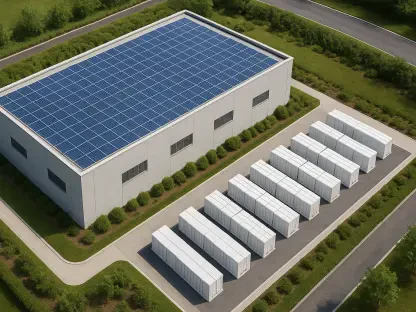

The relentless expansion of our digital existence has transformed the once-silent desert landscape into a high-tech frontier where the demand for data is as vital as the demand for water. As global finance, emergency response systems, and telehealth services move entirely into the cloud, the physical structures housing this information have become the new regional powerhouses. These data centers act as a critical infrastructure backbone, supporting the complex needs of a hyper-connected society. Beyond their technical utility, they serve as significant economic engines for local municipalities, generating substantial tax revenue and providing specialized, high-paying jobs that diversify the regional workforce.
However, this rapid growth has sparked a heated debate regarding environmental stewardship. The sustainability mandate is no longer a peripheral concern but a core operational requirement as public scrutiny intensifies over resource allocation in arid climates. Market leaders are increasingly responding by adopting rigorous frameworks for water-conscious development, ensuring that the march of technological progress does not come at the expense of ecological health. This shift represents a broader industry trend where transparency and efficiency are the primary benchmarks for successful integration into the local community.
Modern Data Centers and the Evolving Landscape of Resource Management
The role of the data center has evolved from a simple storage warehouse to a vital public utility, comparable in importance to an airport or a municipal water treatment plant. In the American West, where resource management is a constant challenge, these facilities must balance their immense processing needs with the limitations of the local environment. Modern developers recognize that their social license to operate depends on their ability to prove that they are responsible stewards of shared resources. Consequently, the industry has seen a rise in voluntary sustainability initiatives that often exceed local regulatory requirements.
Economic benefits remain a powerful driver for regional acceptance, as data centers contribute to the stability of local economies through long-term infrastructure investment. These projects often include upgrades to power grids and telecommunications networks that benefit the broader community. However, the narrative of the water-hungry data center persists, rooted in the memory of older facilities. Today, the leading players in the market are redefining the standard, moving toward a model where digital growth and environmental preservation are not mutually exclusive goals but rather synergistic objectives.
Technological Shifts and Comparative Market Benchmarks
The Great Transition: From Evaporative Cooling to Closed-Loop Systems
The historical friction between data centers and water conservation stems largely from legacy challenges associated with evaporative cooling. In previous iterations of infrastructure, facilities relied on the evaporation of massive volumes of water to regulate the temperature of heat-generating servers. While this was a cost-effective method for energy dissipation, it resulted in significant daily consumption, contributing to the industry’s reputation as a heavy consumer of local moisture. This open-loop approach meant that once the water was evaporated, it was lost to the immediate local system, creating a continuous demand on the municipal supply.
In contrast, innovation has led to the widespread adoption of closed-loop technology, which acts as a game-changer for sustainability. These modern systems fill the cooling loop once and then recycle that same water indefinitely through a sophisticated heat exchange process. By eliminating the need for daily operational water to cool IT equipment, the facility’s footprint is reduced to nearly zero for industrial processes. This transition represents a fundamental shift in how the industry approaches resource reduction, moving away from consumption toward true circulation and efficiency.
Data-Driven Realities: Industrial and Agricultural Water Demand
When analyzing regional performance indicators, the data often tells a different story than public perception suggests. For instance, research from the Kyl Center for Water Policy at Arizona State University indicates that total water use in certain high-growth tech hubs has actually declined over the last few decades despite massive industrial expansion. This paradox occurs because technological and urban developments are replacing legacy agricultural operations, which are traditionally much more water-intensive. The conversion of a single cotton field into a data center campus can result in a net gain for the local water table.
Benchmarking data centers against other established industries further clarifies the reality of the situation. Traditional “Five Cs” industries—cattle, cotton, citrus, copper, and climate—have long been the dominant users of Western water. When modern tech hubs, or the “Cloud,” are compared to these legacy sectors, the technology industry emerges as one of the most efficient users of water per dollar of economic output. In many jurisdictions, the annual water consumption of a large-scale data center is lower than that of a medium-sized beverage bottling plant or even a collection of local golf courses.
Overcoming Public Perception and Regional Environmental Obstacles
Addressing the psychological gap in public perception requires a strategic approach to communication. While the average citizen may view a data center with skepticism, they often overlook the high water use of industries that provide tangible consumer goods, such as craft breweries or luxury landscaping. Reconciling this concern involves highlighting the essential nature of the services data centers provide. Without these facilities, the digital tools used to advocate for environmental causes would simply cease to function, creating a fundamental disconnect between the desire for connectivity and the acceptance of the infrastructure required to sustain it.
Proactive site selection has also become a vital tool in preventing resource friction. By conducting moisture-strapped regional analyses during the planning phase, developers can identify locations where the impact on the local water supply is minimal or where they can utilize reclaimed water sources. Operational transparency is equally critical; by sharing factual data regarding their actual consumption versus projected use, companies can dispel myths with technical clarity. This open dialogue helps build trust with community leaders and ensures that development proceeds in a way that respects the unique environmental constraints of the West.
Navigating the Regulatory Landscape and Conservation Standards
The regulatory environment for data centers is becoming increasingly complex as local governments implement stricter water-saving mandates. Policy compliance is now just the baseline, with many organizations opting for voluntary stewardship programs that set even higher bars for efficiency. These initiatives often focus on standardizing metrics like Water Usage Effectiveness (WUE), which provides a clear and comparable measurement of how much water a facility uses for every kilowatt-hour of energy consumed. Standardized reporting allows for greater accountability and helps the industry move toward a unified set of conservation benchmarks.
Ensuring security and resiliency remains a top priority, as water conservation efforts must not compromise the uptime of essential digital services. If a cooling system fails due to a lack of resources, the resulting outage could impact everything from hospital records to global financial markets. Therefore, the industry focuses on developing redundant systems that prioritize both safety and sustainability. This dual requirement drives innovation in engineering, as designers seek out solutions that offer maximum reliability with minimum environmental impact, ensuring that the digital world stays online without draining the physical one.
The Future of Infrastructure: Innovation and Resource Synergy
Looking ahead, the movement toward zero-water cooling is gaining momentum as emerging technologies aim to completely decouple data processing from water consumption. Research into liquid cooling and advanced air-cooled heat exchangers suggests a future where data centers can operate in the most arid environments without placing any burden on the local potable water supply. This technological evolution will likely change the public perception of these buildings, shifting the narrative from industrial warehouses to vital public infrastructure that provides essential services with an invisible environmental footprint.
The American West is currently serving as a global laboratory for sustainable digital growth. The innovations developed to manage water scarcity here are providing a blueprint for arid regions around the world, from the Middle East to Northern Africa. As these technologies mature, we can expect a shift toward greater resource synergy, where data centers are integrated into circular economies. This might include using waste heat from servers to warm local buildings or participating in regional water replenishment projects that offset the domestic use of on-site staff, further solidifying the facility’s role as a net-positive community asset.
Balancing Digital Growth with Sustainable Stewardship in the Arid West
The investigation into data center water efficiency revealed that the industry has undergone a radical transformation, moving far beyond its “water-hungry” origins. The adoption of closed-loop systems and the strategic transition away from evaporative cooling have positioned these facilities as some of the most efficient industrial users of water in the West. This progress was not merely a reaction to regulation but a proactive move by developers to ensure long-term operational viability in water-scarce regions. The data showed that when compared to agriculture or the beverage industry, data centers provided significantly more economic value per gallon of water consumed.
Future efforts should focus on the continued investment in zero-water cooling technologies and the expansion of reclaimed water use for non-potable needs. Stakeholders must prioritize factual, data-led public discourse to bridge the gap between technical reality and public perception, ensuring that communities understand the trade-offs of modern development. As the digital economy continues to scale, the focus will shift toward total resource neutrality. The next generation of infrastructure will likely prioritize not just minimizing harm, but actively contributing to the resilience of the local environment through innovative utility partnerships and advanced engineering.