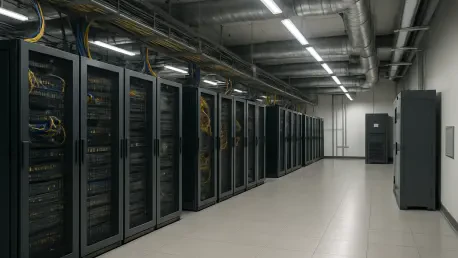

As a leading strategist in Data Center Infrastructure and Energy Strategy, the interviewee has spent decades navigating the complex intersection of high-scale computing and global power markets. With the rise of generative AI, the focus has shifted from chip procurement to the foundational necessity of stable, massive-scale energy. This conversation explores the emerging model of integrated power generation, where hyperscalers and energy giants collaborate to bypass traditional grid limitations.
The discussion covers the strategic importance of multi-billion dollar energy projects, the technical advantages of dispatchable natural gas over traditional renewables for AI bursts, and the fundamental shift toward direct energy ownership. We also delve into how enterprise leaders must now evaluate cloud providers based on their “firm” power capacity to ensure long-term operational stability.
Since electricity availability is now a larger bottleneck for AI growth than chip supply, how does a $7 billion, 2,500 MW project impact scaling timelines?
A project of this magnitude, representing a $7 billion investment, fundamentally changes the calculus of infrastructure deployment by removing the “gridlock” of waiting for utility interconnections. In the current market, securing 2,500 MW of capacity is equivalent to powering a large-scale data center campus that can support millions of AI queries simultaneously. We are seeing a shift where the pace of scaling is no longer dictated by how fast you can buy chips, but by how quickly you can energize them. By locking in a massive, dedicated power source, a provider can accelerate their buildout by years, moving from a position of scarcity to one of strategic surplus that ensures their AI services, like ChatGPT or Copilot, never hit a ceiling.
Natural gas-fired plants can activate power in seconds to manage both base and peak capacity for AI workloads. What are the technical trade-offs when choosing gas over nuclear or renewables, and how does “behind-the-meter” generation solve grid congestion?
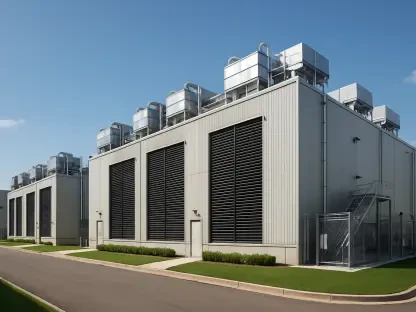
The primary technical advantage of natural gas in this context is its ability to “turn on a dime,” providing critical energy in seconds to handle the volatile, high-density bursts characteristic of AI training and inference. While nuclear provides excellent base load, it lacks the rapid dispatchability of gas, and renewables are often too intermittent to support the “always-on” requirements of a $7 billion facility without massive, expensive storage. By utilizing “behind-the-meter” generation, we essentially build the power plant directly within the data center footprint, which bypasses the regional grid entirely. This approach avoids the years-long queues for grid upgrades and ensures that the local community’s power supply isn’t strained by the data center’s immense thirst for electrons.
The shift toward hyperscalers co-developing and financing their own power plants suggests a move from procurement to direct ownership. What are the long-term implications for energy companies entering the AI stack and the competition between cloud providers?
We are witnessing the birth of a new integrated model where energy companies are no longer just commodity suppliers; they are becoming essential partners in the AI stack. When a firm like Chevron enters exclusivity talks with a hyperscaler, they are moving beyond selling fuel to helping design and operate the very layer that makes AI possible. For cloud providers, the next decade will be defined by “energy dominance,” where the winner is the one who controls their own fuel supply and generation assets. This vertical integration creates a massive barrier to entry for smaller players, as the competition shifts from who has the best software to who owns the most reliable, high-capacity power “moat.”
With power access becoming a primary selection criterion for cloud customers, how should executives evaluate a provider’s energy strategy to ensure their workloads are supported by “firm” capacity?
Executives must look past the marketing optics of renewable credits and scrutinize the “firmness” of a provider’s energy portfolio to ensure their AI workloads won’t be throttled during peak grid demand. It is vital to ask whether a provider has secured “firm, dispatchable capacity,” such as the 2,500 MW project currently being discussed, or if they are purely reliant on unstable, oversubscribed regional grids. A robust energy strategy should include onsite or colocated generation that guarantees uptime regardless of external market conditions or weather events. For a CXO, the goal is to verify that the provider has the physical infrastructure to support “burst capacity” without relying on a utility that might prioritize residential heating over data processing.
What is your forecast for the future of AI power infrastructure?
I forecast a rapid transition toward a “power-first” architecture where data centers and power plants are developed as a single, inseparable unit. Over the next few years, the reliance on traditional utility procurement will fade, replaced by a portfolio of onsite natural gas, hybrid systems, and eventually small modular reactors that provide total energy independence. We will see energy companies and investment firms becoming the new “foundries” of the AI era, providing the raw energy required to sustain the massive compute loads of the future. Ultimately, the ability to generate gigawatts of power on-site will be the most significant competitive advantage in the technology sector, effectively decoupling AI growth from the limitations of the aging public electrical grid.