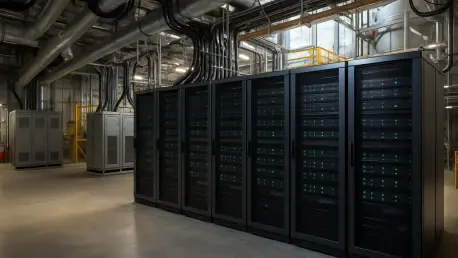

The sheer magnitude of energy required to power the next generation of artificial intelligence has moved beyond the realm of digital theory into the hard reality of industrial-scale utility management. As frontier AI labs race to develop models with unprecedented reasoning capabilities, the bottleneck is no longer just the code itself, but the physical availability of specialized silicon and gigawatt-level power grids. A recent multi-party agreement involving Anthropic, Google, and Broadcom signals a monumental shift in this landscape, moving away from traditional cloud consumption toward a model of massive, vertically integrated infrastructure. This study explores how this transition aims to solve the scalability crisis while redefining the competitive boundaries of the AI industry.
The Shift Toward Utility-Scale AI Infrastructure and Custom Silicon
At the heart of this analysis is a multi-gigawatt infrastructure expansion that positions Anthropic at the forefront of the hardware revolution. This strategic move addresses the growing difficulty of securing reliable compute power amidst a global supply chain that often favors established giants. By pivoting toward specialized hardware, the study investigates how Anthropic seeks to decouple its growth from the volatile market for general-purpose processors. The central question remains whether this shift toward custom-built environments will allow for more efficient scaling compared to the traditional GPU-heavy systems used by competitors.
Securing long-term, utility-scale power commitments is becoming a primary differentiator for AI leadership. As the demand for sophisticated agents increases, the industry must navigate the complexities of national energy grids and specialized chip production. This research examines how the transition to a dedicated infrastructure model—resembling national utility contracts rather than flexible cloud subscriptions—provides a blueprint for operational viability. This evolution suggests that the future of artificial intelligence will be defined by those who can control the physical assets necessary to sustain continuous, high-output computing environments.
Background: The Evolution From Cloud Consumption to Industrial-Scale Computing
The artificial intelligence sector is currently transitioning from an experimental phase into a period of intense industrialization. In the past, firms relied on the “pay-as-you-go” cloud model, which offered flexibility but lacked the stability required for global-scale deployment. Today, the focus has shifted toward securing massive procurement strategies that mirror the infrastructure of heavy manufacturing. This research is vital because it highlights a fundamental change in how compute is valued—moving from a digital service to a physical commodity that requires long-term planning and significant capital investment.
As AI agents become deeply embedded in enterprise workflows, the systems supporting them must be both economically and operationally resilient. The shift toward vertically integrated solutions allows labs to optimize every layer of the stack, from the silicon architecture to the cooling systems of the data center. This background underscores a growing consensus that software innovation alone is insufficient; the physical constraints of power and hardware availability are now the primary governors of progress. Consequently, the industry is seeing a consolidation of power among those who can manage complex hardware ecosystems.
Research Methodology, Findings, and Implications
Methodology
The analysis utilized a multi-dimensional approach to evaluate current infrastructure agreements and semiconductor roadmaps. This involved a technical deep dive into the TPU v7 “Ironwood” architecture to assess its efficiency compared to standard industry benchmarks. Furthermore, the methodology included a review of financial performance data from Anthropic and regulatory disclosures from Broadcom to understand the collaborative manufacturing process. By synthesizing market trends in agentic inference, the research identified how demand is shifting from the initial training of models to the massive deployment of responsive AI agents across various sectors.
Findings
Evidence suggests that Anthropic has committed to a staggering 3.5-gigawatt compute expansion, with a primary focus on domestic infrastructure within the United States. A pivotal finding is the strategic integration of Google’s Ironwood TPUs, which are specifically designed for high-throughput inference rather than just training. This choice allows Anthropic to bypass the hyper-competitive market for traditional GPUs while benefiting from superior energy efficiency. Additionally, the data indicates a massive financial surge, with the company reaching a $30 billion revenue run rate, supported by a doubling of enterprise clients spending over $1 million annually.
Implications
The results of this study imply that the dominance of future AI platforms is inextricably linked to the ownership of physical assets. Practically, this move toward dedicated silicon provides Anthropic with a buffer against supply chain volatility and unpredictable cost fluctuations. Theoretically, it suggests the “software-only” era of AI has officially ended, replaced by a paradigm where hardware and software are co-developed for maximum efficiency. Societally, the move toward multi-gigawatt installations places new pressures on national power grids, necessitating a focus on sustainable energy and advanced cooling technologies to maintain such a massive digital footprint.
Reflection and Future Directions
Reflection
This study demonstrated that the primary hurdle in the current AI era is the physics of scaling rather than just algorithmic complexity. The transition to specialized TPUs represents a pragmatic response to the scarcity of general-purpose hardware. While the integration of Broadcom served as a critical catalyst for mitigating manufacturing bottlenecks, the research could have delved deeper into the specific environmental impact of such enormous power requirements. Nevertheless, the findings clearly show that the path to a $30 billion revenue run rate required a fundamental departure from the standard cloud-based operational models used in previous years.
Future Directions
Future investigations should prioritize the long-term performance gap between TPU-centric ecosystems and the GPU-based architectures utilized by rival firms. As agentic inference becomes the dominant workload, understanding how these different silicon designs handle persistent, real-time interactions will be essential. There are also unanswered questions regarding the geographic distribution of these multi-gigawatt facilities and how they might influence local infrastructure development. Exploring how these massive investments will ultimately dictate the pricing models for enterprise AI services will provide further clarity on the market’s maturation into a utility-like landscape.
Conclusion: A New Era of Specialized Physical Infrastructure
The collaboration between Anthropic, Google, and Broadcom established a new standard for how frontier AI labs manage growth and hardware dependencies. By securing 3.5 gigawatts of power and adopting the Ironwood TPU architecture, the partnership moved toward a future-proofed operational model designed to handle the massive inference loads expected in the coming years. This transition away from software-centric development to specialized physical infrastructure became the primary differentiator in a crowded market. The move successfully insulated operations from hardware shortages while demonstrating that industrial-scale compute is the essential foundation for any global AI enterprise. Ultimately, the industry shifted toward a model where energy security and custom silicon were the ultimate indicators of long-term success and scalability.