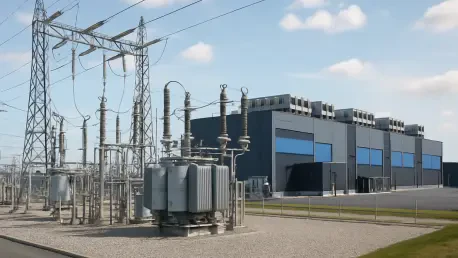

The colossal digital engines powering modern society are quietly approaching a physical breaking point, not because they are running out of space, but because they are running out of electricity to fuel their voracious appetite. In the data center industry, the long-held currency of success—square footage and server rack capacity—is being rapidly devalued, replaced by a single, non-negotiable metric that now dictates the fortunes of hyperscalers, enterprises, and colocation providers alike: the megawatt. This is not a distant forecast but the stark reality of 2026, a year defined by a fundamental realignment where the data center business is no longer about leasing space but about delivering immense, reliable, and scalable power. The insatiable energy demands of artificial intelligence have triggered this irreversible pivot, forcing an entire industry to confront a critical question: in a world being remade by AI, what is the true value of a data center if it cannot secure the power to run it?
The AI Tsunami Forcing a Market Reckoning
The explosion in artificial intelligence and high-performance computing (HPC) is the singular force remaking the data center market. These advanced workloads require computational power that dwarfs traditional enterprise computing, creating an energy crisis for an industry built on a much more modest power-per-rack assumption. Legacy data center designs, engineered for densities of 5 to 7 kilowatts (kW) per rack, are functionally obsolete in the face of AI systems that demand 50, 100, or even more kilowatts per rack. This chasm between existing infrastructure and current demand has rendered old business models untenable.
Consequently, the core thesis of the data center industry has been rewritten. Success is no longer measured in the sprawling floor plans of a facility but in its power capacity and delivery certainty. The conversation has shifted from cost per square foot to cost per kilowatt, and the most valuable asset a provider can possess is not land but a secured interconnection agreement with a utility that can deliver hundreds of megawatts or even gigawatts. This new reality has created a clear divide between providers who can meet this demand and those who are being left behind in a lower-margin, legacy market.
An Unforgiving Landscape of Scarcity and Opportunity
This power-driven demand has created a profound supply-demand imbalance, pushing the market into a state of acute scarcity. Across North America, vacancy rates have collapsed to a historic low of just 1.6%, with the world’s largest market, Northern Virginia, operating at a razor-thin 0.72% vacancy. The development pipeline offers little relief, as a staggering 75% of the 5,242 megawatts currently under construction is already pre-leased, with commitments extending to capacity that will not come online until 2027 or beyond. This supply crunch has inevitably ignited record-high pricing, with large-scale deployments of 10 megawatts or more seeing price increases of up to 19% in the last year alone.
The intense pressures from AI are cleaving the colocation industry into two distinct and diverging models. The first is the power-centric provider, purpose-built for AI and hyperscale clients. These operators focus exclusively on securing massive power blocks and developing campuses capable of supporting extreme-density deployments. In stark contrast is the connectivity-centric model, which represents the traditional colocation business. These providers continue to serve enterprise clients whose primary needs are low-latency connections and rich interconnection ecosystems within established urban cores, but they face immense pressure from rising operational costs without the ability to command AI-driven price premiums.
This scramble for power is also redrawing the global data center map. Saturated primary markets, plagued by utility constraints and lengthy permitting cycles, are no longer the default choice for new large-scale developments. Instead, a strategic migration is underway toward secondary and tertiary regions where utilities can deliver the massive blocks of power required for modern AI infrastructure. A prime example of this trend is the GridFree AI project in South Dallas, an innovative off-grid facility designed to bypass traditional grid limitations. It aims to deliver an astounding 1.5 gigawatts of capacity in half the time of a standard grid-connected development, showcasing the radical new approaches required to meet demand.
The dynamic between the world’s largest cloud providers and their colocation partners has also evolved into a build-to-suit paradigm. Hyperscalers, driven by aggressive AI growth targets that their own construction teams cannot meet, are increasingly outsourcing development to specialized third-party operators. These providers now function as dedicated development arms, constructing entire buildings or campuses for a single tenant. The scale of these partnerships is monumental, illustrated by landmark deals such as Anthropic’s $7 billion, 245-megawatt lease and Nscale’s $865 million agreement for a 40-megawatt deployment, signaling a new era of symbiotic, large-scale investment.
Voices from the Front Lines of the Power Revolution
Industry experts confirm that this shift is not cyclical but structural. Everett Thompson, CEO of Wired Real Estate Group, is a key observer of the market’s bifurcation and the strategic realignment it has caused. He emphasizes that the calculus for site selection has been permanently altered. “Energy resources, not immediate proximity to an urban core, are now the primary site-selection driver,” Thompson states, articulating the core logic behind the industry’s geographic migration toward power-advantaged regions.
The urgency fueling this transformation is directly tied to the hyperscalers’ race for AI dominance. According to Jenn Cahill of Black & Veatch, cloud giants are facing intense pressure to deploy AI infrastructure faster than they can build it themselves. This capability gap has forced them to lean heavily on colocation providers who can manage the complexities of land acquisition, permitting, and construction, allowing the hyperscalers to focus on their core business while rapidly scaling their physical footprint through these strategic partnerships.
While the AI sector booms, traditional enterprise-focused providers are feeling a significant squeeze. Peter Feldman of QTD Systems explains that these operators are trapped between skyrocketing infrastructure costs—driven by the same AI construction boom—and a price-sensitive customer base. This margin pressure is passed down to tenants, as noted by Christina Qi, CEO of Databento, who reports that supply chain disruptions are causing major delays and elevated costs for essential components like servers and memory, creating a challenging environment for all non-hyperscale players.
However, a counter-trend is providing a crucial growth avenue for these traditional operators. Andrew Baffoe of Myriad360 points to the rise of cloud repatriation, as companies shift from a “cloud-first” to a “cloud-smart” strategy. Seeking better cost control and predictability, many organizations are moving workloads from public clouds back to colocation environments. This movement allows traditional providers to leverage their strengths in stability and cost-effectiveness, offering a compelling alternative for workloads that do not require the massive scale of hyperscale AI.
A Providers Playbook for the New Power Paradigm
In this constrained environment, mastering the art of energy procurement has become the most critical survival skill for a data center provider. Success hinges on the ability to secure massive amounts of reliable and cost-effective power through multifaceted strategies. This includes not only sophisticated negotiations with utilities but also the exploration of innovative approaches like developing off-grid facilities or co-locating with power generation sources to guarantee supply and sidestep grid limitations.
Meeting the urgent demand also requires a radical acceleration of the development lifecycle. Providers who can streamline the complex processes of design, permitting, and construction will gain a significant competitive advantage. This involves adopting modular construction techniques, forging strong relationships with local authorities to expedite approvals, and securing supply chains for critical equipment far in advance to mitigate the risk of project delays in a fiercely competitive market.
Finally, capitalizing on the “cloud smart” movement offers a strategic path forward for providers not directly engaged in the hyperscale arms race. By positioning themselves as the ideal solution for enterprises pursuing cloud repatriation, these operators can offer a powerful value proposition centered on cost predictability, infrastructure control, and tailored service. This allows them to carve out a durable and profitable niche by serving the vast market of non-hyperscale workloads that still form the bedrock of the digital economy.
The Unwritten Future of a Power Hungry World
The evidence from 2026 was clear and decisive: the data center industry had fundamentally transformed from a real estate business into a power delivery service. The conversations that once revolved around floor space and rack counts were entirely replaced by a singular focus on megawatts, grid stability, and speed to market. AI served as the catalyst, but the underlying shift was a testament to the physical limits of digital growth. The victors in this new paradigm were those who mastered the complex interplay of energy procurement, accelerated development, and strategic geographic positioning. The battleground was no longer about conquering territory but about commanding the power needed to bring it to life, a reality that reshaped the very definition of digital infrastructure for years to come.