The astonishing revelation that data center investments accounted for an overwhelming 92% of all U.S. GDP growth in the first half of 2025 has sent shockwaves through financial markets, firmly establishing artificial intelligence as the primary engine of the economy. This unprecedented expansion has ignited a ferocious demand for essential materials, with copper at the epicenter of the frenzy. The price for this crucial red metal soared to a historic high of $5.80 per pound on the Comex exchange, fueling a debate among investors and analysts: is this a sustainable supercycle driven by a technological revolution, or are we witnessing the inflation of a speculative bubble with dangerous parallels to the past? The answer may lie in deciphering whether the massive infrastructure buildout is based on tangible future needs or on the same kind of speculative optimism that has led to market collapses before.
The Unprecedented Surge in Copper Demand
An Insatiable Appetite for Infrastructure
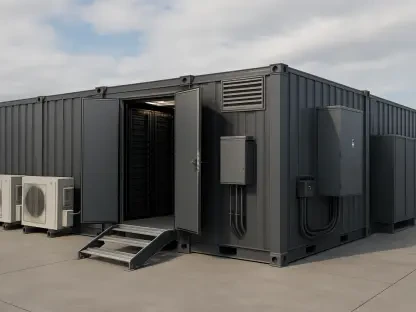
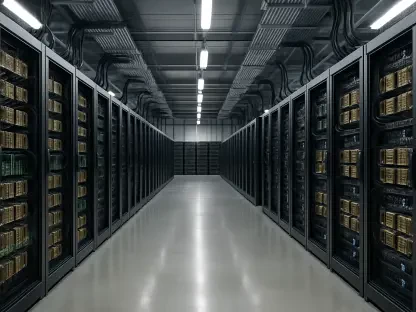
The primary catalyst for copper’s dramatic price escalation is the massive, global expansion of infrastructure dedicated to artificial intelligence. This technological gold rush has spurred annual capital spending by “hyperscaler” giants like Amazon, Google, Microsoft, and Nvidia to a staggering $400 billion. This capital is being poured into the construction of sprawling, energy-intensive data centers required to train and operate advanced AI models. Beyond the servers themselves, these facilities necessitate a colossal amount of copper for wiring, power distribution units, and cooling systems. Furthermore, the immense electrical load these centers place on the national grid has created a secondary wave of demand, as utilities and governments scramble to upgrade and bolster an aging power infrastructure. This dual-front demand—for both the AI facilities and the grid that powers them—has created a seemingly unquenchable thirst for copper, convincing many market participants that high prices are not just temporary but the new baseline for an AI-powered future.
The Compounding Effect of Trade Tensions
Amplifying the demand-driven price pressure is the looming specter of significant U.S. trade tariffs on copper, which could inflate the material’s domestic cost by as much as 50% compared to international markets in Europe and China. The possibility of such a policy has created a powerful incentive for domestic consumers to stockpile the metal, further tightening an already strained supply. This has led to a bifurcated market where U.S. prices have detached from global benchmarks, driven by both fundamental demand and strategic hedging against future policy shifts. The result is a market environment where U.S.-based Comex copper reached its peak of $5.80 per pound in July before stabilizing around $5.44 by year’s end. This combination of a genuine technological boom and geopolitical maneuvering has created a perfect storm for copper, pushing its value into uncharted territory and leaving analysts to ponder how much of the price is based on solid fundamentals versus speculative fear and opportunism.
Historical Parallels and Market Warnings
A Cautionary Tale from a Previous Bubble
Despite the overwhelmingly bullish sentiment, some veteran analysts are sounding an alarm, drawing a direct and unsettling parallel to the dot-com bubble of the late 1990s. John E. Gross, a seasoned red metals analyst, points specifically to the story of Global Crossing as a powerful cautionary tale. The company was founded on the seemingly infallible thesis that owning the internet’s physical infrastructure—a massive undersea network of fiber optic cables—would be immensely profitable. It raised and spent billions on an aggressive global buildout, only to collapse into bankruptcy when the actual demand for its bandwidth fell catastrophically short of its speculative projections. Gross suggests the market is now living in an “echo of the dot-com era,” where the transformative promises of AI are fueling an investment frenzy that may be dangerously disconnected from the technology’s eventual, real-world utility. The core question is whether the current projections for data center and grid demand are realistic or if, like Global Crossing, the industry is building for a future that may not materialize as planned.
Contradictory Signals from a Key Market Indicator
The argument for caution found reinforcement in a subtle but significant market indicator that directly contradicted the prevailing enthusiasm. While copper inventories continued to flow into Comex warehouses, a key metric—the price premium for spot Comex copper over the London Metal Exchange (LME)—steadily eroded throughout the final quarter of the year. This arbitrage, which stood at a robust 17 cents in October and 12 cents in November, dwindled to a mere 4.6 cents by late December. This shrinking premium suggested that the intense, U.S.-centric demand that had propelled domestic prices to record highs was beginning to weaken. It signaled a potential rebalancing of global market dynamics, where the urgency to secure copper specifically for U.S. delivery was fading. The development prompted speculation that the trend could even reverse, leading to an LME arbitrage premium that would favor shipping the metal away from American shores, a move that would have further underscored the fragility of the year’s historic price rally.