
The explosive demand for generative artificial intelligence has fundamentally altered the global data center landscape, forcing operators to reconcile traditional architecture with the voracious appetite of modern GPU clusters. This shift is not merely a matter of adding more servers but represents a paradigm change in how computing environments must function to survive the thermal and electrical pressures of high-performance computing. For many years, data centers were designed to accommodate standard enterprise workloads with predictable power draws, but the current reality involves racks that consume four to five times the electricity of their predecessors. Operators now face a high-stakes decision between the rapid deployment of upgraded legacy facilities and the long-term viability of starting from scratch with purpose-built designs. As the industry accelerates into this new era, the choice between retrofitting and rebuilding has become the defining strategic challenge for infrastructure providers seeking to maintain a competitive edge while managing massive capital expenditures and tight timelines.
Identifying Barriers in Legacy Infrastructure
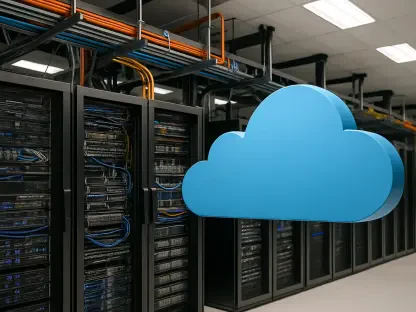
Traditional data centers frequently encounter insurmountable obstacles when tasked with hosting the dense hardware configurations required for large-scale artificial intelligence training. While an older facility might possess significant square footage, the underlying electrical distribution often lacks the necessary headroom to deliver sixty or eighty kilowatts to a single server rack. This power density gap creates a situation where a building remains mostly empty because the available utility feed is exhausted long before the floor space is filled. Furthermore, conventional air-cooling systems, which rely on moving large volumes of chilled air through raised floors, are physically incapable of dissipating the concentrated heat generated by modern high-end processors. When these legacy systems are pushed beyond their design limits, the result is often thermal throttling or hardware failure, which undermines the reliability and efficiency that global enterprises require for their mission-critical operations.
Beyond the immediate concerns of power and cooling, the physical and networking architecture of older sites introduces secondary complications that hinder performance. Standard server racks and floor loading capacities in legacy buildings were often not engineered to support the immense weight of specialized AI systems, which can weigh several thousand pounds per cabinet when fully loaded with GPUs and cooling manifolds. Additionally, the fiber-optic cabling and switching fabrics used in the past often create significant latency bottlenecks that stifle the high-speed communication required between nodes in a distributed training cluster. Without a massive overhaul of the networking layer, even the most powerful hardware will spend a disproportionate amount of time waiting for data to move across the facility. These structural and technical limitations force a realization that simply “plugging in” new AI hardware into an old environment is rarely a viable or sustainable solution for serious deployments.
Strategic Approaches to Retrofitting
For organizations prioritizing speed to market, retrofitting existing data centers offers a compelling pathway that bypasses the multi-year lead times associated with new construction. This approach focuses on surgically upgrading the most critical components of the facility, such as replacing traditional air-conditioning units with advanced liquid cooling solutions like direct-to-chip or rear-door heat exchangers. By bringing coolant directly to the hardware, operators can manage much higher heat densities without necessitating a complete structural redesign of the building. This strategy also allows for the reclamation of “stranded power,” which refers to the unused electrical capacity that often sits idle due to inefficient distribution or outdated configurations. By modernizing the power chain and utilizing intelligent monitoring software, facilities can often unlock enough hidden capacity to support significant AI workloads without requiring a new utility connection or a massive hardware replacement.
The financial and environmental benefits of retrofitting are equally persuasive, as reusing an existing building shell and core infrastructure significantly reduces the total carbon footprint of the project. Compared to the massive amounts of concrete and steel required for a new build, upgrading a legacy site is a far more sustainable method of expanding computational capacity in a world increasingly focused on green initiatives. Moreover, the capital expenditure for a retrofit is generally lower, allowing firms to allocate more of their budget toward the high-cost chips and networking equipment that directly drive AI performance. This strategy is particularly effective for companies focusing on AI inference tasks, which typically require less power and cooling than the massive clusters used for initial model training. By strategically targeting specific upgrades, operators can transform an aging facility into a modern, highly efficient hub that serves the immediate needs of the market while maintaining fiscal responsibility.
The Benefits of Purpose-Built Environments
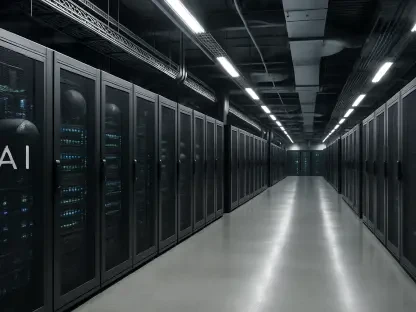
Constructing a purpose-built data center provides a blank slate that allows engineers to design for the extreme realities of high-density computing from the very beginning. These modern facilities are often built with specialized slab-on-grade flooring to handle immense weights and are designed without raised floors to accommodate massive liquid cooling loops and heavy-duty power busways. By eliminating the compromises inherent in older buildings, a new construction can optimize every inch of the facility for maximum efficiency, reaching power usage effectiveness ratings that were once thought impossible. These sites are also frequently located in regions with superior access to large-scale renewable energy sources or robust electrical grids, ensuring that the facility can scale its power intake as the next generations of AI chips become even more demanding. This forward-looking design philosophy ensures that the infrastructure remains technically relevant for decades to come.
While the advantages of a new build are clear, the process involves navigating complex logistical and financial hurdles that can delay a project for several years. The time required for land acquisition, permitting, and utility negotiations often means that by the time a new data center opens its doors, the specific hardware it was designed for may have already been superseded by newer technology. Furthermore, the massive upfront cost of building from the ground up requires a long-term commitment that some organizations may find difficult to justify in a rapidly shifting technological landscape. Despite these challenges, the most significant players in the industry continue to invest in new builds because they offer a level of scalability and reliability that retrofits simply cannot match. For massive foundation model training, where thousands of interconnected GPUs must operate in perfect unison, the precision and capacity of a purpose-built environment provide a level of performance that is worth the initial investment.
Navigating the Choice Between Speed and Scalability
The decision-making process for infrastructure leaders has gravitated toward a hybrid model that segments workloads based on their specific physical and computational requirements. High-intensity training tasks, which demand the absolute limits of power and cooling, were typically directed toward the newest, most advanced facilities where infrastructure was optimized for continuous, heavy loads. Conversely, inference tasks and smaller enterprise applications were successfully integrated into retrofitted spaces that offered lower latency by being closer to end users in urban centers. This strategic division of labor allowed companies to balance the need for extreme performance with the practical realities of cost and location. By matching the workload to the environment, organizations ensured that they were not over-engineering for simple tasks or under-equipping for complex ones, thereby maximizing the return on their significant infrastructure investments across the entire global portfolio.
The transition toward AI-centric data centers was finalized through a series of calculated steps that prioritized adaptability over rigid long-term planning. Engineers focused on modular power and cooling systems that could be scaled or replaced as the hardware landscape continued to evolve beyond initial expectations. Management teams also invested heavily in software-defined power management to gain real-time visibility into how electricity was being utilized, allowing for more precise adjustments to the cooling and distribution layers. Ultimately, the successful organizations were those that viewed their physical infrastructure as a dynamic asset rather than a static building. By embracing a combination of targeted retrofits for immediate capacity and strategic new builds for future-proofing, the industry established a resilient foundation that supported the continued growth of artificial intelligence. These practical measures ensured that the digital backbone remained strong enough to handle the unprecedented processing demands of the modern world.