
Matilda Bailey is a titan in the data center world, currently navigating the high-stakes intersection of global networking and regional infrastructure strategy. With years spent architecting next-gen solutions for cellular and wireless giants, she brings a uniquely technical yet business-focused perspective to the shifting tides of European data sovereignty. Today, she sheds light on the billion-euro investments reshaping the Nordic landscape and explains the complex maneuvers required to secure the digital footprint of hundreds of millions of users across the continent.
This conversation explores the strategic pivot toward Finland as a primary hub for large-scale data infrastructure, driven by power constraints and permitting hurdles in traditional markets. We delve into the mechanics of Project Clover, analyzing how independent oversight and dedicated enclaves serve as a blueprint for modern regulatory compliance. Furthermore, the discussion touches on the environmental and operational challenges of the 50% annual market growth in Northern Europe, examining the critical role of specialized local workforces in maintaining these high-density facilities.
Finland has seen a surge in billion-euro data center investments, particularly in cities like Lahti and Kouvola. What specific regional advantages, such as power availability or permitting conditions, make these locations more favorable than previous expansion sites in Ireland, and how do you plan to scale initial capacity?
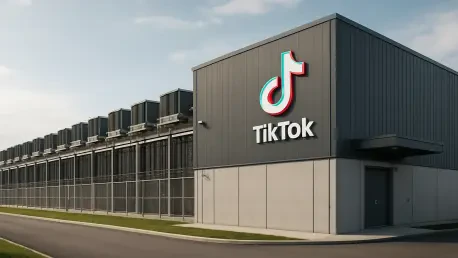
Finland provides a massive release valve for the pressure building in markets like Ireland, where the grid is reaching its absolute limit. When you look at an investment like the €1.16 billion project in Lahti, you aren’t just seeing a building; you’re seeing a strategic move to a region where land and power permits aren’t stuck in a multi-year backlog. We plan to hit the ground running with an initial capacity of 50 MW, but the infrastructure is designed for rapid elasticity, with a roadmap to scale up to 128 MW as the regional demand dictates. This isn’t just about finding a cold spot on the map; it’s about a supportive policy environment that treats data infrastructure as a cornerstone of the modern economy rather than a burden on the utility grid.
Creating a dedicated data enclave for over 200 million users involves significant technical and governance safeguards. What are the specific steps required to implement independent oversight for data flows, and how does this level of transparency help navigate complex regional regulatory frameworks?
Implementing a dedicated enclave for 200 million users is an undertaking of massive proportions, requiring us to think far beyond simple encryption or firewalls. As part of the €12 billion Project Clover initiative, we’ve engaged the NCC Group to serve as a third-party sentinel, providing that vital layer of independent oversight that regulators now demand. They aren’t just checking boxes; they are actively monitoring data flows and reporting any anomalies in real-time to ensure that European data stays within its designated boundaries. This level of granular transparency is our strongest tool for navigating the Digital Services Act, as it provides a verifiable audit trail that proves we are adhering to the highest standards of regional data sovereignty.
The Nordic region is becoming a hub for infrastructure due to its cool climate and renewable energy. How does the local digital ecosystem benefit from high-density facilities located outside major capitals, and what role does a highly skilled local workforce play in maintaining long-term operational stability?
The Nordic region is essentially the “perfect storm” for high-density computing because the natural environment does half the heavy lifting for us in terms of cooling. By moving facilities to places like the Kiveriö district in Lahti, roughly 100 kilometers north-east of Helsinki, we tap into a cool climate that dramatically reduces the overhead costs of thermal management. However, the hardware is only as good as the people running it, and the highly skilled Finnish workforce provides the operational stability required for 24/7 uptime in a competitive market. There is a palpable sense of momentum in these local communities as they become the new hubs of the global digital ecosystem, offering the specialized human intelligence necessary to manage these complex, clean-energy-powered sites.
With the data center market in Northern Europe projected to grow by over 50% annually through 2030, competition for resources is intensifying. How are developers balancing massive 500 MW+ projects with environmental goals, and what impact does this rapid growth have on regional energy grids?
We are looking at a compound annual growth rate of nearly 54% through 2030, which is a blistering pace for any infrastructure sector to maintain without causing friction. Developers are now tasked with balancing massive projects—some scaling up to 560 MW—with a commitment to carbon neutrality and long-term grid health. It requires a delicate dance with local utility providers to ensure that these hyperscale facilities are contributing to the grid’s resilience, often through heat recovery systems that warm local homes, rather than just draining resources. By focusing on renewable energy integration from the start, we can ensure that this rapid expansion doesn’t come at the cost of our environmental goals or the stability of the regional energy supply.
Regulatory pressures are driving a shift toward localized infrastructure and region-specific operating models. Can you share any anecdotes regarding the challenges of data localization and describe the metrics you use to verify that technical safeguards are effectively preventing unauthorized access?
The shift toward localization is often fraught with technical hurdles, especially when you are trying to maintain a seamless user experience across borders while fundamentally changing the backend. I recall the early days of restructuring where the sheer complexity of separating data streams felt like rewiring a commercial jet while it was mid-flight. To verify our safeguards, we use a rigorous set of metrics that track unauthorized access attempts and data egress patterns with millisecond precision, ensuring no packet of data leaves the enclave without authorization. These technical controls, paired with the strict access protocols mandated by EU data governance rules, allow us to demonstrate that localized infrastructure is a functioning reality, not just a theoretical promise.
What is your forecast for European data localization?
The era of the “borderless cloud” is rapidly evolving into a more structured landscape of regional digital fortresses. Over the next five to ten years, I expect to see European data localization become the global gold standard, with “sovereignty-by-design” becoming a prerequisite for any major platform operating at scale. We will likely see more billion-euro investments in secondary markets like Finland and Norway as companies realize that proximity to users and compliance with local laws are the only ways to guarantee long-term market access. It is a challenging transition, but it will ultimately result in a more transparent and resilient internet for everyone.