
The global obsession with securing high-performance compute power has evolved from a calculated business strategy into a high-stakes race defined by fear-based procurement. Organizations are no longer simply upgrading their systems; they are desperately scrambling to acquire artificial intelligence-capable hardware before supply chains tighten or competitors gain an insurmountable lead. This frantic environment has birthed a profound infrastructure paradox where the friction between rigid legacy systems and the fluid, cutting-edge requirements of modern technology represents the most significant challenge of the current decade. Navigating this landscape requires a strategic roadmap that addresses changing procurement cycles, expert mitigation strategies, and the long-term health of the enterprise ecosystem.
The Fragmented Reality of Modern IT Procurement
Data Trends: The Death of the Unified Refresh Cycle
For decades, IT departments operated under a predictable, synchronized rhythm known as the three-to-five-year refresh cycle. In this model, servers, storage, and networking components moved in lockstep, replaced at the same time to ensure compatibility and performance. However, this unified lifecycle is now effectively obsolete because different layers of the modern technology stack evolve at wildly different velocities. Artificial intelligence hardware often necessitates refresh cycles as short as one to two years to remain competitive, while traditional enterprise “workhorse” servers handle standard business logic for much longer.
The emergence of a multi-lifecycle environment forces organizations to manage several overlapping timelines simultaneously. This misalignment creates significant complexity in budgeting and hardware management, as networking has shifted from a background utility to a high-speed bottleneck. The necessity of moving massive datasets between storage environments and processing units has forced the network into an accelerated evolution cycle of its own. Managing these disparate timelines for networking, storage, and specialized compute clusters is now a core requirement for operational continuity.
Real-World Applications: The Risk of Premature Commitment
A major trend in current procurement is the shift toward commitments driven by supply chain volatility rather than immediate operational need. Enterprises are being pressured to finalize massive infrastructure investments much earlier than in the previous decade due to a “spend now or wait forever” mentality pushed by original equipment manufacturers. One notable case involved a $130 million infrastructure deal driven entirely by fear of future hardware shortages, even though the organization lacked a clear roadmap for utilizing the new capacity immediately.
This rush to purchase often leads to costly mistakes, particularly when networking speeds fail to keep pace with raw processing power. When organizations navigate the dilemma of immediate upgrades versus patient planning, they often find themselves locked into specific hardware paths before identifying a clear return on investment. The pressure from manufacturers to refresh systems based on sales targets rather than business utility exacerbates this risk, making architectural flexibility a rare but vital asset.
Industry Perspectives: Strategic Flexibility as a Priority
Insights from industry leaders suggest that architectural flexibility is currently more valuable than raw processing power alone. Since many organizations remain in the experimental phase of adoption, locking into long-term, rigid hardware contracts often results in technical debt. Instead of total data center overhauls, expert consensus favors a modular growth approach where memory is upgraded and gpu capacity is added incrementally. This allows businesses to scale their capabilities without discarding functional assets that still provide value for non-specialized tasks.
Third-party maintenance serves as a strategic tool in this environment, allowing companies to decouple legacy systems from forced manufacturer upgrade cycles. By utilizing independent support, organizations can extend the life of their existing infrastructure that still performs adequately. This redirection of funds allows IT departments to focus limited capital on high-cost investments that truly require the latest technology. Maintaining this balance ensures that foundational systems remain stable while the organization pursues aggressive innovation in specialized compute areas.
The Future of AI Infrastructure: Lessons and Evolution
The current surge in infrastructure investment closely mirrors the early days of cloud migration, suggesting an inevitable move toward hybrid models once the initial hype cools. In that previous era, the frantic push to move every workload to the cloud eventually gave way to a more nuanced approach once the practical realities of cost and data control became clear. Current trends indicate a similar trajectory for specialized hardware, where the hyper-urgency of the moment will eventually transition into a market driven by ROI and sustainable growth.
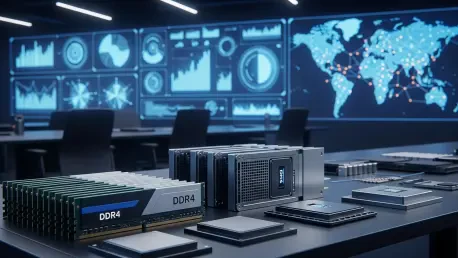
Potential developments in supply chain management now include the need to proactively stockpile critical components like DDR4 memory to avoid project delays. As the market corrects itself, the focus will likely shift from simply acquiring hardware to maintaining operational flexibility and data control. The broader implications of the current investment phase suggest that long-term success depends on integrating unproven strategies with foundational systems without sacrificing control over the internal environment.
Conclusion: Balancing Innovation with Operational Stability
The transition from synchronized refresh cycles to complex, disparate hardware lifecycles presented a significant hurdle for global enterprises. Organizations that prioritized resource management found that not every workload required the most expensive hardware available on the market. It became clear that extending the value of existing assets through strategic support allowed for more aggressive moves in areas that actually demanded high-performance compute. The most successful strategies emphasized the necessity of maintaining a high degree of flexibility to adjust as technology continued to evolve.
Successful enterprises eventually moved away from the trap of rigid, locked-in infrastructure by embracing strategic patience and modular growth. They recognized that the race for power was secondary to the ability to integrate new tools without destabilizing the core business. By focusing on hybrid models and proactive component management, leadership teams ensured that their infrastructure remained an asset rather than a liability. This shift in perspective allowed for a more balanced approach that protected foundational investments while simultaneously building the specialized environments required for the next generation of digital transformation.