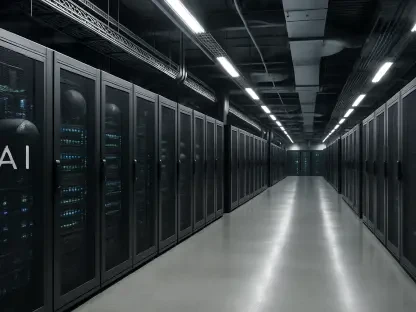

Imagine a world where the relentless hunger for digital innovation—fueled by artificial intelligence and cloud computing—pushes data centers to consume more energy than entire cities, yet the grid struggles to keep pace. This is the reality of today’s tech landscape, where energy demands are skyrocketing, and traditional power infrastructure can’t connect new facilities fast enough. Enter flexible power solutions, a game-changing trend that promises to revolutionize how data centers operate, slashing delays, trimming costs, and stabilizing an overburdened grid. This analysis dives into the heart of this transformative shift, exploring its impact on an industry at the forefront of technological progress.
The Rise of Flexible Power in Data Center Operations
Data and Trends in Adoption
Flexible power is rapidly gaining traction as a vital strategy for data centers grappling with grid connection delays. A groundbreaking study from Princeton University’s Zero Lab, conducted in collaboration with Camus Energy and Encoord, reveals that onsite power generation can shrink wait times for grid hookups by up to five years—compared to the usual seven-year backlog. This is no small feat in an era where every month of delay translates to lost revenue and computing power. The urgency is underscored by surging US power consumption, driven by AI advancements, new industrial facilities, and widespread electrification efforts, which strain the grid, especially during peak demand periods like heatwaves.
Moreover, the scale of this challenge is staggering. US power usage, once stable for decades, is now climbing sharply, with data centers at the epicenter of this surge. Research from Duke University adds another layer, suggesting that the grid could support an additional 76 gigawatts—roughly 10% of peak demand—if large users like data centers strategically manage their consumption during high-stress times. This data paints a clear picture: flexible power isn’t just a convenience; it’s becoming a necessity to keep the digital economy running smoothly.
Real-World Applications and Case Studies
Across the industry, tangible examples of flexible power are already making waves. Data centers are deploying a mix of natural gas turbines, solar panels, and battery storage to bypass grid delays and achieve faster integration. These onsite solutions allow operators to start operations sooner while reducing strain on public infrastructure. Tech giants are taking note, with Google actively funding research into grid-friendly designs and promoting such strategies through public statements as recent as this year.
In parallel, other players are experimenting with innovative approaches. Meta, for instance, is exploring power trading to meet the colossal energy needs of AI-driven operations, testing how flexible power can adapt to fluctuating demands. These case studies highlight a broader industry shift toward self-reliance in energy management, demonstrating that flexible power isn’t a theoretical concept but a practical tool being refined in real-time across diverse settings.
Industry Insights on Flexible Power Solutions
The buzz around flexible power is backed by compelling expert perspectives. Jesse Jenkins, a leading voice from Princeton’s Zero Lab, argues that earlier grid connections through onsite power translate directly into significant revenue and operational uptime for data center operators. His insights emphasize the economic incentive behind adopting these solutions, framing them as a competitive edge in a fast-moving sector.
However, not all views are uniformly optimistic. Astrid Atkinson, CEO of Camus Energy, acknowledges the potential for flexibility but stresses that it extends beyond simply cutting demand. She points to a range of strategies—such as localized generation—that address feasibility concerns and offer tailored solutions. In contrast, skepticism persists, notably from the PJM Interconnection market monitor, who has labeled the idea of data centers curtailing usage during peak times as a “regulatory fiction.” This critique underscores a key challenge: without robust alternative power models, reliance on demand reduction alone may fall short, pushing the industry to innovate further.
Future Implications of Flexible Power in Data Centers
Looking ahead, flexible power holds the potential to redefine data center design as a standard practice. By reducing dependence on costly new infrastructure like transmission lines—often underused outside peak hours—these solutions promise substantial cost savings for operators while easing grid stress. Beyond economics, they align with sustainable energy goals, offering a path to balance tech growth with environmental responsibility.
Yet, challenges loom on the horizon. Public frustration over rising electricity bills in regions hosting data centers has sparked political backlash, raising questions about equitable cost distribution. Additionally, the specter of power shortages threatens to hinder AI capabilities if grid reliability falters. Over the coming years, ongoing innovation in flexible power could serve as a critical buffer, ensuring that technological progress doesn’t outpace energy supply, provided stakeholders address both technical and social hurdles.
Final Reflections
Looking back, the journey of flexible power in data centers emerged as a pivotal response to unprecedented energy demands, cutting grid connection delays, reducing operational costs, and alleviating strain on public infrastructure. Despite lingering doubts about the practicality of demand curtailment, the industry demonstrated resilience through alternative onsite generation models. Moving forward, stakeholders should prioritize investment in scalable, adaptive energy strategies to bridge the gap between technological ambition and grid stability. By fostering collaboration between tech leaders, policymakers, and energy providers, the sector can pave the way for a future where digital innovation thrives without compromising the systems that power it.