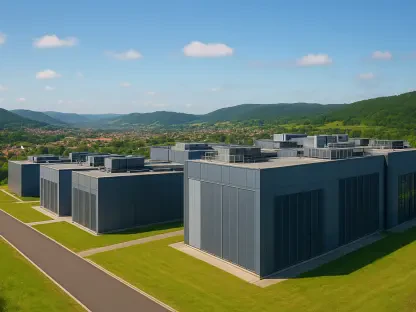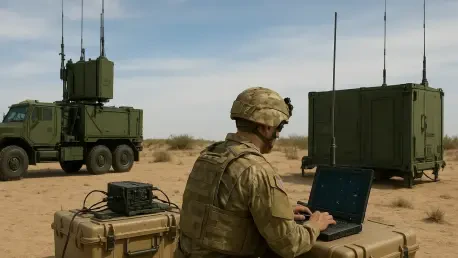

Lessons from recent conflicts indicate that large stationary radar installations are increasingly vulnerable to drone swarms and mass-missile salvos in a contested environment. Consequently, the United States Army is currently navigating a fundamental shift in its digital infrastructure to meet the unique demands of the Indo-Pacific theater. Unlike the relatively stable and fixed environments of previous decades, the Pacific presents a complex array of geographical, climatic, and diplomatic hurdles that render traditional networking models obsolete. To maintain a competitive edge, the military must move beyond the established frameworks used in Europe, focusing instead on building a resilient system capable of operating across space, cyber, air, sea, and land domains simultaneously. This strategic overhaul is driven by the realization that connectivity in the Pacific is inherently fragile compared to the mature fiber-optic networks found in the West. It is no longer enough to rely on static backbones in this vast region where an adversary possesses the means to disrupt or physically sever communication lines during an escalation.
Navigating Geographical and Operational Hurdles
The physical reality of the Pacific island chains necessitates a departure from fixed assets toward deployable resources. In regions where a stable backbone is missing, the Army is developing “network-in-a-box” solutions that allow paratroopers and logistical teams to bring their own connectivity to the tactical edge. This approach ensures that communication capabilities are not tethered to a specific location, allowing forces to establish presence on any land mass and rebuild digital links quickly if an asset is compromised or destroyed. The shift represents a move toward modularity where every component is designed for rapid transit and immediate activation. By prioritizing transportable nodes, the military reduces the risk of long-term outages caused by the destruction of centralized data hubs. These systems are hardened against extreme humidity and salt spray, ensuring that the technology survives the harsh maritime climate. This ruggedization is critical for maintaining reliable links during prolonged deployments in remote littoral areas.
Overcoming Infrastructure Deficits: Environmental Realities
Furthermore, the lack of terrestrial cabling in many parts of the Indo-Pacific means that the Army must create its own digital architecture on the fly. This involves using a combination of low-earth orbit satellites and high-altitude balloons to provide over-the-horizon coverage where traditional infrastructure is non-existent. The goal is to move away from the “hub and spoke” model that defined operations in the Middle East and toward a mesh-network approach. In this configuration, every unit acts as a relay, enhancing the overall strength and reach of the signal as more forces enter the area. Such a self-healing network is vital for operations across disparate island groups where physical distance often precludes line-of-sight communication. The environmental extremes, ranging from typhoons to intense tropical heat, require these deployable units to be both energy-efficient and thermally managed. This ensures that even in the most isolated outposts, commanders have access to the real-time data required for informed decision-making.
Adapting to Contested and Degraded Environments
Military planners anticipate that any high-end conflict in the Indo-Pacific will involve sophisticated efforts by adversaries to jam, sever, or spoof American communication lines. This has led to a major shift in doctrine: the Army no longer views constant, high-bandwidth connectivity as a prerequisite for mission success. Instead, forces are being trained to operate in “degraded, disrupted, or completely unavailable” (DDIL) environments, where localized data and autonomous decision-making allow small units to remain effective even when cut off from the global enterprise. This philosophy emphasizes edge computing, where processing power is pushed to the furthest points of the network. By doing so, units can analyze sensor data and execute missions without needing to send information back to a central command post for validation. This reduction in required bandwidth makes the network more resilient to jamming efforts, as the amount of data that must cross the airwaves is significantly minimized. It changes the focus from “more data” to “the right data.”
Strategic Integration: Technical Innovation at the Edge
While the Pacific is primarily a maritime and aerial domain, land masses remain the essential nodes for long-range precision fires and integrated air defense. Modern “island-hopping” strategies now include a digital layer, where every terrestrial foothold serves as a data relay and processing center. To support this, the Army is championing “transport-agnostic” networking, which allows data to flow seamlessly between satellite links, undersea cables, and line-of-sight radios, bypassing electronic interference through automated rerouting. This means that if a specific frequency is jammed, the system automatically detects the failure and shifts the data stream to a different medium without manual intervention. This capability is critical for maintaining the kill chain in a multi-domain fight. By treating every land-based asset as a potential network node, the Army can create a dense web of connectivity that is difficult for an enemy to dismantle. The integration of land-based sensors into the naval and air picture further complicates targeting.
Land Assets: Digital Hubs and Global Unified Networking
The integration of land assets into the maritime theater is further strengthened by the rollout of the Global Unified Network (AGUN). This modernization effort utilizes software-defined networking to create a standardized, global communication infrastructure. The objective of AGUN is to create a “fabric” of secure, data-centric transport that is inherently multi-path. By implementing this transport-agnostic layer, the Army can extend its enterprise capabilities from the continental United States directly to the “reconstitutable edge” in the Pacific. This technical framework allows for a diversity of solution—meaning that if one method of transport, such as a specific satellite band, is jammed, the system automatically reroutes data through another medium without losing connectivity. Such a self-healing capability is critical for maintaining the kill chain in a multi-domain fight where every land-based asset acts as a digital relay. This ensures that command and control remain intact even under heavy electronic assault.
Managing Diplomatic Partnerships: Data Security and Collaboration
Unlike the structured alliance of NATO in Europe, the Pacific relies on a fragmented web of bilateral and multilateral agreements. This lack of a unified command structure creates significant challenges for real-time information sharing with regional allies. The Army is addressing this by developing sophisticated data-tagging systems that allow them to fuse information from commercial and military sensors, sharing a common operational picture with partners while strictly protecting sensitive intelligence-gathering methods. This process, often referred to as zero trust architecture, ensures that data is only shared with authorized users based on specific policy requirements. It allows the military to collaborate with a variety of nations, each with different security standards, without risking the compromise of high-level classified systems. This granular control over information flow is the key to building the Pacific mesh of partnerships. By providing allies with actionable data, the United States strengthens the collective regional defense.
Mobility and Resilience: Modern Warfare Requirements
Observations from recent conflicts have underscored a vital truth: stationary targets are easily destroyed in the age of precision fires. While certain technologies like short-range drones may not scale to the vast distances of the Pacific, the necessity of constant movement is universal. The Army is now treating portable network capability as a survival requirement, ensuring that digital nodes are small and agile enough to relocate alongside combat units to avoid detection and targeting. This concept of “jumpable” command posts means that a unit can tear down and set up its entire communication infrastructure in a matter of minutes. By reducing the physical and electronic footprint of these sites, the military makes it significantly harder for an enemy to fix their location and launch a strike. The use of low-probability-of-detection waveforms further enhances this stealth, allowing units to communicate without broadcasting their position to enemy sensors. This tactical agility is now a core component of the Army’s operational concept.
Applying Lessons from Global Conflicts: Mobility First
Furthermore, the mass use of unmanned systems in current global conflicts has prompted a redesign of base defense strategies. Networks must now support the rapid integration of counter-UAS sensors and shooters into a unified defense grid. This requires a high-speed, low-latency backbone that can process and distribute target data in milliseconds. In the Pacific, this means that even remote outposts must be equipped with sophisticated electronic warfare and kinetic defense systems that are fully networked. The ability to aggregate data from multiple distributed sensors allows for a more accurate tracking of incoming threats, even those designed to be stealthy. This networked defense is the only way to counter the volume of fire expected in a high-intensity conflict. By applying these lessons, the Army is moving away from the fortress mentality and toward a more fluid and distributed defense posture. This change recognizes that the ability to maneuver both physically and electromagnetically is the ultimate form of protection.
Securing the Digital Lifeline: Operational Success
In conclusion, the Army successfully transformed its logistics and network systems to meet the demands of the Indo-Pacific. Officials implemented resilient digital threads that linked home stations to the furthest reaches of the theater, ensuring that fuel and ammunition flowed despite vast distances. They utilized predictive analytics to anticipate supply needs and rerouted assets around disrupted nodes with precision. These efforts moved the force away from a connectivity-dependent model to one where units acted decisively even during prolonged periods of electronic isolation. The transition from fixed stability to a model of fluid, mobile resilience became the defining technical undertaking of the decade. By securing logistical lifelines with distributed ledger technology and automated systems, the military maintained a high operational tempo and a credible deterrent. These actions resulted in a more decentralized, transport-agnostic architecture that allowed the United States to project power effectively across the region.