
The traditional cycle of purchasing, managing, and eventually replacing enterprise network hardware has long been a significant financial and operational burden for businesses of all sizes, demanding substantial upfront capital and a constant race against technological obsolescence. This capital-intensive approach often forces organizations to delay critical upgrades, leaving them with underperforming and potentially insecure infrastructure, while the internal IT resources required for ongoing maintenance, troubleshooting, and firmware management detract from strategic, value-adding initiatives. A fundamental shift is underway, however, moving away from this ownership model towards a more agile, service-based paradigm. A new “UniFi as a Service” (UNaaS) program exemplifies this evolution, offering a comprehensive, subscription-based framework that promises to deliver fully managed, enterprise-grade networking as a predictable operational expense, effectively transforming network infrastructure from a costly asset into a flexible, always-current utility.
The Shift from Capital to Operational Expenditure
Eliminating Upfront Investment Barriers
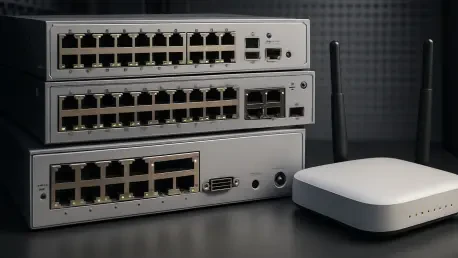
The core proposition of the UNaaS model is the radical departure from the traditional capital expenditure (CapEx) model that has historically defined network infrastructure deployment. Instead of requiring businesses to make a substantial upfront investment in hardware, this service provides all necessary UniFi equipment, including Wi-Fi access points, network switches, and security gateways, as part of a recurring subscription fee. The service provider retains ownership of the hardware, effectively removing the primary financial barrier to accessing enterprise-grade technology. Clients are typically only responsible for the permanent, one-time costs associated with structured cabling and mounting points. This approach democratizes access to high-performance networking, enabling startups, small businesses, and non-profits to leverage the same level of robust and reliable infrastructure previously reserved for large corporations with significant capital budgets, leveling the playing field and allowing them to compete more effectively.
This transition to an operational expenditure (OpEx) model introduces a new level of financial predictability and agility for organizations. The fixed monthly subscription fee encompasses not only the hardware but also its management, support, and eventual replacement, eliminating the unforeseen costs associated with hardware failures, emergency repairs, and periodic, large-scale technology refreshes. This predictable cost structure allows for more accurate budgeting and financial forecasting, freeing up capital that can be reinvested into core business functions such as product development, marketing, or talent acquisition. By converting a large, lumpy capital expense into a smooth, predictable operating cost, businesses can better manage cash flow and align their technology spending directly with their operational needs. This financial flexibility is particularly valuable in dynamic markets where the ability to scale resources up or down without being constrained by sunk costs in physical assets is a significant competitive advantage for any modern enterprise.
A Fully Managed All-Inclusive Service
Beyond the financial benefits, a key component of this service-based approach is the offloading of the entire network management lifecycle to a team of specialized experts. The subscription includes comprehensive 24/7 managed support, which encompasses continuous remote monitoring of network health, proactive deployment of critical firmware updates, and unlimited technical support for any issues that may arise. This constant oversight ensures that the network operates at peak performance and that potential problems are often identified and resolved before they can impact business operations. By entrusting these complex and time-consuming tasks to certified technicians who specialize exclusively in the UniFi ecosystem, internal IT teams are liberated from the day-to-day burden of network maintenance. This allows them to pivot their focus from routine infrastructure management to more strategic initiatives that drive business growth, innovation, and digital transformation, maximizing the value of their in-house talent and technology investments.
The model also establishes a single point of accountability for the entire network stack, a crucial advantage when troubleshooting and resolving issues. In a traditional setup, problems can lead to a frustrating cycle of blame between the hardware manufacturer, the software provider, and the internal IT team. Under the UNaaS framework, the service provider is responsible for every aspect of the network’s performance, from the physical hardware to its ongoing operation. This includes a commitment to on-site response in the event of a hardware failure, where a technician is dispatched to diagnose and replace the faulty equipment, minimizing downtime and ensuring business continuity. This consolidated responsibility streamlines the support process, providing a seamless and efficient resolution pathway. Businesses gain the peace of mind that comes from knowing a dedicated, expert team is fully responsible for maintaining the reliability and availability of their most critical digital infrastructure at all times.
Future-Proofing Network Infrastructure
Addressing Technology Obsolescence
One of the most persistent challenges in IT infrastructure management is the relentless pace of technological advancement, which renders expensive hardware obsolete in just a few years. The UNaaS model directly confronts this issue with an integrated hardware refresh program. A cornerstone of the service is the automatic replacement of all deployed network equipment with the latest-generation technology at each contract renewal. This built-in refresh cycle ensures that clients consistently benefit from the most current standards in performance, efficiency, and security without ever having to plan, budget for, or execute a complex and disruptive network-wide upgrade project. By embedding the technology lifecycle into the service itself, businesses are effectively future-proofed against obsolescence. They can maintain a state-of-the-art network infrastructure that supports emerging applications and growing bandwidth demands, all while avoiding the surprise capital expenditures and logistical headaches of periodic hardware overhauls.
This proactive approach to technology management extends directly to enhancing an organization’s security posture, which is a critical concern in the modern digital landscape. Outdated hardware and unpatched firmware are among the most common vectors for cyberattacks, leaving businesses vulnerable to data breaches, ransomware, and other significant threats. The managed service model mitigates these risks by ensuring that firmware updates and security patches are applied systematically and promptly by expert technicians. Furthermore, the regular hardware refresh cycle guarantees that the network is always running on equipment that supports the latest security protocols and encryption standards. This continuous modernization process transforms network security from a reactive, periodic task into a proactive, ongoing discipline. By building security into the very fabric of the service, businesses can significantly strengthen their defenses against an ever-evolving threat landscape without needing deep in-house cybersecurity expertise.
Tailored Solutions for Diverse Industries
The flexibility and reliability of the UNaaS model make it an ideal solution for a wide array of sectors, each with its own unique networking requirements. For fast-growing tech startups and dynamic co-working spaces, the ability to scale network capacity up or down without large capital outlays is invaluable. Professional services firms, such as law and accounting offices, benefit from the robust security and high availability that protect sensitive client data. In the retail and hospitality industries, a consistently high-performance Wi-Fi network is essential for guest satisfaction and point-of-sale operations. Similarly, healthcare offices require an exceptionally reliable network to support electronic health records and critical medical devices, while educational institutions need to provide seamless connectivity for students and faculty across sprawling campuses. The service provides a tailored, enterprise-grade solution that meets these diverse demands, offering a single, accountable partner for designing, deploying, and managing a network optimized for each specific use case.
To accelerate the adoption of this innovative model, an early adopter program has been introduced for select pilot clients. Participants in this limited-time initiative receive a range of exclusive benefits, including priority deployment to get their new network operational faster, dedicated account management for a highly personalized service experience, and strategic discounts on complementary services such as UniFi Protect for video surveillance and UniFi Access for door access control systems. This launch strategy is designed not only to build early momentum but also to gather valuable real-world feedback to further refine the service offering. The entire process, from the initial consultation and detailed site survey to the professional installation, ongoing management, and eventual hardware refresh, is managed by a team that focuses exclusively on UniFi solutions, ensuring a level of expertise and a seamless client experience that differentiates the offering in a competitive market.
A New Standard in Network Deployment
The introduction of the comprehensive, subscription-based network service marked a pivotal moment in how organizations approached their digital infrastructure. The model effectively dismantled the long-standing barriers of high upfront costs and the complexities of lifecycle management. By shifting the paradigm from hardware ownership to a fully managed service, businesses were empowered to access cutting-edge technology and expert support through a predictable and scalable operational expense. This change not only improved financial agility but also fundamentally redefined the role of IT, allowing internal teams to focus on strategic innovation rather than routine maintenance. The all-inclusive nature of the offering, which bundled hardware, 24/7 support, and automatic technology refreshes, established a new benchmark for reliability and convenience in the enterprise networking landscape.