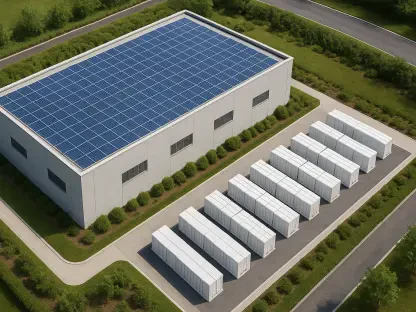

The rapid acceleration of generative artificial intelligence has fundamentally altered the physical landscape of digital infrastructure, rendering traditional coastal data center hubs nearly obsolete for large-scale training workloads. While Northern Virginia long reigned as the epicenter of global connectivity, the massive electricity requirements for training the latest multimodal large language models have pushed hyperscalers toward the American heartland. Today, the priority has shifted from minimizing millisecond latency for consumer applications to securing gigawatts of reliable power. This transition marks a departure from the historical reliance on proximity to undersea cable landings or established peering points. As Amazon, Microsoft, and Google seek to accommodate high-density racks that consume significantly more energy than traditional cloud servers, regions like the Midwest and Texas have emerged as the primary beneficiaries of this tectonic industrial shift. The geographic center of the internet is effectively moving inland.
The Primacy of Energy: Site Selection Priorities
The traditional criteria for selecting data center locations once prioritized network density and fiber-optic proximity above almost all other factors, but the relentless hunger of AI hardware has changed this calculus. Modern training clusters for advanced neural networks require power densities that existing metropolitan grids often cannot support without extensive and time-consuming upgrades. Consequently, the industry is witnessing a strategic retreat from land-constrained coastal markets where energy prices are high and grid capacity is overextended. Developers are now gravitating toward states that offer a combination of abundant land and direct access to power generation sources, such as wind farms and utility-scale solar arrays. This “power grab” has superseded the “land grab” of the previous decade, as hyperscale operators prioritize the speed of interconnection over the speed of light. Without a guaranteed multi-hundred-megawatt power commitment, a site is virtually useless for current large-scale operations.
Projections from recent industry studies indicate a significant redistribution of capacity, with Texas and the Midwest expected to secure over half of all future American hyperscale developments. This represents a substantial increase from their historical share of one-third, signaling a permanent change in how the big three cloud providers distribute their capital expenditures. In places like Abilene, Texas, and South Bend, Indiana, local governments have positioned themselves as vital partners by offering streamlined permitting and tax incentives tailored to the specific needs of massive server farms. These locations provide the necessary acreage for the sprawling campuses required to house the next generation of liquid-cooled hardware. Furthermore, the regulatory environment in these states often permits faster construction timelines compared to the bureaucratic hurdles found in traditional hubs. As AI workloads continue to expand, the ability to bring massive capacity online in months rather than years has become a primary competitive advantage for infrastructure firms.
Scaling Capacity: Meeting Neural Demands
The physical scale of individual data center facilities is undergoing a dramatic transformation to keep pace with the exponential growth of inference and training requirements. New projects currently breaking ground are designed with an average capacity that is nearly double the footprint of facilities built just a few years ago. This surge in density is a direct response to the integration of specialized accelerators like the latest NVIDIA and Blackwell architectures, which demand significantly more cooling and power per rack. By consolidating operations into larger, more efficient campuses in the interior United States, hyperscalers can achieve economies of scale that were previously unattainable in crowded coastal corridors. These massive facilities act as centralized compute engines, capable of processing trillions of parameters across distributed clusters. The concentration of such high-density compute in regions with lower real estate costs allows for more aggressive experimentation and faster iteration cycles for the next wave of generative technologies.
Strategic geographic diversification also serves as a critical risk mitigation tactic for the dominant technology giants who now control a combined majority of global hyperscale capacity. By spreading infrastructure across the central United States, operators reduce their vulnerability to regional power grid failures or localized environmental hazards that could disrupt service. This diversification is not merely about redundancy; it is about creating a resilient foundation for an economy that is increasingly reliant on real-time intelligence and automated reasoning. Cities like Kansas City and Des Moines are no longer considered secondary markets but are now central to the global supply chain of digital processing. This inland expansion has also sparked a revitalization of local economies, drawing high-tech jobs and significant investment into areas that were previously overlooked by the technology sector. The infrastructure being built today in the heartland will likely serve as the backbone of the global digital economy for the remainder of the decade.
Strategies for an Infrastructure-Led Future: Moving Inland
Moving forward, enterprises and infrastructure leaders recognized that securing future growth required a fundamental shift in energy procurement and regional engagement. The decision to pivot toward the US interior was driven by the necessity of integrating data center operations directly into regional energy planning and grid modernization efforts. To maintain a competitive edge, developers sought partnerships with utility companies early in the site selection process, ensuring that long-term power delivery schedules aligned with the rapid rollout of AI hardware. Investing in proprietary energy solutions, such as on-site small modular reactors or large-scale battery storage systems, became a standard practice for mitigating the risks of grid instability. Furthermore, operators prioritized regions that offered the flexibility to scale liquid cooling infrastructure, which is essential for managing the heat output of high-density AI clusters. By focusing on areas with favorable environmental conditions, companies successfully navigated the transition toward a more scalable digital ecosystem.
Organizations that embraced this inland migration found that success depended on more than just securing power and land; it required a commitment to developing local talent and fostering robust community relationships. This approach ensured that the arrival of massive hyperscale facilities translated into long-term regional prosperity rather than temporary construction booms. Looking ahead, the focus shifted toward optimizing the lifecycle of these facilities through advanced automation and sustainable building practices that minimized the ecological footprint of massive compute clusters. Future developments prioritized the use of recycled materials and energy-efficient designs that exceeded previous industry standards. By establishing these new hubs in the American interior, the industry created a blueprint for resilient and responsible growth that balanced the needs of technological progress with environmental and social considerations. These strategic moves laid the groundwork for a more distributed and reliable digital infrastructure that is now capable of supporting the most demanding computational tasks of the current era.