
The rapid expansion of high-density artificial intelligence workloads is forcing a fundamental rethink of how electrical infrastructure interacts with industrial consumers. While the historical conversation regarding digital growth focused almost entirely on the sheer volume of megawatts required to fuel expansion, a far more precarious challenge has emerged in the form of load predictability and extreme dynamic behavior. Modern AI data centers do not behave like the steady, predictable factories of the past; instead, they function as volatile entities that can swing their energy consumption by hundreds of megawatts in mere seconds. This phenomenon was recently demonstrated when a minor transmission disturbance in Northern Virginia caused dozens of facilities to disconnect simultaneously, removing 1,500 MW from the regional system instantly. This synchronized load loss serves as a precursor to a new era of systemic risk where the grid must adapt to a level of volatility it was never designed to endure or mitigate effectively.
Technical Barriers to Maintaining Frequency Stability
The primary technical hurdle currently facing the energy sector involves protection coordination, which refers to the hardware and logic systems that maintain safety. These legacy systems were constructed on the bedrock assumption that large industrial loads remain relatively stable over short durations. However, when AI data centers ramp their power consumption up or down at extreme speeds during training cycles, they can significantly outpace the grid’s ability to respond via traditional frequency regulation. This creates a dangerous operational gap where a sudden voltage dip could trigger a cascading failure if the grid’s safety equipment and the data center’s power systems are not perfectly synchronized. The complexity of these interactions requires a level of precision in millisecond-level response that was previously unnecessary for commercial consumers, placing an immense strain on the mechanical and digital components of regional transmission networks that are struggling to keep up with the pace.
To address these emerging risks, utility providers are currently facing a massive modeling bottleneck that delays the activation of new facilities. Before any large-scale center can go online, engineers must perform exhaustive power flow and fault studies to determine how massive battery arrays and complex power electronics will interact with the grid during a system fault. These simulations have become increasingly difficult because they must account for the specific behavior of uninterruptible power supplies and internal server management software that can drop load without warning. Because these studies require a rare level of specialized expertise, the backlog for connecting new centers to the grid has grown substantially between 2026 and 2028. Without accurate “worst-case scenario” modeling that reflects the true volatility of AI hardware, the risk of a technical oversight leading to a regional outage remains high, forcing utilities to prioritize thorough analysis over rapid deployment of new capacity.
Bridging the Cultural Divide Between Developers and Utilities
A significant cultural and technical divide persists between the technology developers building AI facilities and the utility operators tasked with powering them. Historically, data center developers viewed electricity as a simple commodity to be purchased, much like real estate or hardware, while utilities treated these centers as passive customers that simply consumed what was provided. In the era of massive AI clusters, this boundary is rapidly disappearing as these facilities become dynamic participants in the broader grid ecosystem. Many developers, however, lack the deep electrical engineering background required to understand how their internal equipment impacts the wider transmission network. This lack of shared language often leads to friction during the interconnection process, as utility engineers demand specific technical data that tech firms may view as proprietary or irrelevant, complicating the necessary collaboration required for long-term stability.
This knowledge gap is forcing utilities to take a more assertive approach, requiring detailed disclosures of a facility’s internal control systems and protection settings before granting grid access. By moving beyond simple demand estimates, operators are now insisting on seeing the logic behind how a data center’s power distribution units react to frequency deviations. This shift is necessary because the proprietary algorithms used by tech companies to manage server heat and performance can inadvertently create “load oscillations” that disrupt local power quality. To bridge this gap, some of the more advanced developers are hiring specialized power systems engineers to act as liaisons with the utility companies. These professionals work to ensure that the data center’s internal power management is “grid-aware,” meaning the facility can modulate its demand in a way that supports, rather than undermines, the stability of the local high-voltage transmission lines during peak usage periods.
Modernizing Infrastructure for Dynamic Integration
Industry experts are increasingly acknowledging that the myth of the “always on” data center has become a liability for regional grid health. While these facilities strive for 100% uptime for their internal servers, they will often disconnect themselves from the external grid to protect their sensitive hardware from even minor voltage fluctuations. This self-preservation instinct, while logical for the business, inadvertently causes a massive frequency imbalance for the rest of the utility’s customers. To combat this, there is a strong industry push toward the adoption of virtualized protection and control systems, often referred to as vPAC. These modern architectures allow utilities to have real-time visibility into high-density loads and offer the ability to adjust protection settings remotely. This ensures that a localized fault does not turn into a regional blackout caused by the simultaneous, automated disconnection of multiple gigawatt-scale AI campuses in a single cluster.
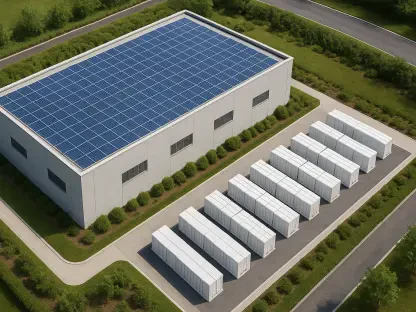
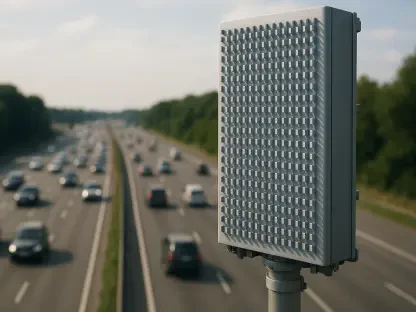
The path forward requires a transition toward “grid-friendly” designs that prioritize proactive collaboration over reactive management. Utilities have started implementing advanced real-time sensors at substations to track the millisecond-level responses of AI hardware, creating a feedback loop that helps refine stability models. This modernization effort also includes the use of dynamic simulations that can predict how a facility will behave during a solar flare or a sudden drop in renewable generation. Success in the current landscape depended on closing the gap between the rapid growth of digital processing and the physical limits of an aging electrical infrastructure. By requiring centers to participate in demand-response programs and utilize their massive on-site batteries to support the grid during periods of instability, utilities converted a potential liability into a stabilizing asset. This shift ensured that the massive energy needs of the AI revolution did not come at the expense of national energy security.
The electrical industry successfully moved away from static planning and embraced a more fluid, data-driven approach to grid management. Utilities integrated advanced monitoring tools that allowed them to anticipate the rapid load swings characteristic of AI training clusters, while developers adopted more robust voltage ride-through standards. These collaborative engineering efforts mitigated the risk of synchronized load losses and helped stabilize the regional transmission networks in Virginia and Texas. Moving forward, the focus shifted toward the implementation of standardized communication protocols between data center control rooms and utility dispatch centers. By treating large-scale AI facilities as active grid components rather than passive consumers, operators maintained reliability while supporting the massive increase in computing demand. This transition proved that the integration of volatile loads was manageable through transparent technical cooperation and the deployment of modernized protective relaying systems across the entire power distribution landscape.