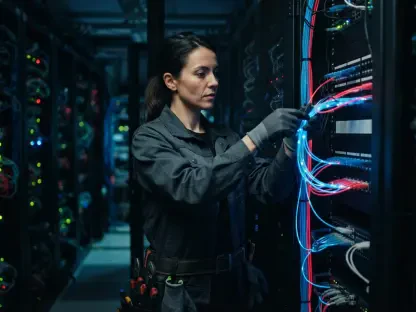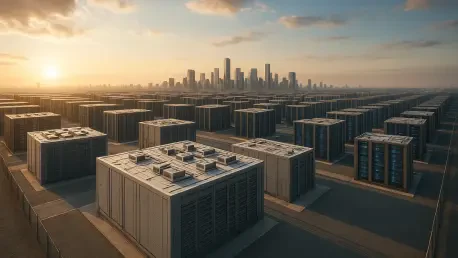

The massive infrastructure demands of modern AI are forcing a fundamental confrontation between the insatiable appetite for energy and the urgent resource needs of local populations. This struggle has rapidly evolved from isolated zoning disputes in Northern Virginia to a coordinated global movement that threatens to stall the momentum of the technological revolution. As developers attempt to scale generative models, they encounter a world where land, water, and electricity are finite and increasingly protected by those who live near these massive facilities. The transition from traditional cloud storage to high-density AI hardware has amplified the physical footprint of the industry, making the presence of data centers impossible to ignore. Communities are no longer viewing these projects as symbols of progress but as existential threats to their own utility stability and environmental heritage. Consequently, the social license to operate has become the most significant hurdle for tech companies, far exceeding the complexities of algorithmic development.
Resource Scarcity: The Physical Reality of Digital Expansion
The primary friction point lies in the staggering energy requirements of the current generation of server clusters, which draw power at rates previously reserved for heavy industrial manufacturing zones. In countries like Ireland, data center operations now consume roughly eighteen percent of the total national electricity supply, prompting the government to consider long-term moratoriums on new connections to protect the stability of the domestic grid. This pattern is repeating in Asian technology hubs such as Singapore and South Korea, where the surge in electricity demand has forced a reevaluation of how national energy budgets are allocated between the private sector and the public. Local residents are increasingly vocal about the perceived injustice of upgrading power grids at public expense primarily to serve the needs of multinational corporations. As a result, the debate has shifted from purely economic benefits to a fundamental question of whether AI development should be prioritized over residential reliability and essential services in a world of limited capacity.
Beyond electricity, the cooling requirements of AI-optimized chips have placed a significant strain on global water tables, sparking intense legal battles in drought-prone regions. In Chile, a proposed Google facility faced a two-year delay after environmental regulators and local activists raised alarms regarding the impact of its cooling systems on an already fragile aquifer system. Similar scenarios are playing out across Spain and Portugal, where agricultural communities are fighting to prevent tech giants from diverting water away from traditional farming during increasingly frequent heatwaves. In the Netherlands, the narrative has shifted toward land preservation, as seen when residents in Zeewolde successfully blocked a Microsoft project to protect valuable agricultural acreage from industrial sprawl. These conflicts demonstrate that the digital economy remains deeply tethered to the physical world, where every liter of water and every acre of soil used by a data center is a resource taken away from local food production and community survival.
Strategic Risks: The High Cost of Community Resistance
For the major hyperscalers including Amazon, Microsoft, and Meta, the rising tide of local opposition represents a significant financial and strategic liability. Industry analysts have observed that regulatory delays and the need for more complex community engagement strategies are driving up data center construction costs by nearly thirty percent compared to just a few years ago. While these companies often frame their expansion as a catalyst for local economic growth and high-tech job creation, the reality on the ground is that these facilities require few long-term employees once construction is complete. Local mayors and municipal leaders have become increasingly savvy, demanding greater transparency regarding environmental impacts rather than simply accepting promises of tax revenue. This skepticism has created a new landscape where the speed of expansion is no longer dictated by capital or demand, but by the ability to navigate a labyrinth of local permits and satisfy the specific demands of diverse, well-organized community groups.
The bottleneck in physical infrastructure has become the primary constraint on the competitive race to dominate the artificial intelligence market. As hardware providers like Nvidia continue to push the boundaries of processing power, the lack of specialized facilities to house this equipment creates a significant drag on deployment. Every month a data center project remains stalled in an environmental review or a zoning appeal is a month where a company’s competitors might find an alternative path to train and deploy more advanced models. This pressure has led to a frantic search for more welcoming jurisdictions, but even in regions traditionally friendly to big business, the sheer scale of the required infrastructure is beginning to test political limits. The race for AI supremacy is no longer just about who has the best code or the fastest chips; it is about who can build the physical garages for these engines quickly enough to stay ahead of the curve. Consequently, the ability to manage geopolitical and local risks has become as essential to success as technical excellence.
Future Directions: Adaptation Through Green Diplomacy
One of the most notable developments in this conflict is the emergence of a sophisticated, cross-border network of activists who share strategies to challenge corporate expansion. Techniques used to halt developments in the United States are being adapted and deployed by community groups in rural Ireland and suburban Japan, stripping tech companies of their traditional divide and conquer approach. These organizations are leveraging detailed environmental data and legal precedents to force a higher standard of accountability from developers. In response, tech giants have pivoted toward what is now being called green diplomacy, where infrastructure projects are bundled with massive investments in local renewable energy. For example, Amazon has committed billions to wind and solar initiatives, attempting to offset the negative perception of its energy footprint by positioning itself as a partner in the regional energy transition. This shift suggests that the era of building massive facilities without considering local ecological contexts has permanently ended.
The global confrontation over data center infrastructure established a new reality where social acceptance became a critical component of technological progress. Moving forward, the industry prioritized the development of high-efficiency, closed-loop cooling systems that eliminated the need for continuous water consumption from local sources. Companies also began exploring decentralized architecture, placing smaller units closer to renewable energy sources rather than concentrating power demand in a few overwhelmed hubs. Stakeholders shifted their focus toward socially integrated infrastructure, where the heat generated by servers was recycled to provide thermal energy for nearby residential districts or municipal greenhouses. This evolution required a fundamental change in corporate culture, moving away from aggressive, opaque expansion toward a model of radical transparency and community partnership. Ultimately, the successful deployment of AI required more than just cutting-edge hardware; it demanded a renewed commitment to the sustainable stewardship of the physical environments.