
The incredible momentum that propelled data center stocks to new heights throughout 2025 is now confronting the unyielding laws of physics and economics as the year draws to a close. While the voracious appetite for artificial intelligence continues to fuel a historic capital expenditure cycle, a growing list of tangible, real-world constraints—chief among them the availability of electrical power—is forcing investors to reconsider the sector’s unbridled growth trajectory. As the market navigates a holiday-shortened trading week marked by thin liquidity, the outlook for this diverse ecosystem of companies, from semiconductor giants to infrastructure suppliers, hinges on a delicate balance. The core investment question has evolved beyond simple demand, now centering on whether the industry can overcome critical infrastructure bottlenecks while navigating a complex macroeconomic environment dictated by central bank policy, or if these powerful headwinds will finally usher in a period of choppy consolidation.
The AI Bellwether and Its Far Reaching Ripples
Nvidia continues to function as the primary barometer for sentiment across the entire artificial intelligence supply chain, with its strategic decisions sending immediate ripples through the market. A recent agreement to license chip technology from the startup Groq, along with the high-profile hiring of its CEO, serves as a clear indicator of an accelerating and increasingly specialized competitive landscape. This move, which was met with a positive market reaction and a subsequent rise in Nvidia’s stock, signals a strategic push to innovate within the AI hardware space, particularly in the realm of inference technology. For investors, these actions underscore the company’s proactive stance in a rapidly evolving market, reinforcing confidence in its ability to not only defend its dominant position but also to define the next phase of AI hardware development. This internal focus on competition and specialization demonstrates a maturity in the market, where performance gains are sought through both groundbreaking architecture and strategic acquisitions.
Beyond its internal strategic maneuvering, Nvidia’s global operations remain a critical factor for the entire sector’s health, particularly its relationship with China. A recent report indicating that the company is targeting mid-February 2026 to commence shipments of its ##00 AI chips to the Chinese market is being scrutinized by investors worldwide. This development holds the potential to materially influence global AI hardware sales volumes, reshape the product mix, and significantly impact Nvidia’s revenue trajectory in the coming year. The re-entry into this massive market could provide a substantial tailwind, but it also reintroduces a layer of geopolitical complexity that the market must price in. The outcome will have a cascading effect, influencing the order books and forecasts for a vast ecosystem of suppliers and partners that depend on the volume and pace of Nvidia’s global deployments, making its international sales strategy a key variable for 2026.
A New Industrial Hurdle Emerges
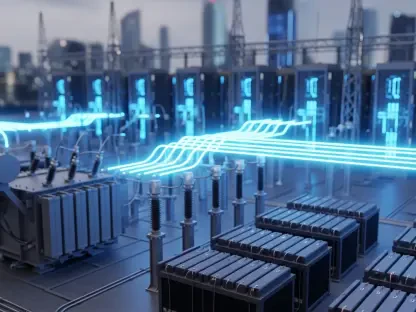
A significant and perhaps underappreciated risk is rapidly emerging from the physical limitations of the world’s electrical grids, threatening to become the single greatest impediment to the data center buildout. Recent analysis has revealed that data center developers are facing extreme delays—in some cases as long as seven years—just to secure the necessary power connections from local utility providers. This profound bottleneck is forcing a fundamental strategic shift across the industry, transforming the development race from a competition for real estate to a frantic search for accessible megawatts. This reality check is altering financial models and project timelines, as the theoretical demand for AI compute collides with the practical constraints of an aging and overburdened power infrastructure. The industry mantra is quickly evolving, with access to reliable and affordable electricity replacing land acquisition as the most critical and scarce resource in the data center development equation.
In response to these daunting grid-level challenges, the industry is undergoing a rapid and decisive pivot toward on-site power generation to maintain development momentum. Developers are increasingly deploying “bridge power” solutions, such as aeroderivative turbines adapted from jet engines and traditional diesel generators, to bring new capacity online and bypass the lengthy delays associated with utility connections. This trend has created a dual narrative for investors. On one hand, it presents a compelling “picks-and-shovels” opportunity, benefiting manufacturers of power generation equipment, engines, backup systems, and the specialized cooling hardware required for dense AI racks. On the other hand, it introduces substantial new risks to the financial viability of data center projects. A heavy reliance on on-site generation can sharply escalate operating costs, create complex new permitting challenges, and trigger significant community and regulatory backlash over concerns related to emissions and the strain on local resources.
Navigating the Macroeconomic Landscape
The overarching macroeconomic environment, specifically the future path of interest rates, remains a crucial variable that will shape the performance of the data center sector. The upcoming release of the minutes from the Federal Reserve’s December meeting is being flagged as the week’s most important macro event. This disclosure comes against a backdrop where the central bank has already reduced its benchmark interest rate by 75 basis points over its last three meetings of 2025, bringing it to a range of 3.50%–3.75%. Investor focus is now intensely fixated on gleaning any signals regarding the timing and magnitude of future rate cuts. The tone of the minutes will heavily influence broader market risk appetite and liquidity conditions, which are critical for sustaining investor confidence in the durability of the capital-intensive AI spending cycle, thereby setting the stage for market dynamics in early 2026.
This sensitivity to monetary policy is not uniform across the data center ecosystem, which contains distinct segments with different financial characteristics. Data center real estate investment trusts (REITs) and large colocation providers like Equinix and Digital Realty are highly sensitive to interest rate expectations. Their valuation multiples are directly influenced by bond yields, and their development and refinancing economics are heavily dependent on the cost of capital. A more dovish stance from the Fed could disproportionately benefit these names. In contrast, infrastructure suppliers and AI hardware companies often trade more like growth-oriented technology cyclicals. Their performance is more closely tied to broad market confidence, liquidity, and the perceived strength of the AI capex cycle itself. Signs of market rotation away from technology stocks in recent weeks suggest that leadership within the data center sector could shift depending on the prevailing macroeconomic climate.
A Recalibrated Investment Thesis
As the trading year concluded, it became clear that the investment thesis for the data center sector had fundamentally matured. The narrative had shifted from a pure-play story of technological demand into a far more complex industrial and infrastructure challenge. The consensus viewpoint coalesced around the idea that while the demand for AI compute remained unquestionable, the primary determinant of success and investment returns had evolved. The focus had moved from “who has the best chips?” to the more pragmatic question of “who can secure the megawatts?” This shift was powerfully encapsulated by the phrase “power is the new land,” signifying that access to electricity had become the most critical resource in the development race. The market’s cautious optimism in the final days of 2025, characterized by muted price action and thin trading volumes, reflected this new, multifaceted reality. Investors had paused to weigh the undeniable tailwind of AI against the hard realities of infrastructure limitations and the pervasive influence of central bank policy, setting the stage for a 2026 where differentiation and execution, not just demand, would likely define the winners.