
Modern network environments are rapidly outgrowing the limitations of traditional gigabit and 2.5GbE standards, creating a massive demand for more efficient and cost-effective high-speed connectivity solutions. As data-heavy tasks like high-resolution video editing and large-scale backup synchronization become standard in smaller workspaces, the middle ground provided by 5Gb Ethernet offers a compelling alternative to the high power consumption and thermal challenges of 10GbE infrastructure. The introduction of affordable unmanaged switches has been pivotal in this transition, allowing users to upgrade their throughput without the complexity or expense of enterprise-grade hardware. Devices targeting this specific niche focus on simplicity and reliability, utilizing modern silicon to ensure that high bandwidth does not come at the cost of excessive heat or noise. This shift marks a significant maturation in consumer and prosumer networking, where high-speed interconnects are no longer reserved for large data centers.
Structural Integrity and Silent Thermal Management
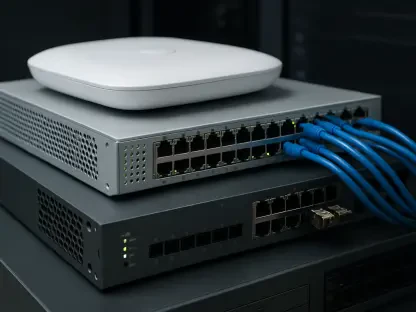
The physical construction of the device prioritizes durability and space efficiency through a ruggedized metal chassis that fits seamlessly into professional environments. Featuring a standard 1U form factor, the unit includes integrated rubber feet for desktop use alongside detachable rack ears for those looking to integrate it into a standard nineteen-inch equipment cabinet. One of the most significant design choices is the integration of an internal power supply unit, which utilizes a standard C14 AC connector directly on the back of the device. This approach eliminates the clutter of external power bricks that often complicate cable management in dense setups. By moving the transformer inside the housing, the manufacturer has ensured a cleaner installation process while maintaining a footprint that remains manageable for diverse user needs. This structural choice reflects a commitment to a professional-grade aesthetic that transcends the typical plastic-shell consumer hardware found in entry-level market segments.
Beyond its physical robustness, the switch distinguishes itself by achieving high-speed data transmission through an entirely fanless cooling architecture. Passive thermal management is handled by a combination of internal heatsinks and strategic side venting, which allows the device to dissipate heat without the need for mechanical airflow. This silent operation is a critical factor for home office users, creative professionals, and small studios where background fan noise can be a significant distraction during recording or focused work. In an era where high-performance networking often necessitates loud, high-RPM cooling solutions, this design demonstrates the efficiency of modern networking chips that can handle 5GbE speeds without reaching extreme temperatures. The absence of moving parts not only ensures a quiet environment but also increases the long-term reliability of the hardware by removing a common point of mechanical failure. The result is a high-bandwidth backbone that operates invisibly within its environment.
Internal Silicon and Network Performance
At the heart of the internal architecture lies the Realtek RTL9303 switch controller, a piece of silicon that is technically capable of 10GbE speeds but has been optimized here for 5GbE throughput. This choice provides a significant amount of performance headroom, ensuring that the switch can handle sustained high-speed traffic across all eight ports without encountering bottlenecks. Supporting this controller is 256MB of ESMT DDR3 RAM, which assists in managing packet buffers and maintaining low-latency communication between connected devices. The internal layout is remarkably clean, featuring a modular board design where the power delivery system is separated from the main logic board to minimize electromagnetic interference. This separation of components ensures that the electrical signals remain stable even when the network is under heavy load. By leveraging high-quality physical layer components, the switch maintains signal integrity over standard Cat6 cabling, making high speeds more accessible to existing setups.
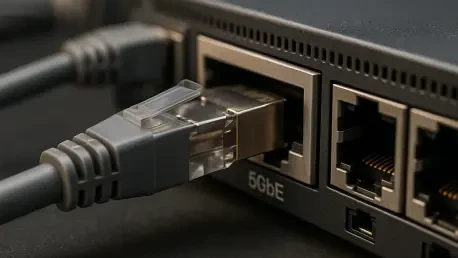
The implementation of eight dedicated 5GbE ports allows for a significant increase in local area network speeds compared to the 2.5GbE switches that dominated the market in previous years. Each port is supported by magnetic modules that protect the circuitry from electrical surges, providing an extra layer of hardware security for expensive connected devices like high-end NAS units or workstations. Because the device is an unmanaged switch, it follows a “plug-and-play” philosophy, requiring no complex software configuration to achieve maximum throughput. This makes it an ideal solution for users who want the benefits of a high-speed backbone without the overhead of managing VLANs or port aggregation. The combination of the Realtek controller and a streamlined PCB design results in a highly efficient power profile, drawing significantly less wattage than older multi-gigabit switches. This efficiency is what ultimately enables the fanless design while still delivering robust, multi-gigabit performance for the entire local network.
Strategic Implementation and Future Network Planning
Deploying a 5GbE switch serves as a strategic move for organizations and individuals who need to bridge the gap between standard gigabit speeds and the high-cost barrier of 10GbE fiber or copper. By utilizing existing copper cabling infrastructure, this technology allows for a cost-effective upgrade path that immediately benefits local file transfers and high-speed internet gateways. The primary takeaway for network administrators is the feasibility of silent, high-speed networking in environments that previously had to choose between noise or slower speeds. For those building out a modern home lab or a small business office, the focus should remain on ensuring that all endpoints, such as network interface cards and storage servers, are compatible with the 5GbBASE-T standard to fully utilize the available bandwidth. This specific hardware configuration provides a reliable foundation for those who prioritize a balance of performance, silent operation, and affordability in their networking stack.
The transition to this level of connectivity moved from being a luxury to a practical necessity for modern digital workflows. Professionals who integrated this switch into their environments found that the increased throughput significantly reduced the time required for data-intensive operations without introducing the thermal issues common in older high-speed gear. It was observed that the passive cooling remained effective even under sustained heavy loads, proving that 5GbE silicon reached a level of maturity that no longer required active ventilation. For future considerations, users should evaluate their specific bandwidth requirements and cabling quality to ensure the best possible performance. The successful adoption of such silent, high-capacity hardware demonstrated that high-speed networking could be both accessible and unobtrusive. This evolution allowed for more flexible workspace designs where high-performance equipment resided directly on desktops rather than being hidden away in cooled server rooms.