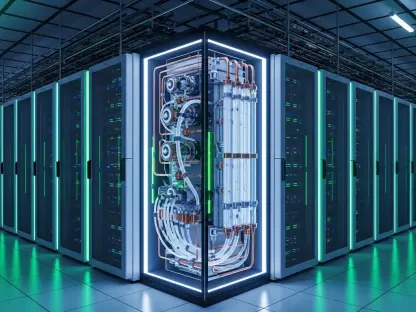

Far from the public eye, a profound and rapid transformation is underway within the world’s digital infrastructure, as the unprecedented computational demands of artificial intelligence are fundamentally rewriting the rules of data center design and operation. The explosive growth of AI has initiated a paradigm shift, moving the industry away from the static, predictable models of the past toward a new standard defined by agility, adaptability, and sustainability. As AI workloads become central to business and innovation, the historical blueprints for digital facilities are proving obsolete, unable to cope with the sheer scale of modern computational requirements. This evolution is not merely an upgrade but a complete reimagining of the foundational pillars that support our increasingly intelligent world.
The Tectonic Shift: How AI is Reshaping Digital Infrastructure
The core nature of data processing has been irrevocably altered by artificial intelligence. Unlike traditional enterprise applications that produce relatively predictable and steady workloads, AI and machine learning tasks are characterized by intense, fluctuating bursts of computational activity. This requires a new class of high-performance hardware, primarily graphics processing units (GPUs), which consume power and generate heat on a scale previously unseen. Consequently, this shift is forcing a wholesale re-evaluation of the physical layer of the digital economy, from power distribution and cooling mechanics to the very layout of server halls.
This transition represents more than a simple technological refresh; it is a fundamental change in the mission of digital infrastructure. Data centers are no longer just passive repositories for information but have become active engines of intelligence creation. The historical focus on reliability and uptime, while still critical, is now complemented by an urgent need for extreme performance and dynamic adaptability. This dual mandate challenges long-held design philosophies and demands a more integrated and intelligent approach to managing the physical environment that houses the world’s most advanced computing systems.
Emerging Paradigms and Market Realities
From Brute Force to Brains: The Rise of Agile and Adaptive Architectures
The industry is rapidly pivoting from a “brute force” methodology of overprovisioning static resources to a more intelligent, “brains”-driven strategy centered on agility. Historically, data centers were engineered for a peak capacity that was rarely utilized, leading to significant inefficiencies in energy and space. In contrast, the new generation of adaptive architectures is designed for flexibility from the ground up. This involves creating environments where power and cooling infrastructure can respond dynamically to the real-time demands of fluctuating computational loads, ensuring that resources are allocated precisely when and where they are needed.
This evolution is powered by the integration of sophisticated, software-enabled monitoring and control systems. These platforms provide operators with granular, real-time visibility into key performance metrics such as energy consumption, thermal profiles, and equipment health. By leveraging this data, operators can proactively optimize facility operations, preemptively address potential failures through predictive maintenance, and dramatically reduce energy waste. An adaptive data center is not just a building containing servers; it is a cohesive, intelligent ecosystem where the physical infrastructure and the digital workloads are in constant communication.
Quantifying the Surge: AI’s Impact on Power, Density, and Growth
The statistical reality of AI’s influence is staggering, particularly concerning power consumption and computational density. While a traditional server rack historically consumed an average of 5 to 10 kilowatts (kW), a single rack of high-performance GPUs dedicated to AI can now demand upwards of 130 kW. This exponential increase places an extraordinary strain on existing power and cooling infrastructure, rendering many older facilities incompatible with modern requirements without extensive and costly retrofitting.
This trend is projected to accelerate significantly. Forecasts indicate that the energy demand specifically from AI workloads in U.S. data centers is on track to triple by 2030. This surge creates a critical challenge, especially when considering that approximately one-third of the nation’s data centers are over a decade old and ill-equipped to handle such high-density deployments. The intense power draw from AI creates a direct conflict between the need for massive computational capability and the growing global imperative for energy efficiency and environmental responsibility.
Confronting the Core Challenges of an AI-Centric World
The primary operational challenge in this new era is managing compressed and often unpredictable project timelines. The rapid evolution of AI chip technology means that the specifications for power and cooling can change multiple times during a facility’s design and construction phase. This uncertainty makes it difficult for developers and operators to lock in designs early, creating a high-stakes environment where flexibility is no longer a luxury but a prerequisite for success. Balancing the need for rapid deployment with the necessity of future-proofing the design against technological advancements is now a central strategic dilemma.
To navigate this complexity, the industry is moving away from the singular focus on speed of deployment toward a more holistic emphasis on agility. This shift acknowledges that the value of a data center is increasingly defined by its ability to adapt to new hardware and evolving workload demands over its entire lifecycle. Operators and integrators face intense pressure to deliver highly complex facilities faster than ever before, all while ensuring the final product can accommodate the next generation of AI accelerators. Achieving this requires a fundamental change in both construction methodologies and operational philosophies.
Navigating the New Regulatory and Sustainability Landscape
The immense energy consumption of AI-powered data centers places the industry squarely in the spotlight of regulatory bodies and environmental advocates. As buildings, including data centers, account for roughly 30% of global energy use, there is mounting pressure to mitigate their environmental footprint. This scrutiny is translating into stricter efficiency standards and sustainability mandates, compelling operators to adopt greener practices not just for corporate responsibility but for regulatory compliance and market competitiveness. The energy-intensive nature of AI directly clashes with these goals, creating a tension that must be resolved through innovation.
In response, intelligent energy management is emerging as a critical component of modern data center operations. By tightly integrating building management systems with power infrastructure, facilities can align their energy consumption with external factors such as grid stability, renewable energy availability, and time-of-use pricing. This allows operators to shift non-critical workloads to off-peak hours or prioritize the use of solar and wind power when it is most abundant. Such strategies not only reduce operational costs and carbon emissions but also enhance the resilience of the data center and the stability of the broader electrical grid.
The Blueprint for Tomorrow: Innovations Shaping Future Data Centers
Modular construction and reference-based designs are becoming the industry standard for addressing the intertwined challenges of speed and complexity. By utilizing prefabricated, standardized components and validated design blueprints, construction teams can significantly accelerate deployment schedules without compromising on quality or performance. This modularity allows for greater flexibility during the build process, enabling mid-construction adjustments to layouts or the seamless integration of more advanced power and cooling solutions as they become available.
These strategies streamline the physical construction and optimize the facility’s footprint, directly contributing to enhanced scalability and sustainability. Reference designs serve as a repeatable, reliable foundation for integrating advanced computing hardware with the sophisticated cooling and high-density power systems required to support it. This approach de-risks complex projects, ensures predictable outcomes, and enables operators to scale their infrastructure more efficiently in response to growing demand. It represents a practical, effective solution to building the highly specialized environments that the AI era requires.
A Strategic Vision for the Future of Data Infrastructure
The convergence of artificial intelligence and high-performance computing presents a defining opportunity to fundamentally rethink data center architecture. The primary objective for all new builds and retrofits is the creation of fully integrated, software-defined environments that are powerful enough for today’s workloads and inherently flexible enough for tomorrow’s innovations. This requires a holistic approach where every component, from the electrical system to the cooling units, is part of an intelligent, interconnected ecosystem.
By embracing adaptive architectures, modular design principles, and unified management platforms, data center teams can successfully navigate the complexities of high-density computing and an evolving regulatory landscape. The future of the data center is not defined by speed alone; it is defined by its agility, intelligence, and sustainability. The industry’s ability to deliver on these new imperatives will be the critical factor in determining the success of future AI initiatives and the long-term environmental viability of the digital infrastructure that powers them.