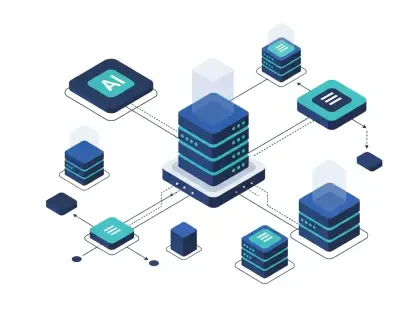

The foundational principles that propelled cloud computing to the forefront of corporate IT strategy over the past decade are now being fundamentally challenged by the uniquely demanding and resource-intensive nature of artificial intelligence workloads. For years, the “cloud-first” doctrine was the undisputed path to modernization, offering unparalleled scalability and flexibility. However, the economic and performance realities of deploying AI at scale have exposed critical limitations in a pure-cloud approach, forcing a significant strategic re-evaluation. This has catalyzed a pivot away from a one-size-fits-all cloud mandate toward a more sophisticated and pragmatic hybrid model. This new paradigm intelligently blends the public cloud with on-premises data centers and edge computing, creating a resilient, cost-effective, and purpose-built architecture for the age of AI. The consensus is no longer about choosing one environment over the other, but about strategically allocating workloads to the environment where they perform best.
Why the Cloud-First AI Strategy Is Failing
The Economic Tipping Point
A primary catalyst driving enterprises away from a pure-cloud AI strategy is the often staggering and unpredictable cost. There is a profound paradox at play: while the cost of individual AI components, such as API tokens for large language models, continues to plummet, overall enterprise cloud expenditures are skyrocketing. Organizations are reporting monthly cloud bills swelling into the tens of millions of dollars, a direct result of the sheer volume and relentless frequency of API calls and resource consumption inherent in production AI systems. The very pay-as-you-go model that made the cloud attractive for general applications becomes a financial liability when faced with the constant, high-intensity demands of AI inference. This has created an unsustainable economic model for many, where the operational costs of running AI in the cloud far exceed initial projections, compelling a search for more predictable and financially manageable alternatives for stable, high-volume workloads.
This financial pressure has led to the identification of a crucial economic benchmark known as the “tipping point.” This metric quantifies the moment when it becomes more financially prudent to move a workload from the public cloud back on-premises. The tipping point is reached when the ongoing cloud operational expenses (OpEx) for a predictable AI workload exceed 60% to 70% of the total cost of acquiring and owning an equivalent on-premises system. Once this threshold is crossed, a capital investment (CapEx) in on-premises hardware ceases to be a legacy decision and transforms into a strategic financial move for long-term savings and cost predictability. This calculation fundamentally reframes the classic OpEx versus CapEx debate, demonstrating that for stable, high-volume AI processes like production inference, owning the infrastructure provides a clear path to controlling runaway costs and achieving a more sustainable economic model for AI operations at scale.
Performance and Control Imperatives
Beyond the compelling economic arguments, fundamental issues of performance and control make a pure-cloud approach unsuitable for a significant class of AI applications. Latency, the delay in data transmission, is often a non-negotiable factor where near-instantaneous response is critical. Many real-time AI systems, particularly those integrated into industrial automation, manufacturing control, or autonomous robotics, demand near-zero latency, often requiring response times of 10 milliseconds or less. The inherent physical limitations of the public cloud—the time it takes for data to travel from a device to a remote data center and back—make it impossible to meet these stringent performance requirements. This physical reality creates an insurmountable technical barrier, rendering the public cloud inappropriate for any time-sensitive AI process where split-second decision-making is essential for operational success and safety.
Furthermore, the imperatives of operational resilience and data governance are pushing organizations to reconsider where their most critical AI workloads and sensitive data reside. For mission-critical AI systems, such as those controlling vital infrastructure or managing core financial transactions, any interruption is intolerable. Relying solely on a public cloud connection introduces an unacceptable operational risk; an on-premises deployment ensures that these vital processes can continue to function uninterrupted, even if external network connectivity is severed. Concurrently, the principle of data sovereignty—which dictates that data is subject to the laws and regulations of the country in which it is located—is prompting many organizations to “repatriate” their computing. By bringing sensitive data and AI models back on-premises, companies can ensure they maintain absolute control, comply with local jurisdictional requirements, and avoid the legal complexities of hosting data with service providers in other regions.
Architecting the Solution: A Three-Tier Hybrid Model
A New Blueprint for AI Infrastructure
In response to the clear limitations of a cloud-only strategy, a new architectural consensus is rapidly forming around a three-tier hybrid computing model specifically designed to optimize for AI. This shift does not represent a rejection of the cloud but rather a strategic evolution toward a more nuanced and effective “both/and” solution. The core principle of this modern blueprint is to move beyond a monolithic infrastructure choice and instead assign distinct and appropriate roles to different computing environments. This purpose-built architecture leverages the public cloud for its unparalleled elasticity, on-premises infrastructure for consistency and control, and edge computing for immediacy. By strategically allocating workloads to the environment best suited to their specific characteristics—be it cost, performance, or governance—organizations can create a cohesive and highly optimized system that maximizes the value and potential of their AI initiatives.
The validity of this three-tiered approach is reinforced by a growing consensus among industry practitioners and technology leaders. Software architects and IT strategists confirm that while public cloud platforms are mature and enable rapid innovation and growth, a hybrid strategy is the most effective way to operate sophisticated AI systems at scale. This expert viewpoint advocates for using the cloud’s flexibility for development and experimentation while keeping latency-sensitive, mission-critical, and regulated applications securely on-premises. This approach also underscores a crucial point of accountability: regardless of where a workload runs, the responsibility for security, compliance, and governance ultimately remains with the enterprise. This pragmatic perspective validates the hybrid model as not just a theoretical concept but as a practical and necessary framework for building robust, secure, and sustainable AI infrastructure in the real world.
Defining Roles: Cloud and On-Premises
Within this sophisticated hybrid framework, the public cloud retains a vital and clearly defined role centered on its core strength: elasticity. The cloud’s pay-as-you-go model makes it the ideal environment for workloads that are inherently variable, experimental, or require massive, short-term scaling that would be impractical or cost-prohibitive to support with on-premises hardware. This includes the computationally intensive process of training large AI models, which can demand immense resources for a finite period. It is also perfectly suited for running experiments with different algorithms, conducting A/B testing, and handling unpredictable “burst capacity” needs where demand for an application can suddenly spike. By leveraging the cloud for these specific tasks, organizations can innovate quickly and access cutting-edge resources without a massive upfront capital investment, reserving their on-premises capacity for more stable and predictable operations.
In direct contrast to the cloud’s role, on-premises infrastructure is now positioned as the superior choice for AI workloads characterized by stability, predictability, and high volume. The most prominent use case in this category is production AI inference, which involves the continuous, day-to-day use of a trained model to make predictions or decisions. Hosting these consistent and resource-intensive workloads on-premises provides organizations with predictable and manageable costs, effectively insulating them from the risk of runaway operational expenses that can plague high-volume inference in the cloud. This approach also serves as a direct solution to the critical business needs for unwavering operational resilience and stringent data sovereignty. By keeping mission-critical AI systems and the sensitive data they process within the corporate firewall, companies can guarantee uptime and maintain full control, ensuring compliance with regulatory mandates.
Completing the Model: The Role of the Edge
The crucial third tier that completes this strategic hybrid architecture is edge computing. The edge is not merely an extension of the data center; it is the definitive solution for a class of AI use cases where immediacy is the most critical factor. It directly solves the intractable problem of latency that neither a remote public cloud nor a centralized on-premises data center can adequately address. By deploying AI models and processing power directly on edge devices, within applications, or on local servers situated close to the source of data generation, the round-trip delay to a central server is entirely eliminated. This capability is indispensable for applications where decisions must be made in fractions of a second. Use cases in autonomous systems, industrial IoT, and advanced robotics rely on this immediate processing to function effectively and safely, making edge computing a non-negotiable component of a comprehensive AI infrastructure.
The tangible impact of edge AI becomes clear when examining its real-world applications. In a smart factory, for instance, an AI model running on an edge device connected to a piece of machinery can analyze sensor data in real-time to detect the subtle vibrations that precede a critical failure. It can then trigger a shutdown in milliseconds, preventing catastrophic damage and costly downtime—a preventive action that would be impossible if the data had to travel to the cloud for analysis. Similarly, in an autonomous vehicle, the AI systems responsible for object detection and collision avoidance must process vast amounts of sensor data and make life-or-death decisions instantly. This necessitates powerful onboard, or edge, AI processing. These examples illustrate how the edge tier completes the hybrid model, ensuring that every type of AI workload, from massive training runs in the cloud to instantaneous local actions, has a perfectly optimized and purpose-fit environment.
A Rebalanced IT Landscape
The widespread re-evaluation of cloud strategy was not a rejection of its transformative benefits but rather a necessary and significant maturation of enterprise IT architecture. The unique and powerful demands of artificial intelligence served as the primary catalyst that pushed organizations to move beyond the simplistic “cloud-first” mantra and evolve toward a more sophisticated, workload-aware approach to infrastructure design. The resulting hybrid model represented a more balanced and sustainable equilibrium for the industry. In this refined landscape, the distinct strengths of the public cloud, on-premises data centers, and edge computing were no longer seen as competing options but as strategically integrated components. This synthesis allowed businesses to deliver optimal performance, achieve greater cost efficiency, and maintain sovereign control in a new and complex technological era.