
In an increasingly digitized global economy where business operations are contingent on uninterrupted data flow, the once-distinct realms of telecommunications and cloud computing are rapidly converging into a single, interdependent ecosystem. This monumental shift is being driven by the relentless demand for scalable, resilient, and intelligent connectivity that can support everything from remote industrial operations to the deployment of sophisticated artificial intelligence models. A groundbreaking strategic partnership between AT&T and Amazon Web Services (AWS) now stands as a clear signal of this industry-wide transformation, aiming to forge a deeply integrated connectivity framework for enterprise customers. By weaving together their respective strengths in networking and cloud infrastructure, this collaboration is set to address critical enterprise challenges, focusing on three core pillars: the modernization of AT&t’s internal network through a hybrid cloud model, the mutual enhancement of infrastructure with high-capacity fiber, and the expansion of connectivity to the most remote locations via a low Earth orbit (LEO) satellite network.
A Symbiotic Infrastructure Overhaul
Modernizing with Hybrid Cloud
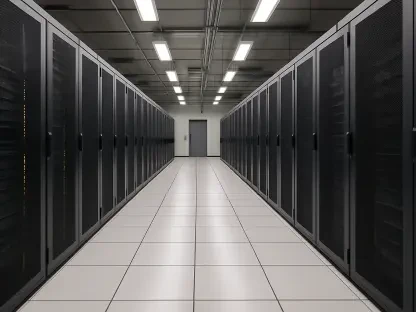
A central pillar of the collaboration involves a comprehensive internal transformation within AT&T, where the telecommunications giant is strategically migrating essential workloads from its legacy on-premises systems to AWS Outposts. This managed hybrid cloud solution enables AT&T to run AWS infrastructure and services directly within its own data centers and edge locations, striking a critical balance between the security and low latency of on-premises hardware and the scalability and flexibility of the public cloud. The primary objective of this migration is to dramatically enhance operational efficiency, bolster network resilience against disruptions, and significantly accelerate the pace of internal service updates and deployments. By modernizing its foundational infrastructure, AT&T is not only optimizing its own operations but is also building a more agile and responsive network backbone capable of supporting next-generation enterprise services and adapting to the dynamic demands of a cloud-native world. This move represents a proactive step toward future-proofing its core network.
To navigate the immense engineering complexities inherent in such a large-scale migration, AT&T is leveraging the specialized expertise of AWS Professional Services alongside the powerful generative AI tool, Amazon Q Developer. The involvement of these resources underscores a significant and accelerating trend within the technology sector: the growing reliance on AI-assisted development and advanced automation to meet ambitious deployment schedules for major infrastructure overhauls. Amazon Q Developer, in particular, assists engineers by generating code, offering debugging suggestions, and streamlining complex workflows, thereby reducing manual effort and minimizing the potential for human error. This AI-driven approach is becoming indispensable for managing the intricate dependencies and vast scope of modernizing legacy systems, allowing large enterprises like AT&T to execute their digital transformation strategies with greater speed, precision, and confidence, ensuring that critical infrastructure upgrades are completed on time and within budget without disrupting ongoing operations.
Reciprocal Enhancement and Fiber Connectivity
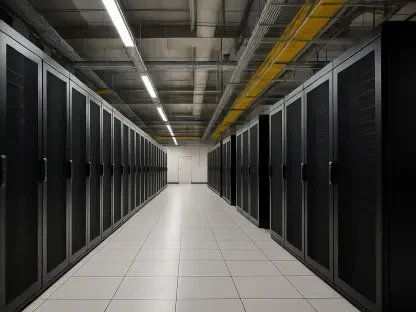
The partnership is designed to be profoundly mutually beneficial, creating a synergistic loop where each company’s strengths are leveraged to enhance the other’s capabilities. While AT&T is a major consumer of AWS cloud services to fuel its internal modernization efforts, it will, in turn, provide indispensable physical infrastructure to bolster AWS’s global network. Under the terms of the agreement, AT&T is tasked with connecting numerous AWS data center locations with its extensive high-capacity fiber network. This strategic buildout is not merely an expansion of existing infrastructure; it is a critical enhancement designed to support the explosive growth of cloud services and the increasingly sophisticated demands of enterprise customers. The low-latency, high-throughput characteristics of a robust fiber backbone are essential for the seamless operation of hyperscale cloud environments, making this reciprocal arrangement a cornerstone of the entire collaboration and a model for future partnerships between cloud providers and telecommunications carriers.
This enhancement of the physical network layer is particularly vital for supporting the next wave of technological innovation, including the widespread deployment of advanced, data-intensive artificial intelligence applications. AI and machine learning workloads require the processing of massive datasets with minimal delay, a requirement that places immense strain on underlying network infrastructure. The high-capacity fiber connections provided by AT&T will ensure that AWS can deliver the low latency and high throughput necessary for these demanding applications, from real-time data analytics to the training of complex neural networks. This aspect of the partnership highlights an overarching and fundamental truth of the digital age: the performance and potential of even the most advanced hyperscale cloud applications remain fundamentally dependent on the quality, capacity, and resilience of the physical network layer provided by telecommunications leaders, reinforcing the inseparable link between the cloud and the ground.
Extending the Reach of Connectivity
Bridging the Gap with Satellite Technology
The collaboration’s ambition extends far beyond conventional terrestrial networks, venturing into space to bridge the digital divide for enterprise customers. By incorporating Amazon’s low Earth orbit (LEO) satellite network into its service portfolio, AT&T will be able to deliver high-performance fixed broadband services to business locations that have historically been underserved or entirely unreachable. This includes areas where deploying traditional fiber networks is either commercially unviable due to low population density or physically impossible due to challenging terrain. The integration of this non-terrestrial network infrastructure represents a significant leap forward in achieving ubiquitous connectivity, allowing AT&T to offer reliable, high-speed internet access to remote industrial sites, distributed agricultural operations, and logistics hubs located far from major urban centers. This satellite-based solution effectively erases geographical barriers, ensuring that businesses can maintain critical operations and leverage digital tools regardless of their physical location.
For enterprise clients managing a wide array of distributed assets, this integrated approach to connectivity offers a transformative simplification of network management. Businesses with operations spanning from urban headquarters to remote field sites can now benefit from a single, unified service level agreement (SLA) from AT&T that covers both their primary terrestrial connections and their satellite-based backup or remote connectivity. This consolidation eliminates the complexity of managing multiple vendors and disparate network technologies, providing a streamlined and cohesive experience. A unified SLA ensures consistent performance, reliability, and security standards across the entire network, simplifying troubleshooting and providing a single point of contact for support. This holistic service model empowers businesses to focus on their core operations with the confidence that their entire connectivity infrastructure is managed under a single, robust, and reliable framework, enhancing both operational efficiency and business continuity.
The Blurring Lines Between Cloud and Telecom
The collaboration between AT&T and AWS ultimately signaled an acceleration in the convergence of network operators and cloud providers. The traditionally clear distinctions that once separated these two technology pillars had faded, revealing an industry landscape defined by deep interdependence and synergistic growth. It became evident that the success of the next phase of network evolution hinged not on isolated advancements but on the ability to seamlessly integrate a diverse array of technologies—from terrestrial fiber and non-terrestrial satellite networks to sophisticated hybrid cloud architectures. This partnership established a new blueprint for creating a resilient, scalable, and intelligent ecosystem capable of supporting the comprehensive digitalization of enterprises. The initiative demonstrated that the future of enterprise connectivity was a unified fabric where the network and the cloud were no longer separate entities but two inseparable components of a single, powerful infrastructure.