
From Moratorium to Mandate: Ireland’s High-Stakes Bet on Sustainable Data
After a period of uncertainty that saw investment pipelines run dry, Ireland has decisively ended its de facto moratorium on new data center connections to the national grid. This is no return to business as usual; instead, Dublin has unveiled a rigorous new framework that fundamentally redefines the relationship between the digital economy and the country’s energy infrastructure. The policy shift provides long-awaited clarity to the tech industry but comes with a stringent set of conditions designed to transform data centers from passive energy consumers into active, self-sufficient participants in the grid. This article explores whether this audacious new model can successfully balance Ireland’s economic ambitions as a global tech hub with the urgent need for grid stability and a sustainable energy future.
The Power Dilemma: How Data Centers Pushed Ireland’s Grid to the Brink
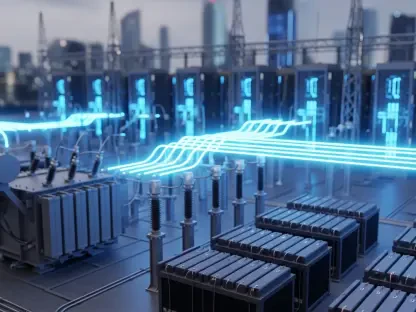
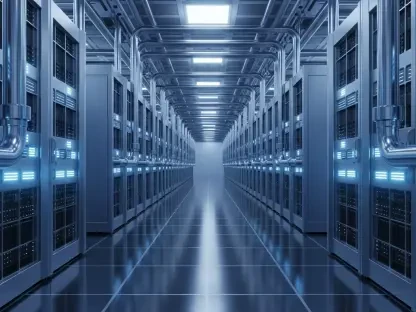
For years, Ireland’s low corporate tax rate, stable political environment, and skilled workforce made it one of the world’s most attractive locations for data centers. This success, however, came at a steep price. The sector’s voracious appetite for electricity created an unprecedented strain on the national grid, with data centers now consuming nearly a quarter of all electricity produced in the country. Projections warned this figure could rise to one-third by 2030, raising serious concerns about energy security and the risk of blackouts. This escalating crisis forced the government’s hand in 2021, leading to a moratorium on new grid connections in the Dublin area, effectively freezing development and casting a long shadow over the industry’s future.
The New Rules of the Game: A Triple-Lock on Data Center Development
Self-Sufficiency and Grid Service: The On-Site Power Mandate
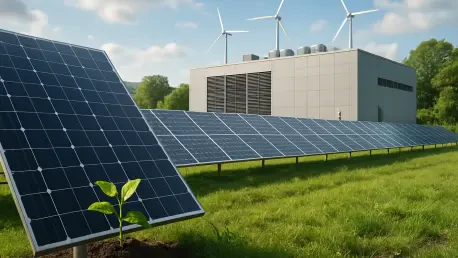
The cornerstone of the new policy is a radical requirement for energy self-sufficiency. To gain approval for a grid connection, new data centers must now demonstrate the ability to meet their full electricity demand with on-site generation, large-scale battery systems, or a combination of both. This mandate is designed to ensure that new facilities do not place any additional net load on the constrained grid. Even more revolutionary is the requirement for these centers to be “dispatchable,” meaning they must be capable of providing power back to the national grid during times of system stress. This transforms data centers from a major liability into a potential grid-stabilizing asset, fundamentally altering their role within the national energy ecosystem.
The 80 Percent Renewable Mandate: Tying Data Growth to Green Energy
Addressing the core sustainability challenge, the framework mandates that a minimum of 80% of a data center’s annual electricity consumption must be sourced from new, dedicated renewable energy projects. This “additionality” clause is critical, as it prevents operators from simply purchasing existing green energy credits, which would do little to expand the country’s overall renewable capacity. Instead, data center developers are now directly incentivized—and required—to fund the construction of new wind farms or solar arrays. This policy effectively forces the industry to underwrite a significant portion of Ireland’s green energy transition, directly linking its own growth to the country’s climate action goals.
Beyond Kilowatts: Enforcing Transparency and Enabling Independence
To ensure compliance and accountability, the new policy introduces robust transparency requirements. Data center operators must now submit annual reports detailing their total emissions, electricity consumption, and the sources of their renewable energy. This measure aims to prevent “greenwashing” and provide regulators with clear data on the sector’s environmental impact. In parallel, the government is introducing supportive legislation to make it easier for large energy users to generate their own power independently. This move signals a broader strategic shift toward a decentralized energy model, empowering industrial players to become part of the solution rather than just being part of the problem.
A New Blueprint for Global Data Hubs? The Future of Irish Data Infrastructure
Ireland’s stringent, conditional-access model could become a pioneering blueprint for other nations grappling with the same energy-versus-technology dilemma. As the global demand for data processing, AI, and cloud computing continues to explode, grids worldwide are facing similar pressures. Ireland’s approach, while demanding, positions it to attract a new class of sophisticated, long-term investors who prioritize sustainability and are capable of integrating complex energy strategies into their business models. This policy is expected to spur significant innovation in on-site power generation, advanced battery storage technology, and smart grid integration, potentially creating a new competitive advantage for the Irish tech ecosystem.
Navigating the New Landscape: Key Takeaways for Industry Stakeholders
The primary takeaway from Ireland’s policy shift is that the era of treating energy as a simple utility is over for the data center industry. The core message for operators is to embed a comprehensive energy strategy at the heart of their development plans, viewing power generation and grid services not as operational costs but as integral business functions. For investors, the landscape now favors those with the capital and expertise to develop integrated data and energy projects. For the Irish government, the challenge will be to ensure that the application and approval processes for these complex projects are efficient and predictable, thereby providing the very certainty the industry needs to commit to long-term investment.
Balancing Bytes and Blackouts: Ireland’s Audacious Path Forward
Ireland is embarking on an ambitious experiment to reconcile the exponential growth of the digital world with the finite capacity of its physical energy infrastructure. By replacing its moratorium with a set of demanding mandates, the nation is making a calculated bet that it can force a convergence between technological advancement and environmental responsibility. The success or failure of this policy will have repercussions far beyond its shores, offering a crucial test case for how to power the 21st-century economy sustainably. The ultimate question is no longer simply if Ireland can reboot its data center growth, but whether it can pioneer a resilient and truly green model for the entire global technology industry to follow.