
We are joined today by Matilda Bailey, a networking specialist whose career has been at the forefront of the technologies powering our hyper-connected world. With a deep focus on cellular, wireless, and next-generation solutions, she brings a unique perspective to the infrastructure wars currently being waged in the AI space, where high-performance fabrics and interconnects are as critical as the chips themselves.
Our conversation will explore the seismic shift in cloud computing driven by artificial intelligence. We will delve into the economics behind the new wave of specialized “neoclouds” and why their purpose-built architecture offers such a stark cost advantage over traditional hyperscalers. We’ll also confront the critical supply chain and power constraints that threaten to throttle this explosive growth, examining the creative strategies providers are using to stay ahead. Finally, we’ll look to the future, discussing how the GPU-as-a-Service model is evolving and whether the incumbent hyperscalers might one day reclaim the very market they helped create.
The article states neoclouds can be just one-third the cost of hyperscalers due to their purpose-built architecture. Can you break down the key differences, from interconnects to cooling, that create these savings? Please provide a metric-driven example of how this impacts a company’s budget.
Absolutely. The cost difference is staggering, and it all comes down to specialization versus generalization. A hyperscaler is like a massive, sprawling city with roads designed for every type of vehicle—bicycles, cars, buses, and freight trucks. It works, but it’s not optimized for any single one. A neocloud, on the other hand, is a dedicated Formula 1 racetrack. Every curve, every surface, and every piece of the surrounding infrastructure is engineered for one purpose: getting high-performance vehicles around the track as fast as humanly possible.
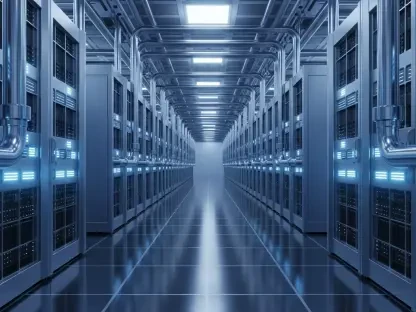
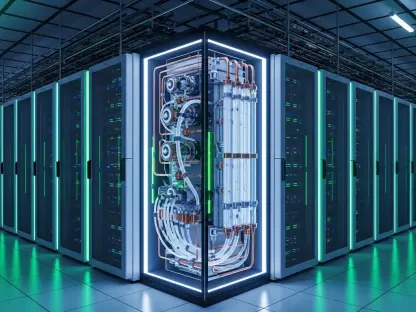
In technical terms, this means neoclouds are architected from the ground up around dense fleets of accelerators. The network fabric isn’t a general-purpose Ethernet; it’s an ultra-low-latency, high-bandwidth system like InfiniBand or RDMA-enabled Ethernet that acts as the central nervous system for the entire GPU cluster. Similarly, the power and cooling aren’t retrofitted; they are designed to handle the immense thermal load of thousands of GPUs running at full tilt, packed tightly together. This consolidation and purpose-built design means there’s no wasted overhead. For a company, the impact is direct and profound. If you’ve budgeted, say, $3 million for a large model training run on a major hyperscaler, a neocloud could potentially deliver the same performance for around $1 million. That’s not just a saving; that’s $2 million in capital you can reinvest in research, talent, or training even larger models.
With AI data center energy use projected to hit 250 TWh by 2030, the piece highlights a major supply chain crisis for power equipment. What specific, creative steps are neocloud providers taking to overcome shortages of transformers and generators to fuel their aggressive expansion?
This is the multi-billion-dollar question that keeps operators up at night. The growth in demand has been so vertical that, as the article notes, the supply chain for critical power equipment is essentially depleted. You can’t just order a large transformer or gas turbine and expect it to show up in a few weeks; we’re talking about lead times measured in years. The neocloud providers who are winning this race are the ones who are thinking like energy prospectors, not just data center operators.
Many of these contenders have roots in the crypto-mining world, so they’re no strangers to unconventional infrastructure plays. They aren’t waiting for the grid to come to them; they are going to the power. This means striking long-term deals directly with utility providers to co-locate new data centers right next to power substations or even power plants themselves, effectively cutting the line. We’re also seeing them get incredibly creative by acquiring land with pre-existing power rights and investing in their own microgrids. The most forward-thinking are securing their orders for generators and transformers years in advance, placing massive bets on future growth long before the first shovel hits the ground. It’s a high-stakes game where securing a power contract is now more critical than securing a shipment of new GPUs.
Experts in the article suggest “GPU-as-a-Service” will evolve into a “fully managed cloud service.” What does this transition look like step-by-step for a provider, and what new skills are needed to manage these complex workloads, especially when talent is so scarce?
The evolution from “GPU-as-a-Service” to a fully managed service is a journey from providing raw materials to delivering a finished product. Right now, most providers are in the first stage. They offer bare-metal access to GPU clusters, which is like leasing someone a state-of-the-art engine. It’s incredibly powerful, but it’s on the customer to build the car, design the transmission, and hire the driver. It requires a tremendous amount of in-house expertise to manage.
The next step, which we’re starting to see, is the software and orchestration layer. This is where the provider starts building the chassis and the dashboard. They offer tools for scheduling jobs, managing data, and monitoring performance, making the raw hardware much more usable. The final stage, the “fully managed cloud service,” is the complete, autonomous race car. The provider doesn’t just give you the hardware; they manage the entire AI lifecycle. They optimize the workloads, fine-tune the models for the specific architecture, and provide a seamless, integrated platform where a data scientist can work without ever having to think about the underlying infrastructure. This requires a profound shift in talent. You no longer just need hardware and networking gurus; you need MLOps specialists, distributed systems software engineers, and AI architects who understand the business problem. Finding these people is the real bottleneck because the talent pool is incredibly small and the demand is insatiable.
The content raises the idea of a “Revenge of the Hyperscalers.” Considering they currently outsource this work, what specific technological or efficiency milestones would AI need to hit for hyperscalers to find it economically viable to reclaim these specialized workloads from neoclouds?
The “Revenge of the Hyperscalers” is a fascinating possibility, and it all boils down to a fundamental economic calculation. Right now, it’s cheaper for them to offload these highly specialized workloads—essentially renting capacity from neoclouds—than it is to re-architect their own massive, general-purpose infrastructure. The turning point will come when the efficiency of AI workloads improves to a point where they no longer require such bespoke, high-strung environments.
There are a couple of key milestones to watch for. First, software optimization. If AI training and inference algorithms become significantly more efficient, they might not need the absolute lowest latency and highest bandwidth of an InfiniBand network. They might run “good enough” on the hyperscalers’ existing RDMA-enabled Ethernet, which would dramatically lower the barrier to entry for them. Second, hardware evolution. As chips become more powerful and more energy-efficient, the extreme power and cooling solutions that are the hallmark of neoclouds might become less of a differentiator. If a hyperscaler can cool the next generation of GPUs within their existing data center designs, their massive scale and integrated service ecosystem could become a compelling advantage again. It’s a race between the specialization of the neoclouds and the maturing efficiency of AI itself.
Your colleague calls the idea that all machine learning requires GPUs a “fallacy.” Could you share a step-by-step process for how a company should analyze its workloads to find the right architecture, and perhaps an anecdote where a non-GPU path yielded surprising benefits?
I couldn’t agree more with that statement; it’s one of the most expensive fallacies in the industry today. The first step for any company is to resist the hype and deeply profile your workload. Don’t just ask, “Is this AI?” Ask, “What kind of math is the model actually doing?” Is it the massive, parallel floating-point operations of deep learning model training, which is a perfect fit for GPUs? Or is it something else?
The next step is to analyze the bottlenecks. Is your application truly limited by raw computation, or is it constrained by memory access, I/O, or network latency? Many machine learning tasks, especially on the inference side, are more about quick data lookups than brute-force math. Finally, you have to benchmark alternatives. Don’t just assume. Test your workload on modern CPUs with advanced vector extensions, or even on specialized accelerators. I recall a fintech client that was building a real-time fraud detection system. The prevailing wisdom was to throw a fleet of GPUs at it. But when we analyzed the workload, we realized the core task was running millions of simple comparisons across a massive dataset in memory. It was completely bottlenecked by memory bandwidth, not computation. We shifted them to a cluster of high-memory CPU instances, and the results were incredible. Not only did they slash their cloud bill by over 60%, but their inference latency actually improved because the architecture was a fundamentally better match for the problem. It proved that choosing the right tool is always more important than choosing the most powerful one.
What is your forecast for the neocloud market?
Looking ahead, I see a period of intense competition and consolidation. The market is currently a bit of a gold rush, with around 200 providers, but not all of them will survive the infrastructure arms race for power and equipment. The winners will be those who not only secure their supply chains but also successfully make the leap from being raw infrastructure providers to offering the sophisticated, fully managed services that enterprises increasingly demand. While the hyperscalers will always loom as a long-term threat, I believe a healthy ecosystem of specialized neoclouds is here to stay. The demand for AI is simply too vast and diverse for a one-size-fits-all approach. The future of the cloud isn’t monolithic; it’s a dynamic landscape of both general-purpose giants and highly specialized, high-performance players.