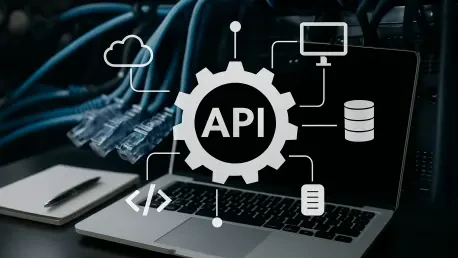

The next leap forward in manufacturing will not be powered by connectivity alone but by the ability to command it with precision and intelligence. For decades, networks have been treated as passive conduits—essential for operations but fundamentally static and unresponsive to the dynamic needs of the factory floor. As Industry 4.0 matures, this model is becoming a critical bottleneck, hindering progress and limiting potential. The true competitive edge now lies in transforming these networks from simple utilities into dynamic, programmable platforms that can be orchestrated in real time. Network Application Programming Interfaces (APIs) are the crucial catalyst for this transformation, serving as the digital language that allows enterprise applications to directly command network resources. By enabling this dialogue, APIs empower manufacturers to turn a simple connection into a powerful strategic asset, unlocking new levels of efficiency, security, and innovation that will define the next generation of industrial production.
From a Passive Utility to a Programmable Asset
In the face of intense global pressures, from volatile supply chain disruptions and escalating operational costs to rising consumer demand for customized products, manufacturers can no longer afford to view their network as a one-size-fits-all utility. The modern industrial environment demands unprecedented agility, and network APIs provide the means to achieve it by serving as the digital bridge between enterprise applications and the underlying network fabric. This fundamental shift allows manufacturers to move beyond merely consuming connectivity to actively managing it, ensuring that network performance aligns perfectly with real-time business needs. This evolution empowers the network to become a direct participant in the production process rather than a silent, passive observer. The ability to programmatically control and fine-tune network behavior is what transforms connectivity from a simple prerequisite into a strategic enabler of resilient and adaptive operations.
This new paradigm empowers applications to directly request and receive specific network capabilities on demand, tailored to the unique requirements of any given task. For instance, a critical quality control system using high-resolution machine vision could use an API to momentarily secure a guaranteed level of high bandwidth and ultra-low latency, ensuring a flawless and instantaneous data stream for defect detection. An autonomous mobile robot navigating a busy factory floor could request a stable, prioritized connection to ensure its guidance and safety systems remain uninterrupted. This level of granular, application-aware control transforms the network from a static cost center into a dynamic contributor to operational excellence. It allows manufacturers to harness the full potential of technologies like 5G, moving from a connectivity-dependent model to a connectivity-leveraged one where the network’s intelligence is harnessed to directly impact business outcomes.
Translating Technical Power into Business Performance
For widespread adoption to occur, the promise of programmable networks must translate into a clear and demonstrable return on investment that resonates with business leaders. The most immediate and compelling benefit lies in boosting operational efficiency and productivity. Network APIs can ensure the reliable, prioritized data flow required for sophisticated predictive maintenance on critical assembly lines, allowing for issues to be addressed before they cause costly downtime. Similarly, they can enable the precise, real-time tracking of high-value tools and assets across a sprawling facility, drastically reducing time wasted on searches and preventing loss. This direct link between intelligent network performance and tangible production output makes the business case self-evident. By optimizing data transmission for specific industrial use cases, APIs help to streamline workflows, minimize waste, and maximize the gross value added of every operational hour.
Beyond gains in efficiency, network APIs represent a powerful tool for enhancing cybersecurity—a top concern for 68% of manufacturers navigating the complex convergence of Information Technology (IT) and Operational Technology (OT). In these converged environments, a security breach can halt production and pose significant safety risks. APIs enable the implementation of programmable security protocols, allowing for dynamic threat mitigation and more granular control over which users, devices, and applications can access the network and what they are permitted to do. For example, an API could instantly quarantine a compromised sensor or dynamically reroute traffic away from a suspected threat, all without manual intervention. This capability is crucial for protecting sensitive industrial control systems from increasingly sophisticated cyber threats, building a more resilient and secure foundation for the smart factory of the future.
Paving the Way for Widespread Adoption and Innovation
The inherent complexity of telecommunications has historically been a significant barrier for enterprise developers looking to leverage advanced network capabilities. However, global initiatives like the GSMA Open Gateway and CAMARA are working to dismantle this barrier by standardizing network APIs, creating a common, simplified framework for interaction. This “network-as-code” approach democratizes access, allowing a company’s internal software developers to integrate sophisticated network functions into their manufacturing applications as easily as they would consume services from a major cloud provider. This abstraction removes the need for specialized telecom expertise, empowering the very people who best understand the factory’s operational needs to build tailored solutions. By making networks programmable through familiar, developer-friendly interfaces, these initiatives are poised to accelerate the pace of digital transformation across the entire industrial sector.
This newfound accessibility is already unleashing a new wave of innovation, as demonstrated by early implementations proving the concept in the field. In a high-stakes aerospace assembly environment, a location API can be used to manage “smart tools,” guiding an operator through complex fastener sequences with precision while automatically logging critical data like torque and position for a complete and verifiable quality assurance record. In another example from the energy-intensive cement industry, a plant engineer wearing an augmented reality headset for remote maintenance can use a Quality on Demand API to guarantee a crystal-clear, lag-free video connection, making the complex repair safer and more effective. Likewise, drone-based inspections can leverage APIs to ensure a reliable, high-throughput video feed and uninterrupted command signals, transforming these advanced operations from a possibility into a reliable, everyday tool.
A Collaborative Blueprint for the Future
The journey from simple connectivity to a true competitive advantage is clear, with network APIs serving as the vehicle driving this next industrial revolution. By making the network programmable, manufacturers can align connectivity capabilities directly with core business processes, resulting in improved productivity, heightened security, and greater operational agility. This transformation is not just a minor technological enhancement but a strategic imperative for any manufacturer seeking to thrive in the demanding landscape of Industry 4.0. The path forward requires strong, cross-industry collaboration between manufacturers, mobile network operators, and technology vendors. This partnership is essential to develop, standardize, and expose network APIs that are specifically tailored to the unique and rigorous demands of industrial applications.