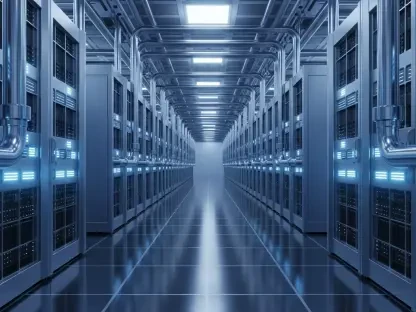

On November 28, the global financial system received a stark reminder of its profound dependence on physical infrastructure when a single data center failure brought one of the world’s largest exchanges to a complete standstill. An outage at a CyrusOne facility in Aurora, Illinois, triggered a shutdown of markets operated by CME Group that lasted over 10 hours, halting trading in equities, currencies, bonds, and commodities from Tokyo to London. This analysis dissects the anatomy of that failure, from its root cause in simple human error to the cascading financial and industry-wide consequences, offering urgent lessons about operational risk in an increasingly digitized world.
The Digital Backbone of Finance
To grasp the full significance of the outage, it is essential to understand the relationship between the two central players. The Aurora data center was not just any facility; it was a critical hub for CME Group, the world’s leading derivatives marketplace. In a landmark 2016 deal, CME sold this facility to CyrusOne, a global data center real estate investment trust, and subsequently leased back the space. This sale-and-lease-back model is common in the industry, allowing enterprises to shed the capital-intensive business of running data centers to focus on their core operations. However, it also introduces a layer of third-party dependency, placing the physical heart of CME’s global operations in the hands of its vendor, CyrusOne, and making operational excellence a non-negotiable requirement.
Anatomy of a Meltdown
A Preventable Human Error
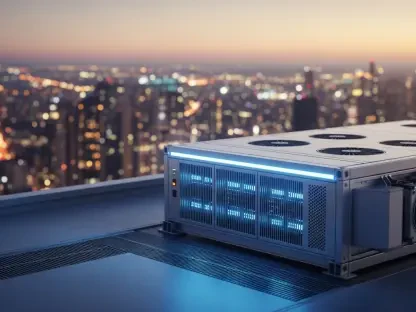
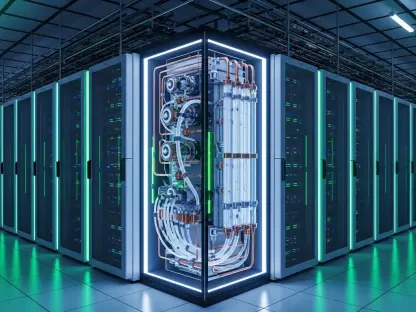
The catalyst for the multi-billion-dollar market disruption was not a sophisticated cyberattack or a natural disaster, but a fundamental operational oversight. According to reports, the incident began when on-site staff and contractors failed to follow standard procedures for draining the facility’s cooling towers ahead of freezing temperatures. This critical error caused the cooling system to become overloaded, leading to a spike in temperatures inside the data hall. As the environment heated beyond safe operating limits, multiple chillers failed, ultimately forcing a complete shutdown of CME’s trading systems housed within the facility. The event underscored a painful truth: even the most advanced financial technology is vulnerable to basic procedural failures.
Conflicting Narratives and Critical Decisions
In the immediate aftermath, the public responses from the two companies revealed a significant divergence in perspective. CyrusOne, owned by investment giants KKR & Co. and Global Infrastructure Partners, issued a statement claiming it took extensive and decisive steps to restore the cooling systems, including dispatching top executives to the site. However, CME Group directly countered this narrative, stating that the data center’s initial remediation attempts further exacerbated the problem. This public disagreement highlighted a breakdown in crisis management and communication. Furthermore, CME explained its decision not to failover to its disaster recovery site in the New York area, noting that the initial information it received from CyrusOne suggested the outage would be brief. This fateful judgment call, based on incomplete early assessments, prolonged the global market freeze.
The Billion-Dollar Ripple Effect
The incident sent shockwaves far beyond the trading floor, triggering immediate and significant financial repercussions. In a clear sign of shaken market confidence, Goldman Sachs Group Inc. paused a planned $1.3 billion mortgage-bond sale for CyrusOne, directly linking the decision to the operational failure. The outage also served as a wake-up call for investors and clients across the data center sector, highlighting the operational risks inherent in an industry often viewed as a stable utility. Analysts from Citigroup pointed out a crucial detail: data center contracts frequently contain termination clauses for service deficiencies, including the very type of cooling failure that occurred in Aurora. This underscored the tangible, contractual, and financial risks operators face when they fail to meet their service level agreements.
Lessons Learned for Financial Infrastructure
The CME outage is poised to become a catalyst for change across the mission-critical data center industry. In response, CyrusOne has already committed to a comprehensive overhaul of its procedures, including updating its cold-weather protocols, increasing its on-site engineering staff, hardening its physical infrastructure, and enhancing staff training. This incident will likely compel other data center operators to re-evaluate their own operational playbooks and a client’s right-to-know during an outage. For financial institutions like CME, the event will force a reassessment of disaster recovery strategies, pushing for more stringent service level agreements and clearer, more aggressive triggers for failing over to secondary sites, ensuring that a vendor’s optimism does not dictate market availability.
Actionable Takeaways for a Resilient Future
The key takeaways from this event provide a clear roadmap for mitigating future risks. For data center operators, the primary lesson is the absolute necessity of rigorous adherence to standard operating procedures and investing in continuous staff training. Transparent, accurate, and timely communication with clients during a crisis is not a courtesy but a core operational requirement. For enterprise clients, particularly in finance, this incident highlights the need to pressure-test their own disaster recovery plans and challenge the information provided by vendors during an outage. Contracts must be fortified with specific clauses that define acceptable performance, detail remediation timelines, and grant clients greater authority in making critical decisions like activating a failover.
Reassessing the Foundations of Digital Markets
The CyrusOne failure was more than a technical glitch; it was a powerful demonstration of the fragile interdependence between the digital economy and its physical foundation. It revealed how a localized, preventable error can cascade into a global economic disruption, freezing markets and jeopardizing billions in transactions. As the world’s financial systems become ever more automated and centralized within these colossal data hubs, this incident serves as an urgent call to action. The industry must move beyond simply building resilient facilities and focus intensely on instilling a culture of operational excellence, ensuring that the unseen infrastructure powering global commerce is never again its weakest link.