
The meteoric rise of digital currencies has been inexorably linked with a growing storm of environmental controversy, casting a significant shadow over their potential to revolutionize the global financial landscape. At the heart of this debate lies the foundational architecture of traditional blockchains, which rely on an energy-intensive security mechanism known as Proof of Work (PoW). This system necessitates a global network of high-powered computers competing to solve complex mathematical puzzles, a process that consumes staggering amounts of electricity, in some cases rivaling the annual energy consumption of entire countries. The immense strain this places on power grids and the associated carbon footprint have drawn sharp criticism from environmental groups, regulators, and the public, compelling the industry to confront its sustainability problem and seek out innovative, greener alternatives to secure its future.
The Shift Toward Sustainable Consensus
In response to the mounting pressure, the cryptocurrency industry has largely rallied around an alternative consensus mechanism known as Proof of Stake (PoS). This model represents a fundamental departure from the computationally intensive approach of PoW. Instead of relying on raw processing power, PoS secures the network through an economic stake. Participants, often called validators, lock up a certain amount of their own cryptocurrency as collateral for the right to validate transactions and create new blocks. This approach dramatically reduces electricity consumption, as it eliminates the competitive “mining” race that defines PoW. Furthermore, the PoS system inherently incentivizes honest behavior; any validator attempting to approve fraudulent transactions would risk losing their staked collateral, aligning their financial interests directly with the integrity and security of the network. This elegant solution addresses the energy crisis head-on, offering a viable path toward a more sustainable blockchain ecosystem.
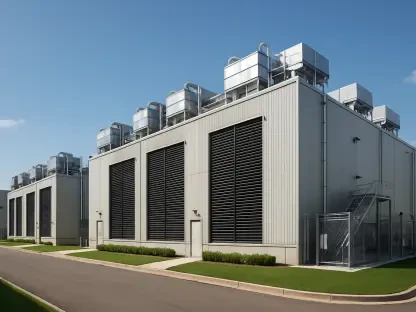
However, the transition to greener blockchains faces substantial barriers that extend beyond simply adopting a new consensus algorithm. A significant challenge is that many of these next-generation solutions are still in their nascent stages, operating as pilot projects that have not yet reached full-scale production or widespread adoption. Moreover, a growing consensus among environmental analysts suggests that a narrow focus on operational electricity use is misleading and can lead to “greenwashing.” A truly holistic assessment of a blockchain’s environmental impact must account for its entire lifecycle carbon footprint. This includes the considerable energy and resources consumed during the manufacturing of specialized hardware, the escalating problem of e-waste as older equipment becomes obsolete, and the continuous energy required for the sophisticated cooling systems needed to keep servers from overheating. Without considering these factors, the industry risks trading one environmental problem for another.
A New Frontier in Blockchain Architecture
To overcome the limitations of current solutions and build a genuinely sustainable digital economy, a forward-looking approach is gaining traction among researchers and developers. This innovative strategy involves integrating blockchain technology with complementary systems like edge computing, sharding, and off-chain storage. Edge computing, in particular, offers a paradigm shift from the centralized data centers that currently power most digital infrastructure. By processing data closer to its source—on local devices or nearby servers—it drastically reduces the need to transmit vast amounts of information to a central cloud. When combined with blockchain, this decentralized approach can distribute the computational load across the network, lessening the reliance on massive, energy-intensive server farms. Similarly, techniques like sharding, which splits a blockchain’s database into smaller, more manageable pieces, and off-chain storage help to further enhance efficiency and scalability, paving the way for more robust and environmentally sound applications.
This powerful combination of blockchain and edge computing is poised to unlock significant advancements in both performance and sustainability. By decentralizing the computational workload, this architecture substantially cuts operational costs and reduces the carbon footprint associated with maintaining and cooling large, centralized data centers. Furthermore, processing transactions closer to the end-user dramatically reduces latency, resulting in faster and more responsive applications. This improvement is critical for driving the mainstream adoption of blockchain technology in areas like real-time payments, supply chain management, and the Internet of Things (IoT). Ultimately, this integrated approach moves beyond incremental improvements, offering a comprehensive solution that addresses the core challenges of scalability and energy consumption. It provides a viable pathway for developing blockchain applications that are not only efficient and cost-effective but also genuinely sustainable from an environmental perspective.
A New Blueprint for Digital Responsibility
The journey toward a sustainable digital currency ecosystem ultimately required a pivot from singular fixes to holistic architectural innovation. The initial focus on replacing Proof of Work with less energy-intensive models like Proof of Stake proved to be an important but incomplete step. It became clear that achieving genuine environmental responsibility demanded a broader perspective, one that encompassed the entire lifecycle of the technology, from hardware production to data transmission. The integration with edge computing provided a powerful blueprint for the future. Continued research and the development of clear incentives for green practices were instrumental in driving this shift. Ultimately, educating consumers on the function and benefits of these sustainable technologies in e-commerce and finance helped build the market momentum needed to turn a technological possibility into a mainstream reality.