
The seamless digital interactions that now define daily life, from instant voice commands to flawlessly smooth video calls, are not the product of a faster internet alone but a fundamental re-architecting of how data is processed. A quiet but profound revolution known as edge computing has reached maturity, marking a definitive transition away from a total reliance on distant, centralized cloud servers. This evolution brings computational power directly to our devices and into local networks, fundamentally altering the digital landscape. For years, the cloud paradigm dictated that our devices act as simple terminals, sending vast quantities of raw data to massive data centers for analysis before receiving a response. This model, while effective for large-scale operations, created inherent delays and significant privacy vulnerabilities. Edge computing systematically dismantles these issues by relocating processing power closer to where data is generated and consumed. The result is a redesign of our digital lives, making technology feel more immediate, considerate, and integrated into the human context, transforming it from a remote tool into a responsive companion that respects both our time and our personal information.
The Core Concept of Decentralization
For the better part of a decade, the dominant cloud computing architecture served as the backbone of the digital world, but its limitations became increasingly apparent as user expectations for immediacy grew. In this centralized model, every complex request, whether a spoken query to a smart speaker or a filter applied to a photo, necessitated a “cloud round-trip.” Data had to travel hundreds or even thousands of miles to a server, be processed, and then return, introducing a perceptible lag known as latency. This delay created frustrating pauses and stutters in real-time applications. Furthermore, this constant transmission of raw user data—including voice recordings, location history, and biometric information—created a massive, centralized target for security breaches. Even with encryption, the practice of collecting and storing such vast quantities of personal information on external servers expanded the potential for misuse, secondary analysis, and a general erosion of user privacy, creating a system where convenience often came at the cost of personal control.
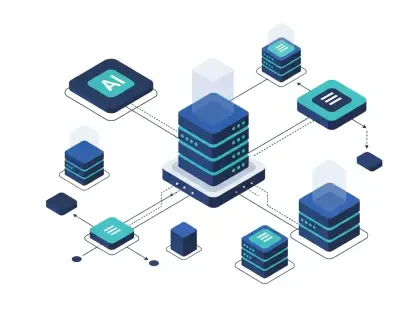
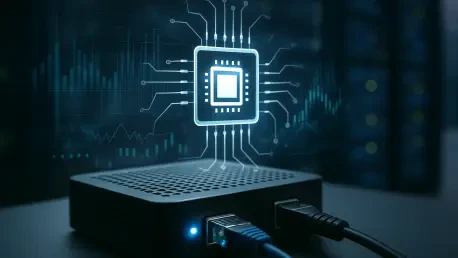
In direct contrast, edge computing introduces a distributed, decentralized paradigm that fundamentally alters this dynamic by bringing intelligence closer to the source of data. The “edge” is not a single location but rather a spectrum of processing points, ranging from the powerful AI chips within a user’s own smartphone to nearby network infrastructure like a local 5G cell tower or a home router. By performing computational tasks locally or in close proximity, this model drastically shortens the physical and network distance that information must travel, effectively eliminating the cloud round-trip for many common operations. This approach directly addresses the twin challenges of latency and privacy. Tasks are completed almost instantaneously, creating a more fluid and natural user experience. Simultaneously, sensitive data can be analyzed and acted upon without ever leaving the secure environment of the user’s device or local network, establishing a new standard where privacy is a default architectural feature rather than an optional setting.
A Fundamental Shift in User Experience
The most tangible benefit of a mature edge computing ecosystem is the near-total elimination of latency, which fosters a qualitatively different interaction with technology. This is far more than a simple increase in speed; it is about creating an experience that feels present, immediate, and seamlessly woven into the fabric of reality. For instance, when augmented reality applications can overlay information onto the real world without any perceptible lag, they transform from novelties into practical tools for navigation, education, and professional tasks. In the realm of communication, video calls become more natural and engaging when the subtle delays that cause people to speak over one another are removed. Interactive entertainment, particularly cloud gaming, becomes viable for a mass audience as the input lag between a player’s action and the on-screen response is reduced to an imperceptible level. The cumulative effect of these micro-improvements across countless daily interactions is a digital world that feels less like a remote service being accessed and more like an intelligent extension of one’s own environment.
Perhaps the most profound and lasting impact of edge computing lies in its capacity to completely redesign the architecture of digital privacy from the ground up. The traditional cloud model normalized the practice of sending vast troves of raw, sensitive user data to corporate servers for processing. Edge computing offers a powerful and elegant alternative through local processing and data minimization. Instead of transmitting a continuous audio stream to the cloud for keyword spotting, a smart speaker can perform that function on-device, only activating and sending data after the wake word is detected. Similarly, a smart security camera can use on-device machine learning to distinguish between a pet, a package delivery, and an unrecognized person, sending only a specific, relevant alert rather than hours of raw video footage. This principle ensures that personal information remains in the user’s control by default, drastically reducing their data footprint and exposure to long-term risks. It represents an ethical recalibration in technology design, where user consent becomes more meaningful because the system is architected to protect privacy inherently.
Practical Manifestations in Modern Technology
Modern smartphones have evolved to become the most powerful and ubiquitous edge devices in use, serving as deeply personal hubs for on-device intelligence. The integration of dedicated AI hardware, such as Neural Processing Units (NPUs), allows these devices to execute complex machine learning tasks that were once exclusive to cloud servers. This capability is evident in features like real-time language translation that works entirely offline, advanced computational photography that enhances images instantly, and predictive text algorithms that learn a user’s writing style without sending keystrokes to an external server. The tangible benefits for the user are manifold. Essential applications remain fully functional even in areas with poor or nonexistent connectivity, providing a more reliable and resilient user experience. Interactions are instantaneous, free from the dependency on network quality. Most importantly, this on-device processing provides users with greater control and assurance over their sensitive information, solidifying the smartphone’s role as a secure and trusted personal companion in the digital age.
Edge computing has been instrumental in addressing the primary criticisms that once hindered the widespread adoption of smart home technology: its over-reliance on a stable internet connection and its pervasive data-gathering nature. By shifting automation logic and data processing from distant cloud servers to a local hub or directly onto the devices themselves, smart homes have become significantly more robust, private, and trustworthy. In an edge-powered home, lights, thermostats, and security sensors continue to function seamlessly even during a complete internet outage, ensuring core functionalities are never compromised. Security alerts from motion detectors or cameras can trigger instantly, providing real-time notifications without a critical delay. Critically, this model allows sensitive data, such as video feeds from indoor cameras and audio from smart speakers, to be processed locally. This design fosters a private and secure environment, restoring a sense of trust and transforming smart devices from potential surveillance tools into secure and reliable extensions of the home.
The Forged Path to a Balanced Future
The ascendance of edge computing was not seen as a complete replacement for the cloud, but rather as the path toward a more intelligent, hybrid architecture. It became clear that edge and cloud possessed complementary strengths. On-device processing, having been perfected, was the undisputed solution for tasks requiring low latency, high privacy, and offline functionality, such as real-time device control and the analysis of personal health data. The cloud, in contrast, retained its critical role in handling tasks that demanded massive computational power or vast datasets, including the training of complex AI models, long-term data archiving, and large-scale analytics. This synergistic relationship allowed for an optimal distribution of workloads. Technology designers had successfully created systems where the edge handled the immediate, personal interactions, while the cloud provided the powerful, behind-the-scenes support, resulting in a digital infrastructure that offered both instantaneous responsiveness and virtually limitless scale. This balanced ecosystem delivered a superior user experience that was faster, more private, and more resilient than any single architecture could have achieved on its own.