
The relentless expansion of our digital world, fueled by artificial intelligence and cloud computing, is quietly colliding with a formidable physical barrier that threatens to halt its progress entirely. The voracious energy appetite of the data centers that power this revolution has outpaced the capacity of traditional electrical grids, creating a critical bottleneck that conventional solutions can no longer resolve. This power deficit is forcing industry leaders to look beyond the familiar and toward a source of energy that is as constant as the Earth’s own internal heat.
At the heart of this challenge lies a simple but profound imbalance: the demand for computational power is growing exponentially, while the ability to deliver clean, reliable electricity is not. Data center developers, who once prioritized fiber optic connectivity and real estate, now find their primary constraint is securing a stable and scalable power supply. This shift marks a pivotal moment, forcing a complete reevaluation of how we build and sustain the digital infrastructure upon which the global economy increasingly depends. The solution may not lie in building more transmission lines to distant power plants but in fundamentally rethinking the relationship between energy generation and consumption.
When the AI Revolution Hits a Power Wall What Comes Next
The artificial intelligence revolution is running on an immense and ever-growing electrical current. The sophisticated processors required for training large language models and running complex algorithms consume energy at a scale that dwarfs previous generations of computing. Consequently, data center developers now face unprecedented challenges in securing power contracts large enough to support these hyperscale facilities, leading to significant project delays and even outright cancellations in key markets. This power scarcity has become the single greatest impediment to the industry’s expansion.
This energy deficit is more than an operational hurdle for tech companies; it represents a systemic threat to continued technological advancement. The inability to power the next wave of data centers directly throttles the pace of innovation in AI, scientific research, and global commerce. In response, the industry is shifting its focus from simply connecting to the grid to actively participating in the creation of new energy resources. This has opened the door for solutions that were once considered niche, pushing them into the spotlight as essential components of future infrastructure.
The Unseen Bottleneck Halting Data Center Growth
The limitations of the current energy infrastructure extend far beyond simple generation capacity. The process of connecting a new, power-hungry data center to the electrical grid is fraught with complexity and delay. Lengthy interconnection queues, which can stretch for years, and congested transmission corridors create a landscape of uncertainty that is incompatible with the rapid deployment schedules the technology sector demands. This gridlock effectively strands vast amounts of potential computing power, waiting for an energy lifeline that is slow to materialize.
While solar and wind power are cornerstones of the clean energy transition, their intermittent nature presents a significant challenge for data centers that require an unwavering 24/7 power supply. The need for massive battery storage systems to smooth out these fluctuations adds considerable cost, complexity, and a significant physical footprint, often making these solutions impractical for powering a facility that cannot tolerate even a moment of downtime. This operational reality underscores the need for a clean energy source that is not dependent on weather conditions and can deliver the constant, reliable power that digital infrastructure demands.
The Geothermal Game Changer From Niche Resource to Scalable Powerhouse
For decades, geothermal energy was a minor player, limited by geography to the rare locations where nature provided accessible underground reservoirs of steam and hot water. This confined its development almost exclusively to areas like California and Nevada, capping its potential. However, a technological breakthrough is fundamentally rewriting this narrative. Enhanced Geothermal Systems (EGS) are now unlocking the vast, untapped heat stored in deep, impermeable rock formations found across the country, transforming geothermal from a regional curiosity into a continental-scale resource.
The innovation behind EGS lies in adapting proven technologies from the oil and gas sector, specifically horizontal drilling and hydraulic fracturing. Instead of searching for naturally occurring reservoirs, EGS engineers create them, making it possible to harness Earth’s heat almost anywhere. This technological convergence is a strategic force multiplier, allowing the geothermal industry to leverage an existing skilled workforce and a mature supply chain. This accelerates project development and dramatically expands the map for potential geothermal power plants, aligning energy generation with the growing footprint of data centers.
A Four Pillar Solution Tailored for Hyperscale Demand
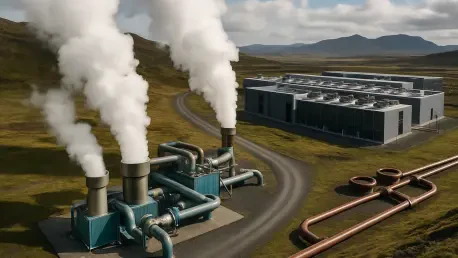
The synergy between advanced geothermal and data centers is built on four key advantages, beginning with the opportunity for colocation. By developing geothermal power plants directly adjacent to data centers, operators can create self-contained energy ecosystems. This model bypasses congested grids, eliminates transmission losses, and provides long-term energy price certainty through direct sourcing. It enables a new siting strategy where power availability, not just fiber access, dictates location, allowing hyperscale facilities to scale their operations in lockstep with the phased development of the geothermal resource.
Beyond strategic siting, EGS offers a crucial advantage in speed to market. The development timelines for geothermal projects are competitive with other dispatchable power sources, and the sector has so far avoided the severe supply chain bottlenecks that have plagued other renewable industries. The inherent modularity of EGS development is particularly well-suited for data center construction, allowing power capacity to be brought online in phases that precisely match the operational ramp-up of new server halls.
Furthermore, geothermal energy provides the firm, reliable power that is non-negotiable for data center operations. Unlike intermittent renewables, geothermal plants generate electricity around the clock with capacity factors often exceeding 90%, guaranteeing the constant stream of power needed to meet stringent uptime requirements. This clean, “fuel-free” energy also insulates operators from the commodity price volatility and transportation constraints associated with fossil fuels, offering predictable, stable energy costs over the long term. This unique combination of sustainability, reliability, and economic resilience positions geothermal as a superior solution for the modern data center.
The Blueprint for a Geothermal Powered Future A New Siting and Development Strategy
The commercial viability of this new paradigm is being demonstrated at projects like Fervo Energy’s Cape Station in southwest Utah. This facility serves as a powerful proof of concept for deploying EGS at utility scale, with its initial phase delivering power to the grid and an additional 400 megawatts planned for development by 2028. The project’s success in securing long-term contracts for its entire capacity underscored the intense market demand for clean, 24/7 power.
The project pioneered a modular design, developing its capacity in standardized 50-megawatt units. This approach brought a new level of predictability and repeatability to geothermal development, creating a blueprint for expanding power generation in sync with a customer’s growing load. It was this model that illustrated how geothermal energy could be tailored perfectly to the phased construction timelines of massive data center campuses.
Ultimately, the maturation of Enhanced Geothermal Systems marked a significant inflection point for both the energy and technology sectors. This technological leap unlocked a vast, domestic energy resource capable of providing the clean, constant, and scalable power required to sustain the growth of our digital infrastructure. For an industry that had hit a hard physical limit, geothermal energy provided not just a solution, but a strategic pathway toward a more resilient and sustainable future.